Get Full Government Meeting Transcripts, Videos, & Alerts Forever!
Get email alerts on the Zoning And Land Use topic
No spam. Unsubscribe anytime.
Trustees set Oct. 27 workshop for zoning draft as board debates open-space mapping and procedural rules
Summary
The Board of Trustees scheduled a combined regular meeting and special zoning workshop for Oct. 27 and discussed contested items in the zoning draft, including open-space mapping, accessory-building heights, alternate member terms for planning and zoning boards, and inter-meeting collaboration procedures.
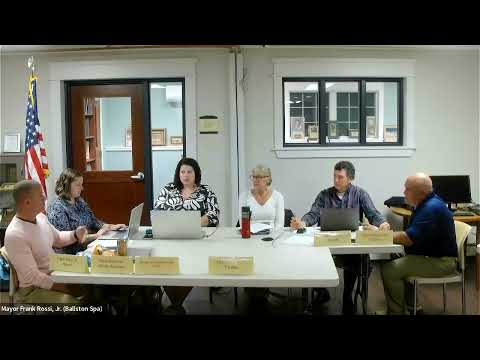
The Village of Ballston Spa Board of Trustees agreed to hold its regular meeting at 6:30 p.m. on Oct. 27 and immediately follow it with a special zoning workshop targeted to begin around 7 p.m. The scheduling decision came after trustees debated availability and the need to advance a zoning code rewrite that began earlier this year.
Trustees reviewed an informal inter-meeting drafting process that board members used to exchange comments through a shared spreadsheet. Several trustees said the collaborative approach had produced tentative majority positions on issues such as zoning for the former nursing-home and county building properties, height parity for accessory and nonresidential structures in residential zones, and the inclusion of village-owned recreation properties in an open-space zoning designation.
Points of debate included whether accessory or nonresidential accessory buildings should be allowed to exceed the height of primary residential buildings and whether alternate members of the Planning Board and Zoning Board of Appeals should serve two-year terms instead of one. Trustees said the draft contains nonconforming-structure language to address existing buildings that exceed proposed limits. Trustees also emphasized that site-plan review standards should require ADA-compliant sidewalks and context-sensitive design controls where nonresidential uses operate in residential areas.
Trustees noted some friction about process: one trustee asked that staff not alter mapping between meetings without a formal workshop; others said edits by email and shared sheets were an accepted drafting tool and that the majority of the board had reached consensus on several items. The board concluded that working drafts would continue to be refined between meetings but committed to a formal workshop on Oct. 27 to consider changes and move the draft forward.
Ending: The board set Oct. 27 for a combined meeting and zoning workshop and directed continued inter-meeting drafting while preserving a formal opportunity for discussion and vote at the scheduled workshop.