Get Full Government Meeting Transcripts, Videos, & Alerts Forever!
Get email alerts on the Behavioral Health topic
No spam. Unsubscribe anytime.
Behavioral Health Solutions panel reviews grant requests, warns limited funds make co-responder start risky
Summary
San Miguel County's Behavioral Health Solutions panel said grant demands exceed available funds and that while a co-responder program would meet community needs, the panel cannot confidently fund a new multi‑year program without other sustainable sources; if ballot measure 1A passes, the panel may revisit allocations.
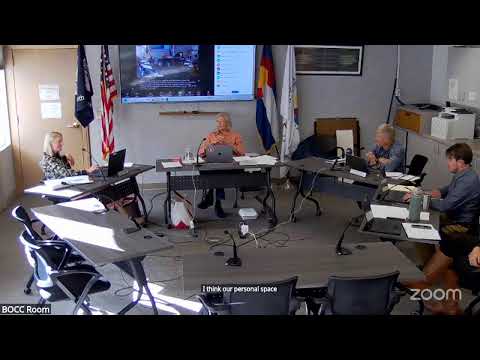
Members of San Miguel County’s Behavioral Health Solutions panel told commissioners Oct. 15 they face a large number of requests for mental-health and crisis funding in 2026 and said their current budget allocation leaves limited room to start new multi-year programs such as a co-responder program without other stable funding sources.
Panel chair John Pandolfo summarized the preliminary grant cycle: the panel received requests totaling roughly $810,000 against a budget that currently contemplates awarding about $450,000 with $65,000 set aside for ad hoc needs. That gap leaves many worthy applications unfunded. Pandolfo said the panel is committed to “pillar” services — crisis response, school-based counseling, suicide prevention and substance-use treatment — and is prioritizing core services rather than new program launches without a sustainable funding plan.
Panel members and community stakeholders discussed the prospect of restarting a co-responder program (a clinician riding with law enforcement to respond to behavioral health calls). Tom Kennedy and others confirmed prior one-time grants supported earlier co-responder pilots but those funding streams ended. Commissioners and panelists agreed that a one-year seed allocation could be considered, but only if multiple partners commit to sustaining the program. Panelists urged diversified funding — town contributions, developer community benefit agreements, in-kind support from clinics and grant matches — to avoid an unfunded multi-year obligation.
Panel administrator Melanie (Tri-County Health Network) explained that the panel also funds mental-health navigation services, a multi-role contract that includes bilingual navigators and administration of a sliding-fee mental-health scholarship program that provides subsidized sessions for county residents and workers. Commissioners asked whether the panel could adapt the RFP/award cadence if ballot measure 1A (a proposed property tax increase on the ballot) passes; panel members said they would consider contingent awards and paused multi-year commitments until the election outcome is clear.
The panel will complete grant awards in the coming weeks and return with a finalized recommendation to the county once the board considers the panel’s package alongside county budget priorities.