
Legal counsel flags Stanton Optical cases and advertising orders as matters to monitor
Get AI-powered insights, summaries, and transcripts
Subscribe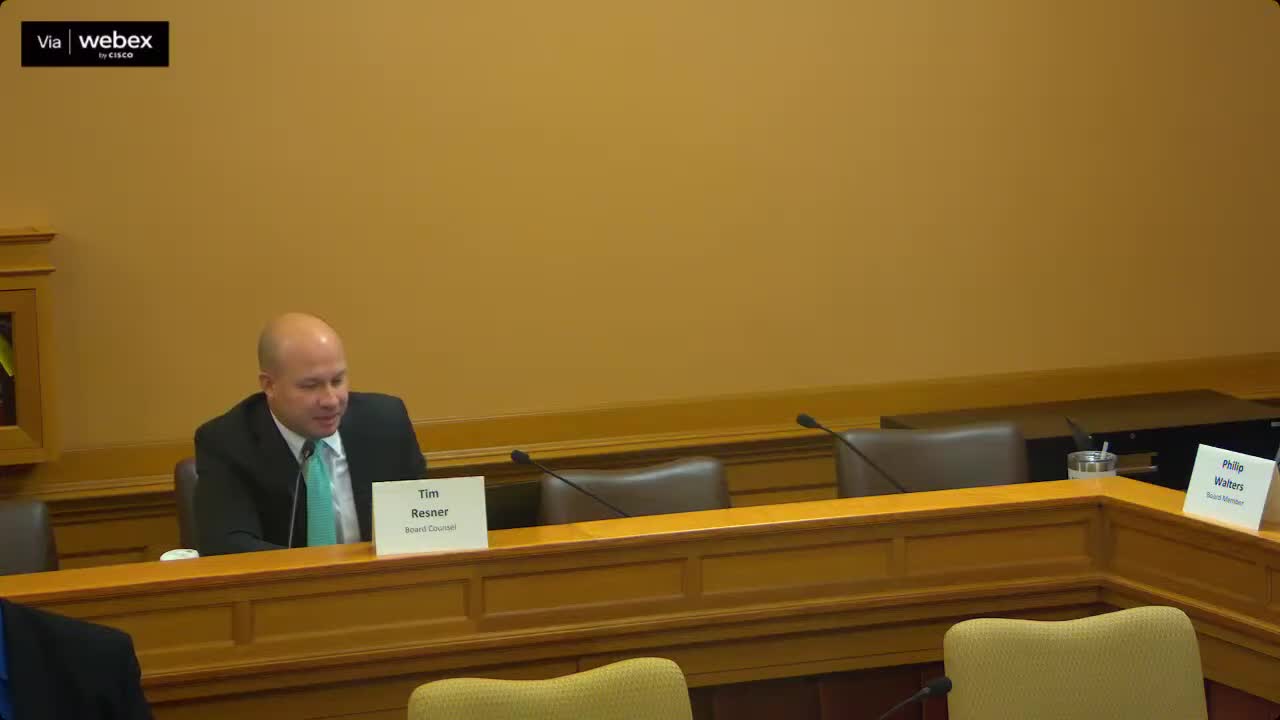
Summary
Board legal counsel summarized out-of-state enforcement involving Stanton Optical, including a California administrative order finding certain advertising misleading and a related civil suit tied to corporate oversight in Texas; counsel recommended monitoring outcomes as potential regulatory lessons.
Legal counsel to the board provided an update on litigation and regulatory actions involving Stanton Optical in other states and suggested the board monitor these matters for policy lessons.
Counsel said a California administrative order held that Stanton Opticals advertising of "free eye exams" violated advertising and deceptive-practice provisions; that order was upheld and counsel said Californias executive director later described registration issues the state would pursue but lacked funds to pursue further action at that time. Counsel also described a Florida-filed lawsuit involving practices affiliated with Stanton Optical in Texas; the suit alleges corporate overreach and improper direction of clinical practice. The Florida filing reflected a forum-selection clause in contracts requiring litigation in Florida.
Counsel said such orders and litigation differ across states because statutes and corporate-practice rules vary, but that decisions elsewhere can be persuasive in informing board policy and educating members about potential regulatory approaches. He recommended the board monitor outcomes and consider whether existing Kansas statutes and forms of corporate practice adequately address the regulatory concerns raised elsewhere.
Why this matters: Corporate-affiliated optical retail models have prompted enforcement and litigation in other states; outcomes elsewhere can highlight regulatory gaps or enforcement approaches states may consider when similar issues arise locally.