Get Full Government Meeting Transcripts, Videos, & Alerts Forever!
Get email alerts on the Affordable Housing topic
No spam. Unsubscribe anytime.
City, developer and state outline financing and timeline for Syracuse Developmental Center redevelopment
Summary
City officials, developer Albanese and partner Home Headquarters presented updated financing, timeline and infrastructure plans for the 48‑acre Syracuse Developmental Center redevelopment, including a proposed local low‑interest loan through Sedco to bridge a roughly $9 million gap needed to unlock additional state subsidy.
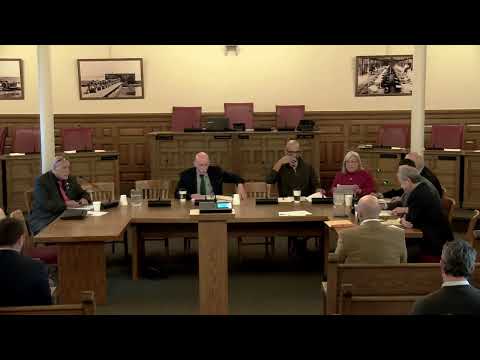
City staff and private partners briefed the Syracuse Common Council on the status of the Syracuse Developmental Center (SDC) redevelopment project, describing demolition largely complete, a multimillion‑dollar state grant already committed and outstanding financing the developer says is needed to close in December.
Eric Ennis, a city staff member presenting the update, said the city received a $29 million award from Governor Kathy Hochul’s administration in 2022 to support the project and has been working with the Albanese Organization and Home Headquarters on a multiphase redevelopment of the 48‑acre SDC site. "This project is one that we have been working on since 2022," Ennis said, adding the project has been complex and involves multiple city departments and outside partners.
The nut graf: City and private developers said they are targeting closing this winter with state housing authorities and tax credit investors, but they described a financing gap that the city might help fill through a low‑interest loan administered by Sedco to unlock further state subsidy.
Developers and partners summarized current scope and schedule. Home Headquarters plans to build 27 owner‑occupied townhomes in phase 1; Carrie Quaglia, representing Home Headquarters, said architects have near‑final plans and the organization expects to apply for state AHOP (Affordable Homeownership Opportunity Fund) funding that would subsidize roughly $200,000 per townhome, producing subsidized sales prices in the $220,000–$250,000 range. Quaglia noted permits for townhomes pulled after Jan. 1 will require sprinkler systems, adding an estimated $15,000 per unit, and that two units must meet Section 504 accessibility requirements.
Chris Albanese, speaking for the Albanese Organization, described Buildings A and B as a two‑building multifamily component totaling 261 units that is proceeding through the state's 4% Low‑Income Housing Tax Credit process administered by the New York State Housing Finance Agency (HFA). Albanese said Goldman Sachs has been selected as the tax credit investor and that HFA board approval and a formal closing are anticipated in December, with a target HFA closing date discussed as Dec. 8 and a bond closing mentioned as Dec. 18. "We're on HFA's calendar to close, I think, December 8," Albanese said.
Budget and financing details presented to the council included an estimated $134 million private investment for Buildings A and B, about $15 million for the townhomes and roughly $150 million total private investment when combined with demolition and related costs. Ennis and Albanese said the project is currently "over term sheet" with HFA — meaning the project's subsidy needs exceed standard state formulae — and the state has indicated it will provide additional subsidy if local matching support is in place. Ennis outlined a proposed local contribution via Sedco of up to $11 million, which the city would structure as a low‑interest loan (the “local match” described by staff is roughly $9 million for the developer subsidy plus other items) and discussed repurposing portions of the previously awarded $29 million state grant to capitalize that loan.
City staff described how the Sedco loan would be structured to avoid immediate tax consequences for the developer and to comply with federal and state program rules. Ennis said the proposed Sedco loan interest rate under discussion is 0.25 percent with a long term (staff referenced a 50‑year term) and that the loan is intended to function as a subsidy vehicle rather than a near‑term revenue source for the city. Chris Albanese said the project had been about $25 million over term sheet at an earlier stage and that rising construction costs and added units have pushed the amount higher; he said the state initially sought a $9 million local contribution.
Ennis described additional infrastructure funding and delivery pieces: the city will issue a design bid package in November to select contractors to build on‑site utilities (water, sewer, conduit) and an access roadway; National Grid would construct and own a duct bank for electric service, and city staff proposed a combination of repurposed ESD grant funds, state CHIPS roadway funds (about $5 million), and city bonding (about $7.8 million) to complete the public infrastructure. The city also flagged an approximately $500,000 "not to exceed" allowance to cover removal of concrete caissons that remain under parts of the site and that may require private contractor excavation.
Ennis and Michael Collins, commissioner for neighborhood and business development, both emphasized that a planning commission resubdivision approval is required and was scheduled to be considered at the next planning commission meeting; staff said that local approvals and documentation are among the conditions the state wants satisfied before HFA closes. "This project will be on the planning commission agenda on Monday evening to approve and finalize those lot lines and resubdivision," Ennis said.
Project design and programmatic commitments: Albanese and city staff said the A/B buildings will include a mix of unit sizes and AMI (area median income) targets, with approximately 10 percent of units planned as three‑bedroom apartments and a mix of studio, one‑, two‑ and three‑bedroom units targeted across 50, 60, 70 and 80 percent AMI bands to meet affordability goals discussed with the council. Quaglia said nine of the townhomes will include garages and reiterated the organization's experience building owner‑occupied units around the city.
Other issues raised in council discussion included management of the large property (Albanese described creating an in‑house management company for past projects), the potential to expand the Rosemond Gifford Zoo on a carved‑off portion of site acreage (city staff said discussions with Onondaga County were ongoing and any transfer would return to council for approval), and the project's phased delivery with timing provisions in the purchase and sale agreement that start an 18‑month clock after acquisition of phase 1 lots.
Councilors and staff repeatedly described the project as complex but on a parallel track: city demolition began in May 2024 and staff said hydroseeding is in place following removal of the roughly 600,000‑square‑foot former SDC building, and that site work and financing are intended to allow construction activity to begin in 2026 following the financing closings. Ennis closed by saying the city and partners expect to present necessary legislative items to the council but that formal approvals had not been taken during the briefing. "We are all indications are pointing to on track," he said.
Ending: No council vote was recorded on the amendment to ordinance 650 (02/2022), the Sedco loan proposal, or the other legislative items described; staff said they would return with legislation and that several local and state approvals remain prerequisites to a financial closing. Planning commission action, HFA board approval and final operating agreements with the tax credit investor remain the primary conditions identified by staff and the developer.