Get Full Government Meeting Transcripts, Videos, & Alerts Forever!
Get email alerts on the Road Dedication topic
No spam. Unsubscribe anytime.
Valley County accepts deeded public rights-of-way, approves 12 road names; Riverbend Lane approval tied to Forest Service agreement
Summary
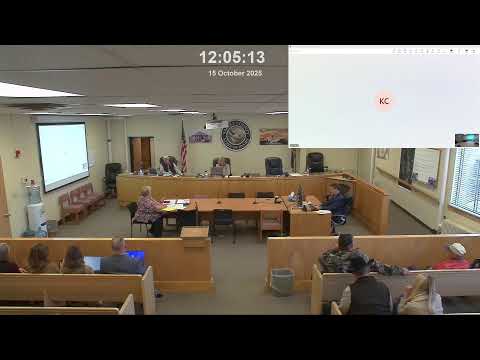
The Valley County Board of County Commissioners on Oct. 15 voted to accept deeds and validate 12 roads as public rights of way offered by DF Development LLC, and to add the proposed names to the county’s official road list.
The Valley County Board of County Commissioners on Oct. 15 voted to accept deeds and validate 12 roads as public rights of way offered by DF Development LLC, and to add the proposed names to the county’s official road list. The board’s action, taken after a public hearing, includes conditions that Riverbend Lane not be accepted until a U.S. Forest Service cost-share agreement is terminated and that the roads be constructed to fire-code standards before dedication.
The move will add named roads and clarify access for emergency responders across a roughly 13,436-acre holding that DF Development said will not create new parcels. Planning staff and the applicant said the primary goals are to ensure future access to public lands, improve addressing for emergency services, and create circulation between Clear Creek and Horse Thief Road.
Planning staff opened the hearing by telling the board, “I would like to be very clear that this application does not create a subdivision.” Applicant attorney Josh Leonard of Clark Wardle LLP told the commissioners the deeds would transfer long stretches of Clear Creek Road and Horse Thief Road to the county and that the developer “gains no additional entitlements by deeding these roads to the county.” Leonard also said the applicant expects to build a new bridge on Longmeadow Drive and to construct the named roads to fire-code standards before dedication.
The board-approved list contains 12 proposed road names that county dispatch and the assessor’s office reviewed and found nonduplicative: Elk Valley Drive; Legacy View Drive; Longmeadow Drive; Low Creek Drive; Moose Meadow Drive; Peak View Lane; Ranch View Road; River Bend Lane; Sparrow Lane; Still Forest Drive; White Pine Drive; and Wildland Drive. The record shows two noncontiguous stretches of Clear Creek Road (4.33 miles and 2.77 miles) and a segment of Horse Thief Road northerly of the junction with Clear Creek Road; the applicant later estimated Horse Thief’s total deeded length at about 3.54 miles and described “a little over 7 miles” of Clear Creek Road included in the offer.
Public comment at the hearing focused on two themes: road maintenance and recreational access. Multiple residents said Valley County already lacks funding and capacity to maintain its current roads and worried county ownership could lead to increased traffic, dust and pressure to plow or otherwise maintain the routes. Valley County Parks and Recreation Director Dave Bingham warned the board that accepting the dedications as proposed would remove about 6.2 miles of Clear Creek Road from the county grooming system, affecting winter snowmobile access, and urged development of an alternate grooming route or a parking lot at the maintained road terminus.
Former U.S. Forest Service employee Ron Julian described the road surface as mostly native-surface or decomposed granite and urged the board to delay action until mitigation for the loss of snowmobile access is developed: “When you have planning without planning exercises and a lot of involvement from the public, you don't get all the issues. So I would encourage you to table this until you get that issue resolved,” he said. Several other residents raised similar concerns about bridges, dust and traffic speeds.
Applicant counsel and staff repeatedly said acceptance of the deeds would not create new lots or entitlements and that any maintenance—including snow removal—would require permits and bonding under county road-permitting rules. The board also heard that White Pine Drive (shown on some Forest Service maps as East Mountain Spur) requires clarification of ownership with the U.S. Forest Service before renaming; the Rice/DF team committed to resolving that question before final dedication or to make the White Pine renaming conditional on Forest Service approval.
After deliberations the board adopted a motion to accept the dedications and approve the road names, subject to conditions: River Bend Lane’s acceptance is conditional on termination of the Forest Service cost-share agreement governing that segment; all roads must be constructed to fire-code standards as determined by a Valley County designee; road name signs must be installed; and the county will verify whether the Forest Service objects to renaming East Mountain Spur to White Pine Drive (no response within six months will be treated as tacit approval). The board’s action statement also reiterated that Valley County does not guarantee continued maintenance of any roads and that maintenance levels are set by the Board of County Commissioners.
The board’s decision becomes effective after 15 days and once the road signs have been installed and the deeds recorded, staff said. County staff and the applicant also told the board they are discussing possible mitigation steps raised during public comment, including identifying an alternate grooming route and locating a parking lot where the maintained road ends to preserve winter recreational access to Forest Service areas.
The item’s primary, near-term effects are administrative: assigning official road names and transferring property interests (subject to the Forest Service condition) so the county holds public rights of way that today exist largely as private landowner roads with prescriptive easements or Forest Service road numbers. Longer-term outcomes—whether the county becomes responsible for maintenance or whether grooming or public access patterns change—depend on further permits, agreements and possible code amendments.