
Teachers, union leaders and staff say collaborative‑planning rollout is adding to workload; EACC survey cited
Get AI-powered insights, summaries, and transcripts
Subscribe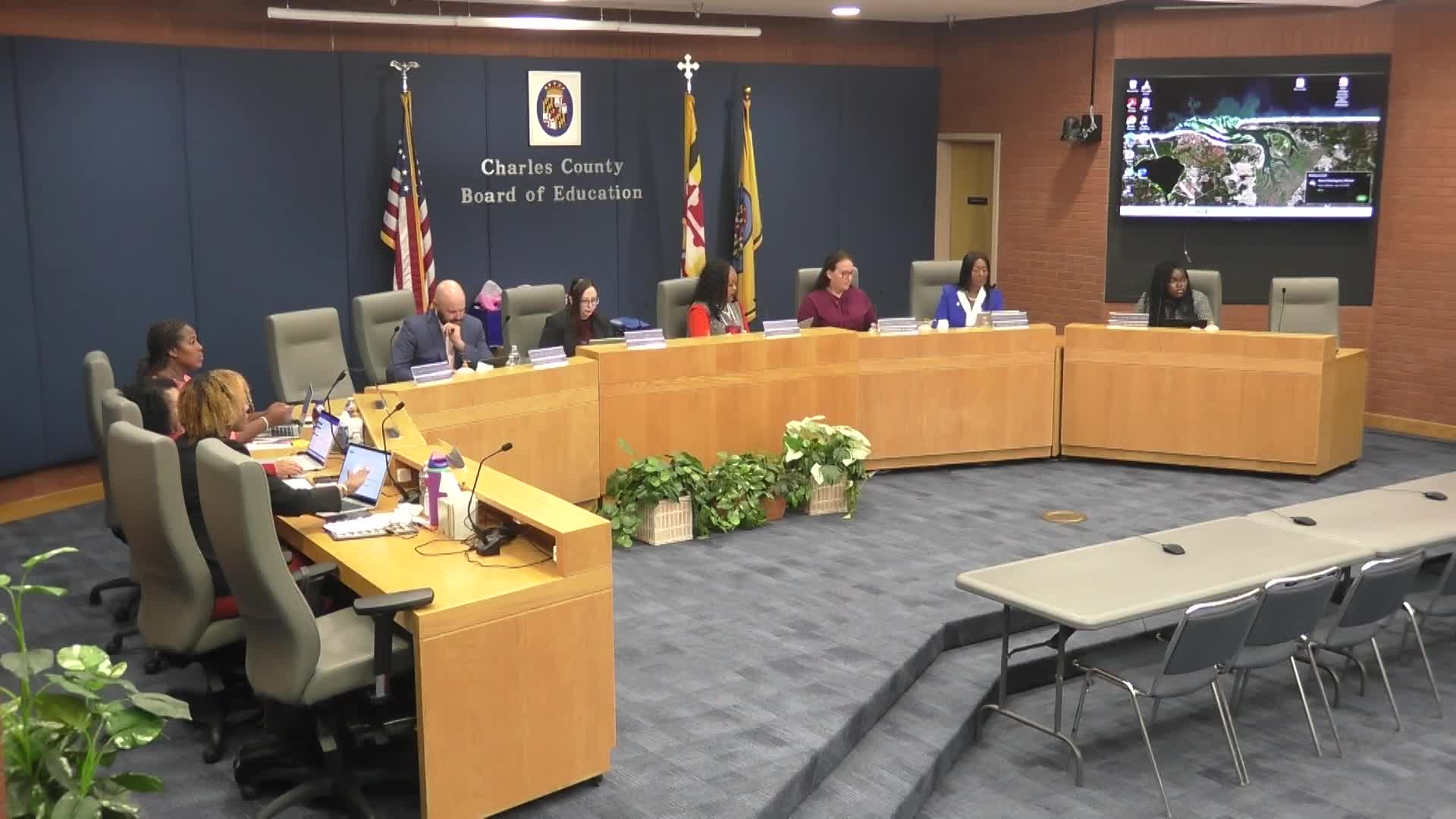
Summary
Teachers and union leaders told the Charles County Board of Education on Oct. 14 that the district’s mandated collaborative‑planning requirement, as currently implemented, is increasing teacher workload, adding paperwork and creating scheduling problems for specialists and principals.
Union leaders and many teachers used the board’s Oct. 14 meeting to press for revisions to the district’s collaborative‑planning rollout, saying the current implementation has increased paperwork, reduced flexible planning time, and placed logistical burdens on principals and central office staff.
EACC president Sean Heil described results of a quick survey his group conducted of 243 educators about collaborative planning: roughly 55 percent of respondents cited benefits such as shared lesson development and vertical planning, but 24 percent said there were no benefits, and nearly 39 percent cited lack of time as a core concern. Heil and other union representatives said mandated 30‑minute collaborative blocks are sometimes scheduled when partners are not available, force teachers to work before or after the student day to meet expectations, and create extra documentation burdens that teachers say take time away from planning and instruction.
Multiple teachers and union representatives during public forum and staff presentations described the same themes: the initiative can be valuable when implemented in flexible ways but is currently being run in a one‑size‑fits‑all manner in some schools. Key concerns attendees cited:
- Time and scheduling: Some elementary specialists and teachers on campuses with different schedules lack matching planning periods, which forces collaboration into unpaid time or the loss of subject‑specific planning. - Paperwork and perceived micromanagement: Teachers report multiple documentation demands to demonstrate compliance with collaborative planning, which some say reduces actual collaborative work. - Uneven implementation: Schools with block schedules or prior collaborative practice (some high schools and middle schools) report more success; others struggle with staffing and coverage.
District staff and board members acknowledged the concerns. Several board members urged clearer guidance, better training for facilitators of collaborative meetings, and a pause or reexamination of timelines until the district can provide consistent facilitator training and more flexible scheduling options. Sean Heil and other teachers urged the board to allow local flexibility and to remove duplicative paperwork requirements.
Why it matters: Teachers said the current implementation is adding to existing workload pressures and contributing to attrition concerns. The board heard multiple public speakers — classroom teachers, veteran educators and union leaders — say that without course corrections the program risks undermining the very instruction it intends to improve.
What’s next: Board members asked staff to work with union leaders, principals and the Office of Teaching and Learning to revisit the structure and documentation for collaborative planning, to create facilitator training, and to consider pilot modifications (e.g., fewer mandatory days or lighter documentation) that preserve the aim of shared planning while reducing the burden on teachers.