Get email alerts on the Land Use Planning topic
No spam. Unsubscribe anytime.
Council hears downtown master plan update; staff asks whether to include building‑type standards
Summary
City planners described a downtown master plan and objective design standards project centered on a form‑based code approach and asked the council whether ‘building type’ standards should be included to guide infill housing and mixed‑use development.
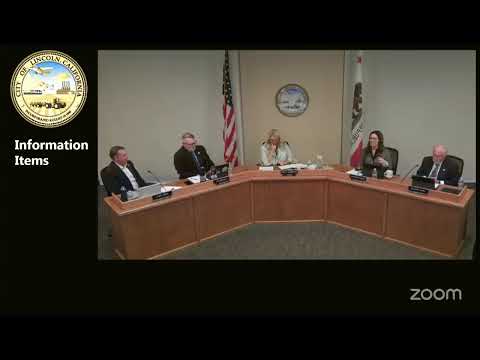
Efren Sanchez, senior planner with the City of Lincoln Community Development Department, updated the City Council on Oct. 14 about the downtown master plan and objective design and development standards (ODS) project and asked whether council wants building‑type standards included in the ODS. The item was presented for direction and discussion; no ordinance or adopting vote was taken.
Sanchez described the project timeline and scope, saying the master plan is intended to “provide the tools to transform downtown into a recognizable center and vibrant destination” and that an ODS using a form‑based approach would trade pure use‑based zoning for standards that emphasize building form, pedestrian frontage and a predictable design outcome. “By including building type standards, form based ODS can allow a range of house‑scale buildings, such as single family homes, duplexes, fourplexes, cottages, courts, pocket neighborhoods,” Sanchez told the council, explaining those standards can enable a mix of unit sizes and price points while maintaining neighborhood scale.
Why it matters: staff and consultant work seeks to encourage walkable mixed‑use infill, reduce approval uncertainty for certain housing types and comply with state housing streamlining requirements that apply to some forms of ministerial, objective standards. Sanchez said a master plan with ODS is generally faster and less expensive than a specific plan while still shaping predictable design and development outcomes.
Council questions and issues: council members asked how form‑based rules would interact with existing industrial or automotive uses downtown and whether the city can treat older auto‑oriented uses as legally nonconforming so they remain but cannot be reestablished once closed or redeveloped. Planning staff said those use‑specific zoning changes would be a parallel or follow‑up code‑amendment process; council can direct staff to pursue code changes or moratoria (as was done previously for drive‑through uses) to prevent incompatible new uses in targeted downtown parcels. Members also asked whether sufficient vacant or underutilized parcels exist to support infill; staff said consultants identified approximately eight to ten candidate parcels and noted form‑based codes also apply to underutilized or redevelopment sites, not only vacant lots.
Building‑type standards question: the planning commission previously recommended including building‑type standards, and Sanchez asked the council whether to include them in the draft ODS. Proponents said building types provide certainty to developers and the community about form and scale; potential drawbacks cited include perceived inflexibility for some building products. Sanchez said staff had consulted comparable communities such as Davis on implementation.
Next steps: staff will continue public outreach and stakeholder workshops, prepare an administrative draft and subsequent public review draft, and return to council with draft materials and an environmental document in 2026. Council did not adopt regulations or take a formal vote on the ODS at the Oct. 14 meeting; the item remains at the project development and outreach stage and staff requested feedback on whether to incorporate building‑type standards into the ODS.
AI generated
The text on this page is AI generated. Summaries, highlights, analysis, and video transcripts are all produced from the original source material.
AI can make mistakes, so if you spot one, and we will fix it for everyone.
Note: the source content is unaltered by us. Any content source we link to, be it a video, an audio recording, or a document, is presented exactly as its publisher released it. That publisher is usually a government body, sometimes an individual official or another organisation.