Get Full Government Meeting Transcripts, Videos, & Alerts Forever!
Get email alerts on the Employee Benefits topic
No spam. Unsubscribe anytime.
Muskego committee approves health‑plan changes and maintains proposed raises after debate
Summary
Committee approved design changes to the city’s employee health plan to lower near‑term cost pressure while maintaining the proposed 4% total raise (2% Jan, 2% July). Changes include a higher employer‑side deductible buy‑up, modest employee out‑of‑pocket increases in some proposals, prescription copay adjustments and a family‑advantage incentive.
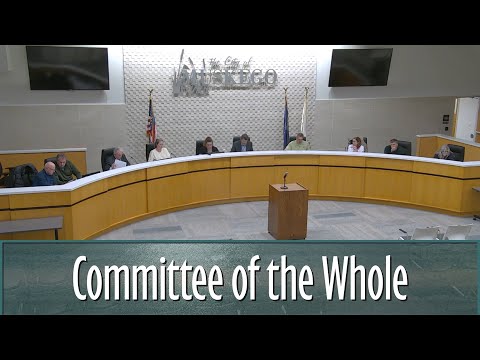
Muskego’s Committee of the Whole on Oct. 14 approved a package of proposed health‑plan design changes intended to reduce the city’s projected 9.5% renewal increase and maintain pay increases in the 2026 operating budget.
The council voted to accept proposals that include raising the city’s insured deductible level (to a higher base the insurer prices more favorably), increasing employer HRA funding to offset the larger deductible, raising some member out‑of‑pocket deductibles as an optional second step and changing prescription and visit copays. The committee also approved a voluntary “family advantage” cost‑sharing program intended to encourage employees to move eligible dependents off the city plan when practical.
Why it matters: The city’s insurer renewal presented a roughly 9.5% cost increase for 2026. The changes approved by the committee are projected by the city’s consultant to lower the budgetary impact by roughly $257,000 in combined savings across measures (the staff presentation cited figures of about $45,000 savings from changing the base plan/HRA, $28,000 from modestly higher employee deductibles, and about $90,000 from copay/prescription design changes plus the potential $94,000 if employees shift to family advantage under assumptions in the consultants’ modeling).
Key items approved
- Move the insured deductible from $3,000/$6,000 (single/family) to $5,000/$10,000 and increase HRA funding to offset the change, producing an estimated $45,000 in plan‑level savings without employee cost impact. - Optionally raise employee out‑of‑pocket contributions for single/family as a second step (e.g., raising employee deductible contributions to $500/$1,000) — modeled to save another $28,000 — but council discussion favored avoiding excessive employee cost shifting. - Adjust office‑visit copays (e.g., primary care and specialists), urgent care, and prescription tiers; the consultant estimated these copay/design changes would yield the largest single savings (approximately $90,000 across plan models). - Implement a Family Advantage program to reimburse certain out‑of‑pocket costs and offer up to $100 per family member per month to encourage eligible employees to move dependents to a spouse’s plan when it reduces overall cost; consultant model assumed moving 7 families could yield about $94,000 in savings.
Council debate and final action
Alderman (name recorded) expressed concern about shifting costs onto employees with modest wages and proposed keeping some employee out‑of‑pocket limits unchanged. Alderman Schrader, Alderman Wolf and others argued the changes were necessary to preserve financial sustainability and the ability to offer raises.
A motion to keep the mayor’s recommended health plan changes as presented passed (voice vote followed by a formal tally), and a separate motion to amend the package by removing parts of the proposal (moving only some elements) failed for lack of a second. The committee then recorded a voice vote approving the mayor’s recommendations as the committee’s position for budget preparation.
Pay increases
The mayor’s proposed pay schedule — 2% in January and 2% in July, for a total 4% increase in 2026 — remained in the draft budget and was not rescinded. The mayor and several aldermen emphasized they would still review compensation benchmarking separately.
Ending
Staff will circulate detailed plan comparisons to employees and department heads and work with department leadership to explain how the changes affect particular employees. Councilors tasked staff to return any requested clarifications prior to final budget adoption.