Get Full Government Meeting Transcripts, Videos, & Alerts Forever!
Get email alerts on the Outdoor Dining Legislation topic
No spam. Unsubscribe anytime.
Working group flags pros and cons of city bill to widen outdoor‑dining rules; members urge targeted fixes
Summary
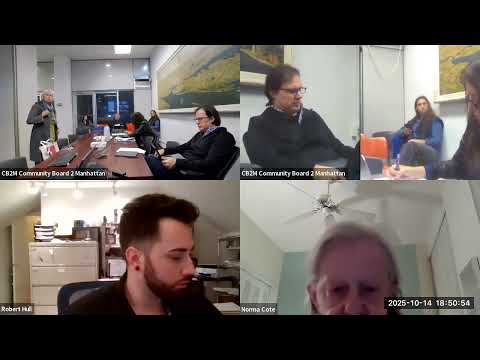
At the Sept. 10 working group meeting members discussed proposed city legislation that would expand who can apply for outdoor dining permits and remove seasonality for roadway cafes. Committee members said some changes could be helpful but urged targeted rules and protections for narrow sidewalks and pedestrian safety.
Members of the Manhattan City Outdoor Dining Working Group discussed draft legislation — introduced to the City Council in September 2025 and referred to the transportation committee — that would widen eligibility for outdoor dining permits, remove or relax seasonal limits on roadway cafes, and streamline the review process for small food retailers.
Why it matters
The proposed changes could let more food retailers (including some grocery stores and wholesale food sellers) apply for sidewalk or roadway seating and could allow roadway cafes to operate beyond the current seasonal window. Working group members said the potential benefits for businesses must be weighed against pedestrian safety, sidewalk obstruction, and the cumulative effects of different curb uses.
What the committee said
Committee members welcomed the opportunity to comment but cautioned that a single, citywide rule might not work for every neighborhood. They flagged three areas for City Council and DOT attention:
- Clarity on which operators may apply: A number of proposed words in the draft — for example, allowing wholesale bakeries, bodega‑style food sellers or grocery stores to apply — need clearer definitions and safeguards so that applicants preparing packaged or pre‑made food are treated differently from full‑service restaurants.
- Sidewalk and roadway safety: Several members said day‑to‑day enforcement and site plan accuracy already present challenges. Committee members said they would not support removing seasonal protections without commitments for better coordination with DOT on paving, active traffic lanes and truck routes.
- One‑size‑fits‑all rules: The committee noted that sidewalk widths, tree pits, curbline features and transit kiosks vary block to block. Members urged that any change include borough‑ or corridor‑specific flexibility, clear rules for primary building entrances and pedestrian ramp clearances, and stated measurement methods (for example, measuring to the edge of the tree pit or vault rather than to the tree trunk).
Operational concerns, enforcement and next steps
The group also discussed enforcement realities: multiple members said barriers and planters sometimes create new obstructions rather than removing them, and that service aisles previously used as a justification for barriers are often not present in the new program. Several working group members recommended a targeted review of the role of barriers and whether smaller one‑row café layouts against a building should be treated differently from two‑row configurations that extend into the clear path.
The committee agreed to circulate technical comments to Council staff and DOT, emphasizing a need for consistent measurement rules, better DOT/agency coordination for roadbed installations, and a refusal to remove basic pedestrian protections citywide without guardrails for high‑traffic corridors.
Ending
The working group did not take a formal vote on the draft legislation but asked staff to prepare comments for the City Council’s transportation committee and to recommend narrow, implementable changes rather than a blanket expansion of eligibility and seasonality.