Get Full Government Meeting Transcripts, Videos, & Alerts Forever!
Get email alerts on the County Budget topic
No spam. Unsubscribe anytime.
County administrator presents $116 million “next step” budget, flags health insurance and capital choices
Summary
Jefferson County Administrator Michael Lucky presented the proposed 2026 operating and capital budget, describing it as a “next step” budget and warning of fiscal pressure from health-insurance and wage increases, limited sales-tax growth and lower-than-expected net new construction. The board set public hearings and schedule for final adoption.
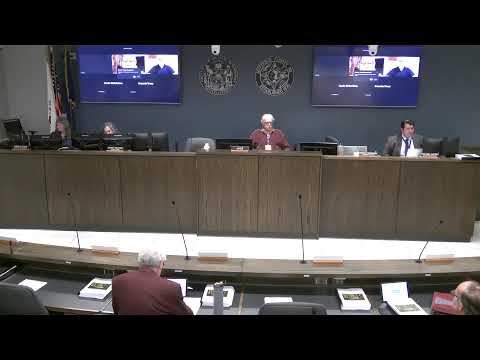
Jefferson County Administrator Michael Lucky presented the proposed 2026 operating and capital budget to the Jefferson County Board of Supervisors on Oct. 14, outlining a $116,038,688 countywide expenditure plan and recommending a mix of modest new debt and targeted use of fund balance to pay for capital projects.
Lucky told the board the package is a "next step budget," building on prior adjustments and aligning spending with the county’s strategic plan. He said the overall countywide tax levy is about $34.4 million and that the proposed mill rate of 2.7391 represents a 2.34% decrease from 2025, while the levy increase is driven largely by debt and debt-service timing.
The budget summary and nut graf: Lucky said the proposed budget includes a wage adjustment and a substantial increase in employer health-insurance contributions to hold the county’s percentage contribution steady. He told the board the budget is balanced but cautioned that rising health-insurance costs, step increases and constrained revenue growth will require vigilance in 2027 and beyond.
The most pressing drivers, Lucky said, are health insurance and debt. He explained the county must increase its employer contribution to keep pace with the state maintenance plan rate: "Last year ... our contribution percentage was 78.75% of S and P. The S and P amount went up 13% this year. So in order to maintain that 78.75%, we had to likewise increase our contribution by 13% or so." He quantified the county cost as about $943,000 for health-insurance contribution changes and said a 2% wage adjustment adds roughly $900,000.
On capital funding, Lucky outlined a funding approach that combines a limited bond issue and use of unexpected utility aid tied to a liquefied natural gas facility. He said the county received $750,000 unexpectedly from utility aid tied to an LNG facility in Axonia and recommended issuing about $800,000 in debt and using the $750,000 toward capital to preserve a net mill-rate reduction. He noted that authorizing long-term debt requires a three-quarters vote of the board (23 affirmative votes) and that a roll-call vote on debt will occur at the public hearing Oct. 28.
Lucky also reviewed individual budget elements: proposed steps and wage adjustments; a recommended restructuring that defunds some vacant positions (county engineer/planning position and a risk manager/safety officer) while adding or restoring other positions such as human-resources generalist, MIS systems administrator and additional communications/dispatch positions for the sheriff's office. He described human-services program staffing requests that are funded through program billing and noted growth in the children’s long-term-services caseloads.
On reserves, Lucky said the county’s unassigned fund balance stood at about $24 million as of Dec. 31, 2024, which is above the board’s two-month required minimum but below the three-month target. He told the board a Government Finance Officers Association (GFOA) study is under way to assess the fund-balance policy and that preliminary results suggest the county may be holding amounts above what the GFOA would recommend.
Lucky warned of uncertain revenue lines: sales tax was budgeted conservatively at $9 million despite year-to-date volatility that, if annualized, could approach $9.4 million. He called attention to the state-shared revenue changes, utility aids and a potential state bill that could clarify utility-aid treatment for the LNG facility.
Board members asked clarifying questions during and after the presentation. Supervisor Brogman asked for the square footage of a mechanical room referenced in a separate facilities capital request (noted later in the meeting as approximately 2,500 square feet). The administrator closed by reminding the board of the Oct. 28 public hearing (which will include the roll-call vote on debt) and the final budget vote on Nov. 12.
Ending: Lucky said the package balances multiple priorities while acknowledging that 2027 and 2028 may require additional difficult choices if revenue or cost trends worsen. He encouraged committees and department heads to refine their five-year capital plans and flagged health-insurance and staffing as recurring issues for the coming cycles.