
Wyoming task force reviews draft to give cities, towns authority over historic-horse-racing simulcasts
Get AI-powered insights, summaries, and transcripts
Subscribe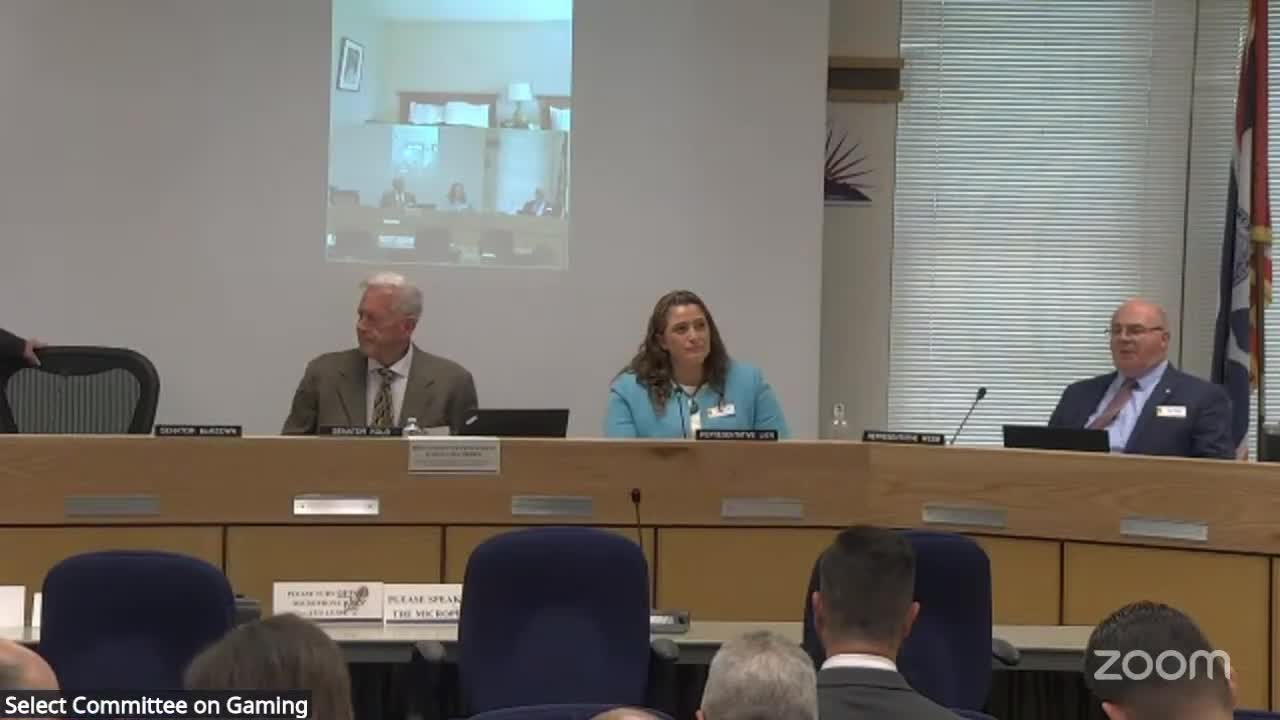
Summary
A Select Committee on Gaming working draft would let municipalities — not just counties — approve, condition and revoke historic-horse-racing simulcast permits; stakeholders pressed the committee to clarify notice rules, appeals and a controversial 100-mile restriction.
The Select Committee on Gaming reviewed working draft 26 LSO 00145 on local control for pari-mutuel simulcasting and historic horse racing during a public meeting in Evanston, where Legislative Services Office staff walked members through a revised bill modeled on House Bill 185.
The draft would create a new statutory section within Title 11, Chapter 25 to treat simulcasting as a specific type of pari-mutuel permit and to require local approval by the governing body where simulcasting is conducted. Tamara (LSO attorney) summarized the bill as one that "generally relates to pari mutuel wagering" and said it "requires approval by a city, town, or county for the issuance of a simulcasting" permit.
Why it matters: The proposal shifts local control from a county-only model to a municipality-or-county model for permits, adding procedural requirements for notice, hearings and written findings and adding explicit limits on when local governments may revoke or deny renewals. The change would affect how operators of historic-horse-racing (HHR) terminals and simulcast facilities apply, where they locate terminals, and how adjacent jurisdictions and service providers (law enforcement, prosecution, social services) weigh local impacts.
Major elements of the draft and committee discussion
- Local approving authority: The bill defines "local approving authority" to mean the governing body of a city, town or county that has jurisdiction over the location where simulcasting will occur. Under the draft, if simulcasting is inside a municipality, the city or town must approve; if outside corporate limits, the county must approve. Tamara explained that the draft "brings in cities or towns" where existing law previously spoke only to counties.
- Application and public-notice requirements: The draft would require applicants to file with the local approving authority, identify the specific location and number of historic-horse-racing terminals, pay publication costs and submit renewals 90 days before expiration. Local authorities would be required to prepare and publish notice once a week for two weeks and post the notice online; witnesses and local officials urged the committee to modernize the "newspaper of local circulation" requirement because several communities no longer have local print papers.
- Conditions, revocation and appeals: Local authorities may impose "reasonable conditions" on approvals (hours, terminal placement, negotiated conditions) and may revoke or deny renewal only for "good cause," limited to a short list: breach of conditions not cured within 10 business days, a commission notification of violation of gaming or criminal law, or failure to commence simulcasting within two years (with a possible one-year extension for good cause). The draft allows a simulcasting permit holder to appeal a local denial, revocation or renewal denial to district court; LSO staff noted that the draft does not extend the same statutory appeal right to new applicants.
- Transfers and ownership: A Travel Committee amendment makes transfers of location subject to local approval and treats such transfers as renewals (deniable only for good cause). Committee members pressed for clarity about how transfers of ownership, membership changes in corporate permittees, and transfers of location should be handled. The Wyoming Gaming Commission director said that in practice a change in ownership or membership does not automatically reset the term of a permit.
- Definitions, stewards and repeal language: The working draft reorganizes definitions and repeals language in the existing definition section. It removes an unclear requirement that one steward supervise each simulcast location and clarifies steward requirements apply to live pari-mutuel events.
- 100-mile rule: The earlier bill had repealed the statutory 100-mile restriction that limited simulcasting within 100 miles of a live pari-mutuel event. LSO staff flagged where the rule could be reinserted; industry speakers were sharply divided. Eugene Joyce of Wyoming Horse Racing LLC said, "The 100 mile rule is antiquated," arguing the market and business model have changed; other operators and a member of Cowboy Racing urged caution and said the rule can protect local racing purses.
Stakeholder positions and practical concerns
- Local governments: Matt Hall, legislative director for the Wyoming Association of Municipalities, said local governments "must have a decisive role in approval, renewal, and when warranted, revocation of every permit," and urged single-approving-body authority so long as adjacent jurisdictions get formal notice and an opportunity to comment. The Wyoming County Commissioners Association asked that counties retain a meaningful role, noting counties often provide law enforcement, prosecution and behavioral-health services that congregate beyond municipal borders.
- Gaming commission: Nick (Director, Wyoming Gaming Commission) told the committee that commission staff already inspect sites, review floor plans and solicit local comment during administrative review. He urged local officials to forward any complaints to the commission so enforcement staff can investigate.
- Industry operators: Operators described rapid growth in purses and tourism-driven revenue tied to HHR and simulcast terminals. Testimony documented recent investments: operators said purses at some venues rose from about $1.9 million to a projected $3 million year-to-year and that projects such as Swan Ranch and upgrades at Evanston involved multi‑million dollar capital commitments. Operators urged time to coordinate a shared approach to saturation, machine limits and transfer rules; several promised to present joint options to the committee within about 30 days.
Procedural questions raised
Committee members and witnesses asked the LSO to clarify several drafting points before the committee advances legislation: how to write notice language when a "newspaper of local circulation" no longer exists in many communities; whether contested-case hearing language was appropriate when cities and towns are not agencies under the Wyoming Administrative Procedure Act; precise effects of the draft's effective date on existing permit holders; and how transfers of location should be distinguished from transfers of ownership.
What the committee asked for next
The committee carried public comment and asked LSO and stakeholders to refine language: a narrower bill focused on local approval and revocation (without folding in fiscal allocations or other complex changes), alternative notice language for areas without local newspapers, and clearer drafting on appeals and transfers. Committee co‑chairs asked operators to coordinate on proposals for managing growth (saturation / machine limits / race-day links) and to share those proposals with the committee within the next month. The committee also scheduled further consideration of a related moratorium draft for the following day.
Ending
No formal legislative action or vote occurred during the hearing. The committee recessed after public comment and directed staff and stakeholders to return with clarified draft language and additional options for limiting growth and protecting local interests.