
Spectrum Gaming tells Wyoming committee HHR market has grown; urges state money‑laundering law as tribes warn of lost revenue
Get AI-powered insights, summaries, and transcripts
Subscribe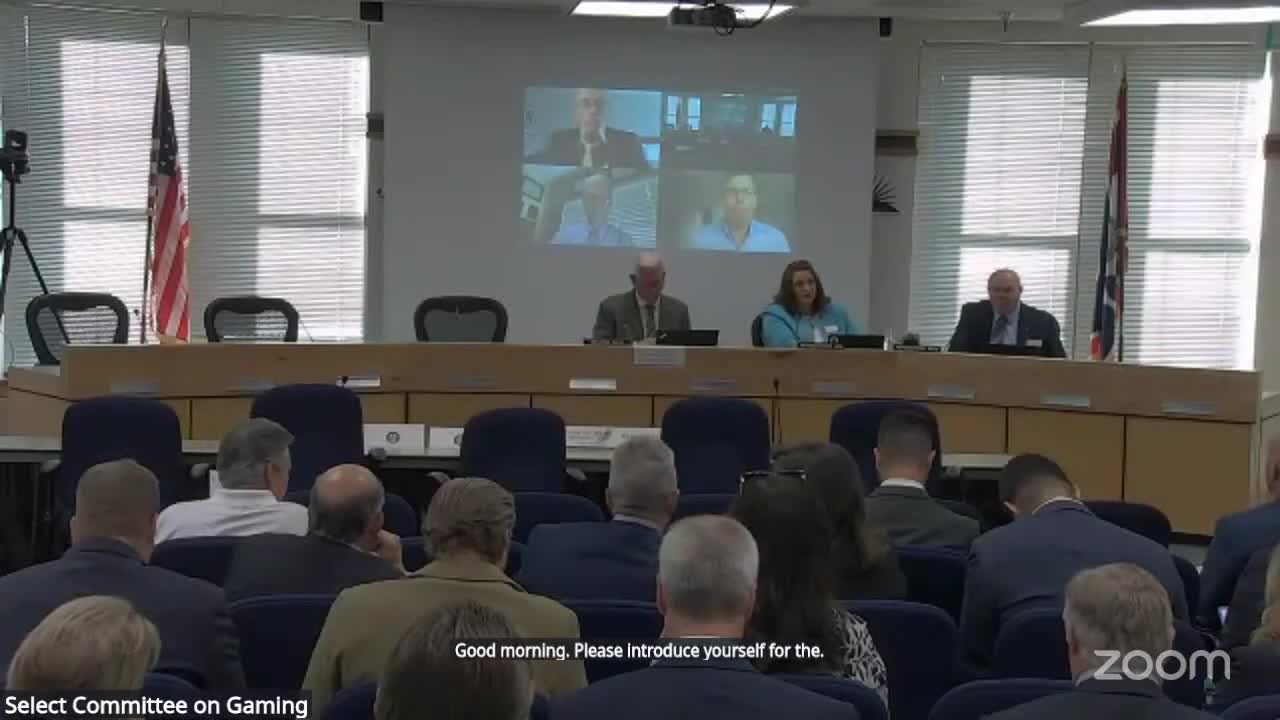
Summary
Spectrum Gaming told the Select Committee on Gaming on Aug. 7 that Wyoming's historic horse racing market has grown substantially and recommended the state adopt a criminal anti‑money‑laundering law and other regulatory changes.
Spectrum Gaming told the Select Committee on Gaming on Aug. 7 that Wyoming's historic horse racing market has grown substantially in the past year and that the state should strengthen its anti‑money‑laundering and regulatory tools to keep enforcement effective.
The consulting firm estimated there is roughly $400 million of wagering revenue the state could capture from HHR and related markets, driven in part by new and improved properties and by patrons shifting from neighboring population centers into Wyoming. "We felt that there was about $400,000,000 of revenue available in the marketplace," Spectrum Senior Vice President Matthew Robe said during his presentation to the committee. Robe said statewide HHR revenue rose from about $14.4 million in June 2024 to more than $17 million in June 2025, an increase he described as roughly 18 percent over 12 months. He noted the Swan Ranch property in Cheyenne contributed strongly: the firm recorded nearly $2.4 million of HHR revenue there in June 2025 and about $1.65 million two months after it opened in August 2024.
Why it matters: Spectrum's market figures provide a data point for lawmakers weighing whether to further authorize, tax or restrict online or expanded forms of gaming. The firm also outlined regulatory gaps that it said make enforcement and oversight harder as gaming grows.
Key recommendations: Spectrum senior analyst Ted Grove, who led the report's law‑enforcement and regulatory review, recommended five near‑term priorities for Wyoming regulators and legislators: enact a state criminal money‑laundering statute; clarify state illegal‑gambling statutes (including statutory definitions used as exemptions); remove a statutory mandate that would automatically license sports‑wagering vendors licensed in three other jurisdictions and instead require a full Wyoming suitability review; adopt flexible licensing time frames so the gaming commission can extend review deadlines for complex applicants; and strengthen self‑exclusion compliance incentives, including consideration of forfeiture rules for winnings obtained by excluded persons.
Grove said the recommendations reflect common industry practice and federal expectations. "Most casinos in the United States must comply with stringent federal AML requirements," Grove told the committee. He noted that, under federal rules, gambling businesses that generate more than $1 million in gross gaming revenue are treated as financial institutions subject to Bank Secrecy Act obligations. Grove recommended a Wyoming statute modeled on a New Jersey law introduced to the Wyoming Legislature this year.
Tribal reaction: During the public‑comment period, Travis McNeven, representing the Northern Arapaho Business Council, told the committee tribal gaming operations on Wind River Reservation have experienced material declines since HHR expanded in Wyoming. "Foot traffic is down roughly 66%" versus a 2012 baseline, McNeven said; he also told the committee tribal gaming revenue is down about 34% and estimated about 500 fewer jobs across tribal operations, hotels and support services since 2012. McNeven urged the committee to visit tribal properties and to consider tribal impacts when evaluating new forms of gaming such as iGaming (internet‑based casino play).
Spectrum on tribal facilities and iGaming: Robe and Grove said tribal casinos were examined informally while Spectrum staff toured the state, but that tribal facilities were not regulated by the Wyoming Gaming Commission and therefore fell outside Spectrum's formal scope. "Our mandate was from the gaming commission, which does not regulate or control the tribal properties," Robe said. Grove added that if tribes were to seek to operate casinos on newly purchased private land, federal processes at the Department of the Interior and the National Indian Gaming Commission would determine whether those lands could be taken into trust and become tribal trust lands eligible for Class III gaming under IGRA.
On online gaming, Spectrum provided an estimate of iGaming's potential at full build‑out, using state benchmarks and per‑capita comparisons with other markets. The firm's range for Wyoming was roughly $93 million to $138 million annually at full build‑out, depending on adoption and tax rate assumptions, Robe said. Spectrum observed iGaming can produce tax revenue and some in‑state jobs in technical and customer‑service roles but stressed online play creates different economic effects than brick‑and‑mortar casinos.
Licensing and background checks: Committee members and commission staff discussed licensing deadlines and criminal‑history checks. Grove and Wyoming Gaming Commission Executive Director Nick Laramendi described problems when mandatory statutory timelines (90 days for sports wagering decisions; 60 days for some skill‑game licenses) expire before FBI criminal‑history checks arrive. Laramendi said the commission sometimes issues conditional licenses because of federal processing delays and suggested statutory flexibility allowing the commission executive director to extend time frames for good cause.
Legislative follow‑up: Committee staff and members said a draft money‑laundering bill has been prepared for committee consideration. Legislative Service Office attorney Tamara Reveley told the committee a bill draft and fact sheets from other states were available for discussion at an upcoming meeting; Senator Cope and gaming‑commission staff also said a money‑laundering bill had been before the Legislature earlier in the year but did not become law.
What the committee did not decide: There was no committee vote on new legislation during the Aug. 7 session. The Spectrum presenters left the committee with a list of implementation options and requested that lawmakers consider statutory changes to improve investigatory tools and licensing procedures.
At a glance: Figures and sources mentioned to the committee - Spectrum estimated an available market of about $400 million of HHR‑related revenue; June HHR statewide revenue rose from ~$14.4 million (June 2024) to >$17 million (June 2025). - Swan Ranch HHR revenue: about $1.65 million (Aug 2024, two months after opening) and nearly $2.4 million (June 2025). (Source: Spectrum Gaming presentation.) - Spectrum iGaming full build‑out estimate: roughly $93 million to $138 million annually (banded estimate from Spectrum). - Tribal impacts (Northern Arapaho): foot traffic down ~66% (baseline 2012), gaming revenue down ~34%, ~500 jobs lost (figures presented by Travis McNeven of the Northern Arapaho Business Council). Committee members asked for documentation and offered invitations for in‑person visits to tribal properties.
Committee reaction: Lawmakers pressed presenters on criminal‑history processing times, the meaning of tribal sovereignty for regulation of reservation gaming, and whether the state should adopt an AML statute to give local investigators prosecutable tools. Commission staff said statutory flexibility on licensing time frames and clearer state money‑laundering law would aid enforcement.
What comes next: Committee staff circulated a bill draft and state comparisons for an anti‑money‑laundering statute; the committee scheduled follow‑up discussion that could include statutory amendments to licensing deadlines and additional regulatory standards for self‑exclusion and forfeiture.
Sources: Spectrum Gaming presentation to Select Committee on Gaming, Aug. 7, 2025; public comment from Travis McNeven (Northern Arapaho Business Council); remarks from Ted Grove and Matthew Robe (Spectrum Gaming); testimony and counts provided by Nick Laramendi, executive director, Wyoming Gaming Commission; and committee staff notes.