Get Full Government Meeting Transcripts, Videos, & Alerts Forever!
Get email alerts on the Online Sports Wagering topic
No spam. Unsubscribe anytime.
Industry and state officials press for regulated online sports market; responsible‑gaming funding and county distribution questioned
Summary
Industry representatives urged the committee to focus on bringing illegal offshore wagering into the legal market; state lottery and a responsible gambling coalition described how funding is generated and spent and raised questions about fund structure and county allocations.
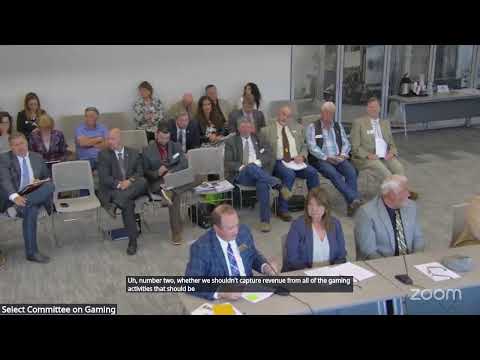
Industry and public‑health witnesses gave the committee a combined briefing on online sports wagering markets, illegal offshore operators and the state's responsible‑gaming funding and delivery.
Dave Picard of the Sports Betting Alliance told the committee that the regulated online sports‑wagering market protects consumers through geofencing, know‑your‑customer checks and responsible‑gaming tools; he urged state action to reduce the large illegal market that remains available online and offshore. "There are hundreds upon hundreds" of unregulated operators accessible online, Picard said, and he recommended further education and enforcement to move consumer play to regulated operators taxed at 10% of net proceeds.
On prevention and treatment funding, John Klontz, CEO of the Wyoming Lottery Corporation, and Robin Medina, the lottery's responsible‑gaming lead, described the state's existing coalition model. Lottery funds for problem gaming come from unclaimed lottery prizes (the lottery's unclaimed prize account) and the statute that directs the first $300,000 of online sports wagering revenue each fiscal year to the Department of Health for problem‑gambling grants; those funds are routed to counties that accept them for local prevention and treatment programs. Klontz said the lottery's program has pursued accreditation, training and a statewide hotline; Medina described coalition uses including training, conference attendance and certification of treatment providers.
Committee members noted the current patchwork of funding: the Department of Health is a pass‑through for a $300,000 pool that counties can accept or decline; several counties declined those funds in recent years and the unaccepted amounts roll forward. Jeremiah Rehman of the Wyoming County Commissioners Association described the result: in some counties the available annual allocation is modest (for example, four‑figure amounts in small counties) and the commissioners' association is discussing whether consolidating funding or expanding eligible sources would improve prevention and treatment reach.
The gaming commission's public information officer, Sarah Beth Lyon, described self‑exclusion infrastructure: people can self‑exclude via commission and operator systems; the commission's website lists a self‑exclusion form and, as of testimony, 20 Wyoming individuals were on the commission's exclusion list. She said self‑exclusion enforcement for online operators is supported by operator agreements but enforcement for skill‑based amusement games is more challenging in person and the commission is exploring compliance programs and education.
Witnesses requested future committee work on illegal operator enforcement, funding consolidation or changes, and expanded treatment resources; the committee asked staff and stakeholders to provide options and fiscal impacts.