Get Full Government Meeting Transcripts, Videos, & Alerts Forever!
Get email alerts on the Simulcasting And Hhr Zoning topic
No spam. Unsubscribe anytime.
Committee reviews bill to shift simulcasting oversight to local zoning, set terminal caps
Summary
The Select Committee on Gaming reviewed a draft bill (26 LSO160 8) that would require compliance with municipal or county zoning for off‑premises simulcasting and historic horse racing facilities, cap video pari‑mutuel wagering terminals tied to live racetrack days, and remove a standing county-approval requirement. Members debated amortization of
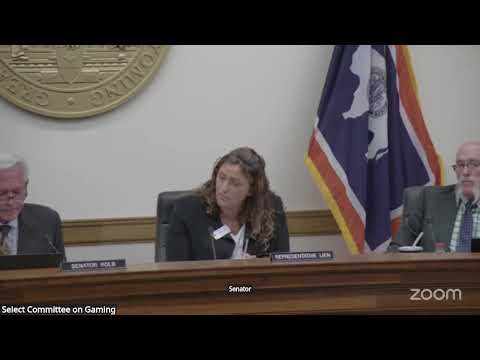
The Select Committee on Gaming on Oct. 16 considered a draft bill, identified in the meeting as 26 LSO160 8, that would make local zoning the controlling approval for simulcasting and historic horse racing (HHR) facilities and add limits on the number and issuance of pari‑mutuel wagering terminals.
Tamara (Legislative staff) introduced the draft and told the committee the bill would make local zoning regulations the primary mechanism for siting simulcasting facilities and would change several long‑standing elements of state law. "This bill draft would make it explicit" that city, town or county zoning can regulate where simulcasting facilities locate, she said, and the draft also proposed a cap tied to the number of permitted live flat‑track race days and a prohibition on authorizing new terminals while previously approved terminals remain unused.
Why it matters: The draft would shift authority from a board of county commissioners’ separate approval process to land‑use tools (zoning) that apply differently across Wyoming. Several counties do not have zoning; others use municipal zoning boards or board of adjustment processes. That creates differing local effects and prompted sustained discussion about property rights, legal risk and the practical ability of local governments to manage uses through rezoning, variances or conditional permits.
Key provisions and numbers
- Local zoning as condition for simulcasting: The draft modifies the simulcasting definition and requires an applicant to show compliance with any applicable local zoning regulation. If no local zoning applies the application would not be blocked on that ground.
- Terminal limits and use condition: New rule language in the draft would direct the Wyoming Gaming Commission to specify requirements for terminals, including (a) a prohibition on authorizing additional pari‑mutuel wagering terminals if the applicant already has authorized but not‑in‑use terminals anywhere in the state, and (b) a cap of 1,200 pari‑mutuel wagering terminals "in the state for each permitted live flat track" on which the permit holder conducts qualifying live horse racing or other pari‑mutuel events.
- Permit term and applicability: The draft retains that pari‑mutuel permits do not exceed three years. It removes the existing statutory requirement that a county commissioners’ approval be part of issuance for simulcasting permits, substituting compliance with local zoning where it exists. Existing permit holders would generally remain subject to their original conditions until permit renewal, when the new rules and zoning could apply.
Debate highlights and concerns
- Counties without zoning: Several members and county representatives warned the draft effectively grants voice only to localities that have zoning. Jeremiah Grama of the Wyoming County Commissioners Association said the bill would "force" counties without zoning to adopt zoning if they wanted a future role, and said counties prefer participation through the existing licensing/permit process because zoning applies only in unincorporated areas and offers fewer enforcement options than permit revocation.
- Nonconforming uses and amortization: The draft originally included a new amortization provision that would allow local governments to set reasonable periods to end existing nonconforming uses (a local authority could require a long phase‑out to allow recovery of investment). Several members and legal commenters flagged takings risk. Tamara said the provision would permit amortization and that the change is "one of the tools that is used in other states," while others including county and municipal representatives noted Wyoming has strong private‑property protections and that amortization provisions may lead to litigation.
- Saturation and terminal counts: Gaming staff gave commission figures showing large numbers of approved but not‑in‑use terminals across operators (examples given in committee testimony: one operator approved for 2,310 terminals with a fraction in service; another approved for 2,804 with about 1,052 in operation; a third approved for 1,289 with 1,043 in operation). Witnesses said some approvals reflect multi‑phase border resort builds and COVID-era spacing changes; industry witnesses said build‑out timing explains unused approved terminals.
- Who may operate and zoning as an economic filter: Industry and municipal witnesses urged that zoning be an objective set of land‑use rules—"where, when and how"—but not a mechanism to bar specific applicants. Cowboy Racing and others cited a 2015 state district court decision (Wyoming Downs v. Sweetwater County) that found county action could not be used for protectionist, anti‑competitive purposes.
Amendments and committee action
- On the record the committee moved and seconded the bill for continued consideration. Two amendments were offered and adopted by voice vote during the meeting: one struck the phrase "or other pari mutuel event day" from a particular definition (page 4 lines 11–12 in the draft), and the committee removed the draft's section that would have expressly authorized amortization as a method to terminate nonconforming uses (the committee struck the subsection typically cited in the draft as pages 6–7). The committee also adopted conforming language to reflect those changes.
- The task force did not adopt a final bill on the floor. Members agreed to continue discussion at a subsequent meeting to give time for additional drafting and stakeholder review.
Comments from stakeholders
- Industry: Operators opposed terminal caps and the amortization language. Kyle Ridgeway (Wyoming Downs) said, "We oppose this bill in short form," and described lengthy, local zoning and permitting processes his company used to secure build‑out approvals. Eugene Joyce (Wyoming Horse Racing LLC) called terminal caps "inhibiting to growth" and urged that the market, not a statewide cap, guide terminal counts.
- Counties/municipalities: Jeremiah Grama (Wyoming County Commissioners Association) and Dr. Mark Rennie (Wyoming Association of Municipalities, council president for Cheyenne) urged caution. Grama said counties rely on licensing authorities to impose conditions and revoke permits if needed; municipalities noted variances and board of adjustment decisions are often the on‑the‑ground mechanism for siting in cities like Cheyenne.
Where the process goes next
Committee members agreed the subject needs more work to reconcile zoning tools, licensing/permit authority, legal risk around takings, and practical effects where local governments lack zoning. Members directed staff to return with revisions and additional options for how to limit terminals, preserve local input and reduce litigation risk. No final, enacted language was produced at this meeting.
Ending note: The committee adopted targeted edits on the draft during the hearing but left open major questions about terminal caps, the legal exposure of amortization, and how counties without zoning would be affected. The task force scheduled further consideration at a later meeting.