
Choctaw County delays decision on $150,000 dispatch funding request, asks for 30-day accounting
Get AI-powered insights, summaries, and transcripts
Subscribe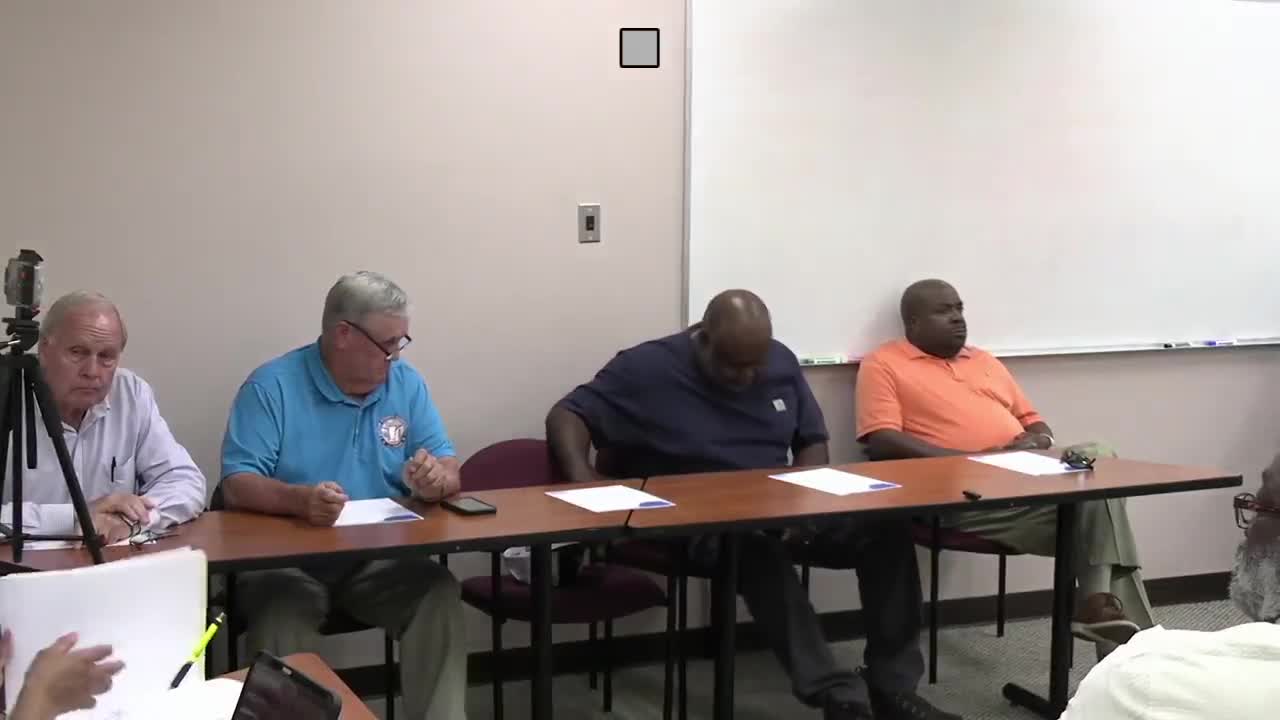
Summary
Choctaw County commissioners heard a request from the local ambulance/EMS service for $150,000 per year to support dispatch operations, including a proposed three-year contract. Commissioners declined to authorize immediate funding and directed the EMS/dispatcher group to provide a line‑item accounting within 30 days for consideration at the next,
Choctaw County commissioners on Monday heard a request from the county’s ambulance/EMS representatives for $150,000 a year to support dispatch operations and delayed action until the service provides a line‑item accounting within 30 days.
The request — described at the meeting as $150,000 per year on a proposed three‑year contract — followed discussion among EMS personnel, county commissioners and members of the county’s 9‑1‑1/dispatch leadership about response times, staffing, training and how previous taxpayer funds were spent. "They are requesting they are requesting a $150,000 a year," a county staff member in the meeting said when describing the request.
Why it matters: Commissioners and EMS leaders said the funding affects how emergency calls are routed and whether the ambulance service should continue relying on the county’s 9‑1‑1 transfer process or establish its own in‑house dispatch. Supporters of an in‑house system argued it would allow the ambulance service to dispatch the closest unit by GPS and keep callers on the line; others warned that splitting dispatch responsibilities could add transfer delay and create coverage gaps.
What happened at the meeting
- Request and prior payments: County staff said the ambulance/EMS group is asking for $150,000 a year and that the county paid $50,000 earlier in the fiscal year. The EMS representatives said the new amount would help cover staffing and operations for dispatch.
- Debate over in‑house dispatch vs. county 9‑1‑1: Rodney, speaking for EMS personnel, argued an in‑house dispatch would allow direct links to county resources and real‑time GPS monitoring (an on‑board system the speakers called AngelTrak), saying "All of the employees ... would prefer to have our own dispatch. We can kind of control it better." Others, including county officials and residents, raised concerns about call transfers and staffing levels, asking how often the county 9‑1‑1 center transfers calls and whether that transfer adds critical seconds.
- Staffing and cost questions: EMS presenters said salaries and benefits for dispatch staffing were estimated in one comment at about $146,000 per year and that two dispatchers are often required to handle simultaneous calls. Commissioners expressed skepticism about the $150,000 figure and asked for a clearer payroll and benefits breakdown. One commissioner summarized the county’s position by saying the EMS group must "provide figures" showing what prior funds paid for before any additional funds are approved.
- Funding sources and audits: EMS leadership described multiple revenue streams that support ambulance operations: billing insurance collections, a local 1¢ sales tax designated in part for EMS, and state 9‑1‑1 fees. Meeting participants said the state phone fee distribution equates to roughly $2.23 for some prepaid phones and about $1.86 for other cell service lines, and one county staffer said the county receives roughly $35,000 monthly from state 9‑1‑1 fees; commissioners requested written documentation of these figures and of prior expenditures.
- Training and operational concerns: EMS and ambulance crew members said dispatchers have received required training but that communication lapses (for example, dispatch having to re‑contact callers or relay incomplete details) have occurred and should be addressed in writing. A paramedic who identified himself as Brian said the multi‑agency emergency response in the county "works together" and praised local EMS quality while noting communication breakdowns create risk.
Action directed and next steps
Commissioners did not approve the $150,000 request at the meeting. Instead they directed EMS and the dispatcher/9‑1‑1 representatives to produce a detailed, line‑item accounting showing how prior funds were spent and a clear budget for the requested $150,000. Commissioners set a 30‑day deadline for that documentation and said they will revisit the request at the next meeting. One commissioner told the room, "They got 30 days to provide this to the next meeting." The county framed the next meeting as the point for a final decision.
Context and background
Speakers at the meeting said the ambulance service has used insurance collections plus the local 1¢ sales tax to fund operations and that some prior county support was recorded as $50,000 in the current fiscal year. EMS leaders also said the service is exploring grant options but told commissioners there are limited grants that directly supplement dispatcher salaries. Several speakers noted that audits and state requirements may drive the need for two dispatchers at certain times.
What commissioners asked for
Commissioners asked for: a) a full accounting of how the previously provided $50,000 (and any other county funds) were spent; b) a detailed budget for the requested $150,000 per year (including payroll and benefits, number of dispatcher positions, and whether the contract would fund full‑time or part‑time staff); and c) clarification of whether grants or other outside revenue were pursued to offset operating costs.
The county scheduled discussion of the request for the next meeting, after staff and EMS representatives provide the requested accounting and staffing detail.