Get Full Government Meeting Transcripts, Videos, & Alerts Forever!
Get email alerts on the Meeting Procedures Public Comment topic
No spam. Unsubscribe anytime.
Board limits public comment to 30 minutes, sets first executive session cap at 45 minutes and moves executive session to follow initial public comment
Summary
Trustees voted to limit public comment periods to 30 minutes with the option to extend, and to hold an initial executive session after the first public-comment period limited to 45 minutes, with a secondary executive session allowed if needed.
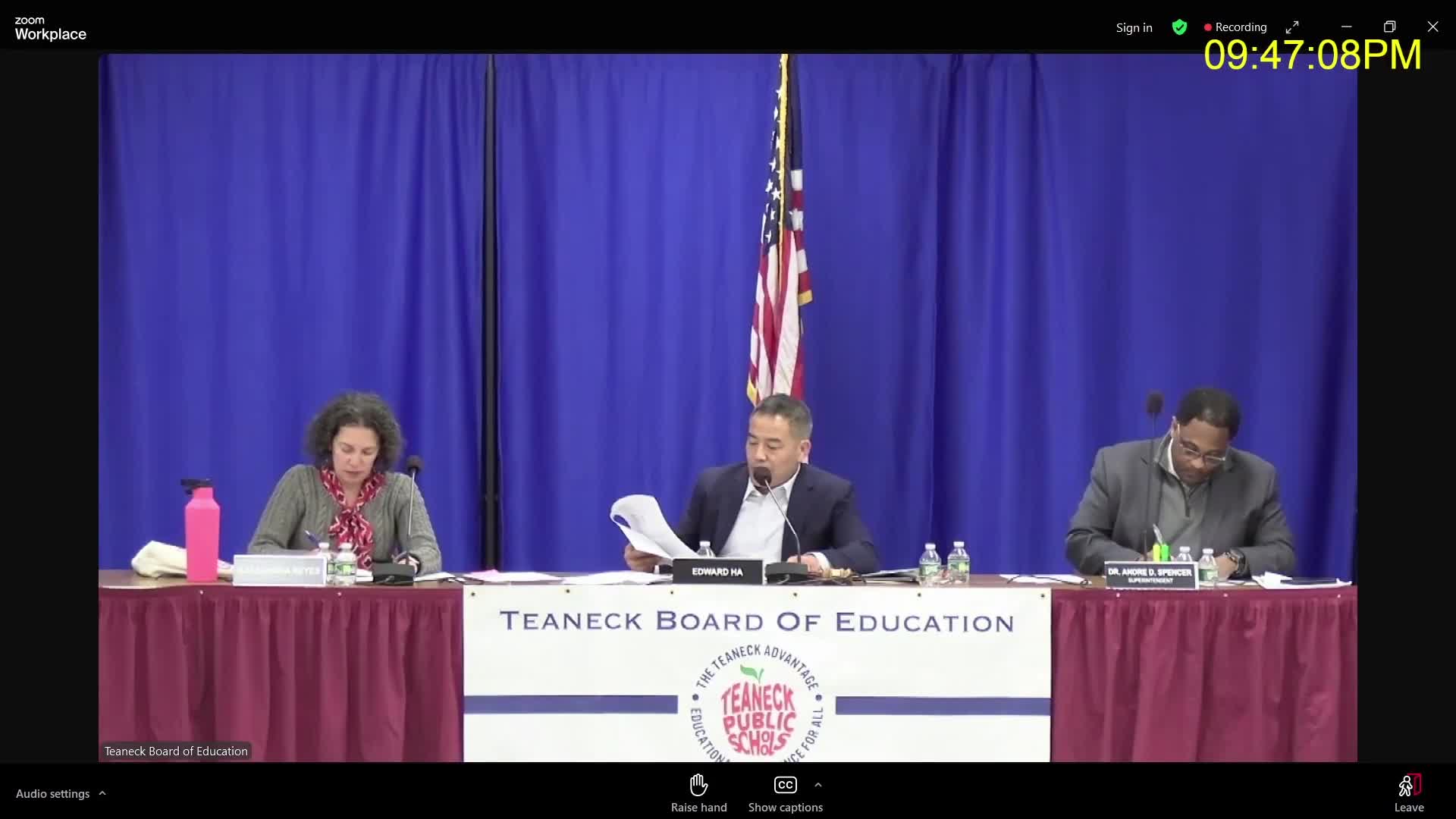
The Teaneck Board of Education voted to change the meeting flow and time limits for public comment and executive session at its Jan. 7 reorganization meeting.
Key decisions: After discussion, trustees adopted three procedural changes by roll call: 1) Move the initial executive session to immediately after the first public-comment period (agenda alignment will place public comment before that executive session). 2) Limit that initial executive session to 45 minutes; a second executive session may be held later in the meeting if needed. 3) Limit the combined public-comment periods (public comment 1 and public comment 2) to 30 minutes total, with an option for the board to extend the period by motion.
Why it matters: Those changes alter when members of the public can speak relative to executive-session deliberations and create a time cap to make meetings more predictable for attendees and staff. Trustees debated tradeoffs: some favored moving executive session earlier so public comment could feed into deliberations; others emphasized the superintendent’s report and student reports as useful context before public comment.
Votes and procedure: The board adopted the 45-minute cap by roll call (majority yes) and then approved the 30-minute public-comment limit; the transcript records a unanimous roll call for the 30-minute limit with an explicit option to extend. Board counsel and trustees noted that any policy changes affecting board procedures should be reconciled with written district policy and that the board may need to update policy language to reflect the new practice.
Next steps: Administration will implement the new meeting order and timing, provide updated agendas indicating the new sequence, and the board will ask counsel to reconcile the district’s written policies where necessary.