Get Full Government Meeting Transcripts, Videos, & Alerts Forever!
Get email alerts on the Pollinators topic
No spam. Unsubscribe anytime.
Local pollinator group asks Estacada Parks & Recreation for event space, site support
Summary
BC USA, a local pollinator outreach group, updated the Estacada Parks and Recreation Commission on recent habitat plantings, volunteer activities and opportunities to partner on summer tabling and future grant-funded plant distributions.
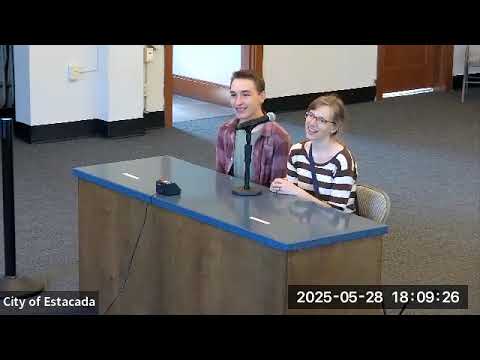
At the Estacada Parks and Recreation Commission meeting on May 28, BC USA co-chairs described the group's recent pollinator-habitat plantings, volunteer outreach and requests to collaborate with the city on summer events and park sites.
BC USA told the commission it has established two small pollinator habitat sites—one at Sixth and Main, across from the middle school, and another in front of the library parking lot—where volunteers removed turf, placed cardboard as a weed barrier and planted perennials intended to fill in as wildflowers over time. "Our goal is to create more public awareness of pollinators and how you can help support them," said one BC USA co-chair, summarizing the group's outreach aims.
The group said it also formalized an integrated pest management approach to reduce unnecessary pesticide use. A BC USA co-chair who said they started the project (identified in the meeting as Merrick) said they are graduating and stepping down; a parent and co-chair present said she expects to serve as the point person while Merrick is away for at least five years. The group described a committee of roughly "6 to 8 people" that helps run events and maintain plantings.
BC USA asked to tabling opportunities at the city's summer concerts and other events, and staff and commissioners confirmed the concerts occur every other Thursday beginning June 26 with a 6–8 p.m. timeframe. Commissioners suggested identifying park sites for additional plantings and said the city may be able to help where park space and maintenance levels fit. The BC USA co-chairs said some past plant material came through donations and local nurseries and that, when available, city grant programs have supplied plant bundles—"between 50 and 200 plants"—for options such as hedgerows or pollinator gardens. They noted timing for that type of grant follows a spring application window with plant pickup in the fall.
The group described past community planting events that drew volunteers, including children, and said volunteer maintenance (weed pulling and occasional watering while plants establish) has been their current approach. "Once they're pretty much set in, they're pretty self-sufficient," a co-chair said, noting self-sustaining native perennials reduce ongoing work for city crews.
BC USA said the city website will list updated contact information for the group within about a week as committee membership is finalized. The co-chairs asked the commission to consider parks where plantings and volunteer events could be sited and requested help publicizing tabling opportunities at summer events to increase volunteer recruitment.
Commissioners offered logistical suggestions—coordinating planting timing with grant cycles, identifying park spaces that would not create large new maintenance burdens, and treating larger park areas as potential partnership projects with clarified upkeep responsibilities. The group said it is prepared to lead volunteer planting and maintenance but would coordinate with city staff on any larger, park-scale projects.
The commission did not take formal action on the group's requests but invited follow-up coordination on event tabling, site suitability and grant opportunities.