Get Full Government Meeting Transcripts, Videos, & Alerts Forever!
Get email alerts on the Downtown Redevelopment topic
No spam. Unsubscribe anytime.
Council declines to send Weinbrenner RFQ as drafted, asks for edits and public presentations
Summary
After hearing a public pitch from a local developer and a staff review of a revised request for qualifications, the council did not approve the RFQ as presented and asked staff to return with relaxed language and an opportunity for local proposers to present.
The Common Council on Tuesday declined to approve a draft request for qualifications (RFQ) for redevelopment of the Weinbrenner boot factory building and asked staff to revise language and return in two weeks.
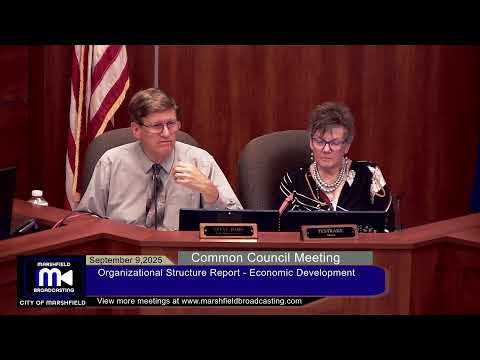
City Administrator Steve Bard summarized changes in the new RFQ, saying council had requested a shift away from low‑income housing tax credit (LIHTC)–centric proposals toward market‑rate and mixed‑use concepts. “The city is not interested in a LIHTC project,” Bard said, reflecting council direction to favor market‑rate residential and ground‑floor commercial uses in the draft.
A local developer, Jack Peslik, spoke during public comment to outline a private redevelopment concept that would convert portions of the building into residential units and mixed commercial uses. “Really, I see the building advancing and developing in 4 primary ways,” Peslik said, describing a plan that included up to 48 living units, restaurants and office or retail space and phased construction.
Why it matters: Weinbrenner is a prominent downtown property; council members expressed a shared interest in a reuse that supports the West Second Street redevelopment plan and attracts market‑rate housing and commercial activity. Several council members, however, urged language that would not exclude developers who propose all‑residential projects or different parking strategies.
Council action: Alderman Giles moved to approve the RFQ as drafted; Alderman Grama seconded. After council discussion — including requests that the document use “preferred” language rather than strict requirements to avoid deterring submissions and that public presenters such as Peslik be allowed to finish or be heard in more depth — the motion failed. Staff said it will return with revised language in two weeks and that any interested proposer, including local developers, may respond to the updated RFQ.
Process notes: Bard said the RFQ timeline in the packet left specific dates blank and that staff planned to solicit responses later this year with selection and negotiation phases extending into early 2026. The RFQ language emphasizes market‑rate residential, ground‑floor nonresidential uses and on‑site parking as preferences rather than legal requirements in the revised draft staff will bring back.