Get Full Government Meeting Transcripts, Videos, & Alerts Forever!
Get email alerts on the Land Use Sensitive Area Affordable Housing topic
No spam. Unsubscribe anytime.
Council advances removal of local sensitive-area overlay on Salvation Army parcel to allow affordable homes
Summary
On Jan. 6, 2025, Grand Haven City Council introduced a zoning-map amendment to remove a locally designated sensitive-area overlay on a two-acre Salvation Army parcel, clearing the way for a proposed sale to Dwelling Place and a community‑land‑trust model that would reserve two‑thirds of units as affordable.
Grand Haven City Council on Jan. 6 introduced a resolution to remove a locally designated sensitive-area overlay from a two‑acre parcel owned by the Salvation Army, a step the city says is necessary for the property to be developed for affordable owner‑occupied housing.
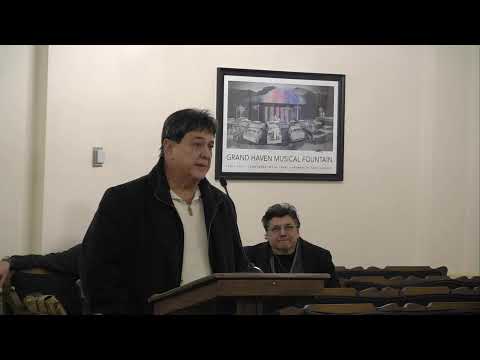
The council acted after a public hearing that included presentations from Tom Rheinsma of the Grand Haven Salvation Army advisory board and Jacob Horner, head of real estate for Dwelling Place. Rheinsma said the Army bought the land in 2001, has not used it, and in 2024 decided the parcel could be sold for development that would benefit the community. “The army and Dwelling Place have a contract for sale of the property. It includes a covenant that there will be that two thirds of the housing units will be affordable,” Rheinsma said.
Horner described Dwelling Place’s community land trust model and what “affordable” would mean under their plan. “When I say moderate income, I mean between 80 and a 120% of area median income,” Horner said, and explained the CLT retains ownership of the land and leases it to buyers to keep prices lower. He also told council the site is locally designated in the city’s overlay as a wetland but that Tri Terra’s wetland delineation concluded the area was formed by stormwater runoff and not a naturally occurring wetland.
Why it matters: Removing the local sensitive‑area overlay would change only the city’s zoning map and not state or federal wetland designations. Planning staff and the planning commission reviewed a Tri Terra delineation and recommended the overlay’s removal, which would allow the parcel—in its underlying Neighborhood Mixed Use zoning—to be developed under the usual building and use rules for that district. Supporters say the sale and development would create permanently discounted for‑sale homes through a CLT and expand attainable ownership opportunities in Grand Haven; opponents raised concerns about losing a locally regulated sensitive area.
Council action and next steps: The planning commission recommended approval of the overlay removal. At the Jan. 6 meeting the council voted in favor (roll call: Fritz — yes; Lowe — yes; Manetza — yes) to introduce the zoning‑map amendment; further approvals and any site plan review would follow if the applicant pursues a formal development application.
Public comment and technical details: Rheinsma and Horner told council the Salvation Army acquired the site for $50,000 in 2001 and that the parcel has been vacant for roughly 25 years. Horner said Dwelling Place’s CLT typically discounts the home price by at least 25% from market value and aims for home payments at 31% or less of household income. He also cited local housing‑market figures presented to council: a median home sale price of about $200,000 five years earlier and $378,000 in October 2024.
Council members discussed the nature of the local designation and emphasized this action concerns only the city overlay, not state or federal wetland permitting. Several council members said the planning commission’s deliberation and the Tri Terra report provided sufficient factual basis to reconsider the overlay; one member urged staff and the commission to review the city’s sensitive‑area standards more broadly to avoid ad hoc decisions in the future.
What’s next: If the zoning‑map amendment is finalized, any developer (including Dwelling Place under its option) would need to pursue site‑specific approvals, permitting and any applicable environmental or mitigation requirements. The council’s vote on Jan. 6 introduced the amendment; subsequent public notices and required readings will follow under city procedure.