Get Full Government Meeting Transcripts, Videos, & Alerts Forever!
Get email alerts on the Community Development Cdbg topic
No spam. Unsubscribe anytime.
Waukegan holds public hearing on CDBG CAPER; housing rehab serves 16 families
Summary
City officials opened a public hearing on the 2024 Consolidated Annual Performance and Evaluation Report (CAPER). Director Larissa Garland outlined CDBG-funded programs, noting 16 housing-rehab cases and program limits; officials discussed Hinkston Park work and a $240,000 facade project at Dahlia's Daycare.
The Waukegan Community Development Committee opened a public hearing July 7 on the city’s 2024 Consolidated Annual Performance and Evaluation Report (CAPER), which reviews use of Community Development Block Grant (CDBG) funds for the program year covering May 1, 2024, to April 30, 2025.
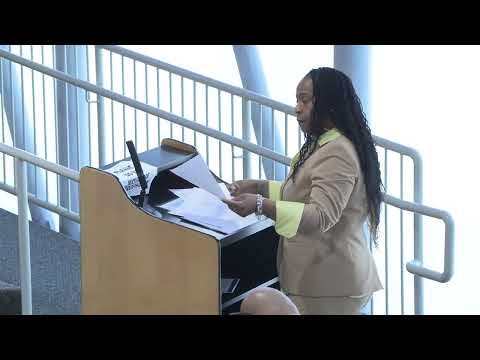
The CAPER presentation was made by Larissa Garland, CDBG director, who said the report “provides an assessment of the city of Milwaukee against progress towards achieving the goals and objectives stated in the 2024 … consolidated plan,” and summarized the year’s funded public-service and capital activities.
Garland told the committee that CDBG funds supported a mix of public-service programs and capital projects. She said the city partnered with the Lake County Consortium — which she identified as Lake County, the City of North Chicago and the City of Waukegan — to coordinate funding applications. She provided a one-page highlights list showing the year’s allocations and service counts.
According to Garland, the housing rehabilitation program served 16 families in the year reviewed: 4 Hispanic households, 11 Black households and 1 mixed-race household. She summarized applicant eligibility rules: applicants must meet income qualifications, own the property for at least one year, have no unpaid liens that would block assistance, and not be delinquent on their mortgage. "If they have any unpaid liens, that will also stop them from being able to get services," Garland said.
Garland said the program operates with a waiting list she estimated at “at least a 100” households (she later suggested 109). She described how contractors are selected: contractors must be on a vetted rehab list and receive bidding opportunities; in emergencies the department limits solicitations to contractors with relevant specialties (for example, sewer or plumbing contractors).
On capital work, Garland described Hinkston Park improvements as a full renovation of the picnic shelter, bathrooms and finishes. She offered to provide committee members a rendering after the hearing. She also highlighted a large facade-improvement award: $240,000 went to Dahlia’s Daycare at the corner of Butchart and Washington; Garland said the bid arrived substantially higher than early projections and was the low responsive bid.
Garland also noted issues with data produced by IDIS, the HUD reporting system: she said pages in the produced CAPER document contain numbers "that mean absolutely nothing because it does not calculate properly," and told members the office used internally verified figures for the presentation.
Committee members asked clarifying questions about the scope of Hinkston Park work, the emergency versus substantial-rehab distinction for housing assistance, contractor selection, and the facade award size. Alderman Martinez commended staff for accessibility improvements in the Third Ward connecting Glenwood Drive and Ridgeland.
The public hearing was closed by motion after no members of the public requested to speak. The committee voted to close the hearing and proceeded to other agenda items.
The CAPER packet remained available to committee members with a one-page summary of funded programs and the more detailed CAPER document, which Garland said includes IDIS-generated fields that the department considers inaccurate and therefore does not rely on for the summary counts she presented.
Garland’s presentation and the committee’s questions focused on programmatic reach, eligibility constraints and contractor procurement practices; members did not take further formal action on the CAPER during the hearing.
The committee moved on after the hearing to consider a slate of resolutions and procurement items.