Get Full Government Meeting Transcripts, Videos, & Alerts Forever!
Get email alerts on the Annexation topic
No spam. Unsubscribe anytime.
Planning commission recommends annexation of 4500 West/800 North contingent on development agreement
Summary
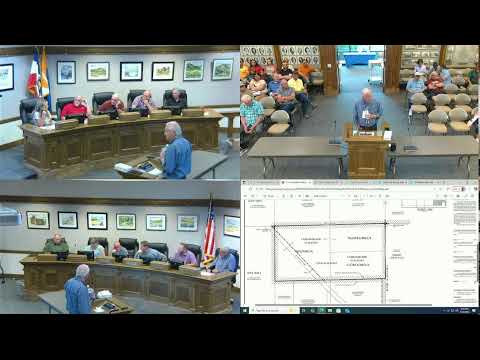
Cedar City Planning Commission voted to recommend annexing a county parcel at 4500 West and 800 North into city limits, but conditioned the recommendation on a development agreement that includes buffers and neighborhood consultation to address residents' concerns about noise, light and traffic.
The Cedar City Planning Commission voted to recommend annexing a parcel at 4500 West and 800 North into Cedar City, provided the property owner and future developer agree to a development agreement that includes a buffer and other protections for the adjacent Buena Vista neighborhood.
The petitioners, represented at the meeting by Dan Roberts, asked the commission to recommend annexation of the property that the county has approved for division into two parcels. Roberts said the owner is seeking annexation into Cedar City to allow the city’s master-plan road network and zoning to apply to the site. "We're just petitioning for annexation," Roberts said during his presentation.
Residents who live in the nearby Buena Vista neighborhood voiced concerns about nocturnal noise, persistent industrial "droning," bright factory lights and traffic congestion at the neighborhood’s single access point. Joshua Peterson, who lives closest to the subject property, urged the commission to delay annexation and reconsider the general plan first: "So my proposal is to not annex at this time," he said, arguing that zoning and master-plan designations determine future land uses. Several neighbors and long-term residents detailed ongoing noise they attribute to nearby industrial operations, including repeated metal drops that they said occur in the early morning hours.
Why it matters: Annexation would shift regulatory authority from Iron County to Cedar City and, absent additional conditions, would typically bring the property under the city’s planned industrial designations (I&M 1 and, farther west, I&M 2). Neighbors said their immediate worry is that industrial uses that meet the I&M 1 standard could be built immediately adjacent to back yards. Commissioner discussion at the meeting focused on whether the city can require enforceable protections—buffers, fences, lighting controls or limiting building uses—at the time of annexation or must leave those items to later permitting.
Key details and context
- Location and ownership: The petition concerns property near Highway 56 and Iron Springs Road at roughly 4500 West and 800 North, a parcel that abuts existing industrially zoned areas and Port 15. Speakers identified a portion of the tract as owned by members of the Francisco family and noted that Southern Utah University (SUU) and other industrial parcels are nearby.
- Master-plan road and access: City staff and the petitioners described a master-planned minor arterial labeled as 4500 West that would serve the site. Commission staff and the petitioner said a narrow city-owned sliver of right-of-way exists along parts of the alignment. Dan Roberts and staff warned that access to the parcel also depends on whether Union Pacific will permit a railroad crossing; staff told the commission that railroad-approval processes can take years.
- Zoning and likely future uses: The site is in county jurisdiction now and listed in county records as AG-20 (agricultural) but shown in the city’s general/master plan as transitioning to light industrial (I&M 1) and heavier industrial (I&M 2) at its western edge. Staff members reminded the commission that if the city follows its general plan, future zoning and typical permitted uses would tend to default toward those industrial designations.
- Neighborhood concerns and mitigation proposals: Residents asked for buffers, fences or vegetative screening to reduce noise, light and dust impacts. Some residents described existing industrial noise ("wong wong wong" droning and loud bangs from pipe handling) and said traffic can already take 15–20 minutes to exit the neighborhood at peak times. Buyer/developer outreach was discussed: nearby landowner Dave Staley was described by residents as proposing landscaping, downward-facing lighting and even a small park on a portion of adjacent land; the planning commission encouraged that collaborative approach but emphasized any binding protections should be put in writing.
- Staff and legal process guidance: Planning staff (Randall) explained that state annexation law creates fixed timelines and that the commission’s recommendation goes to city council for a final decision. Staff also noted that development agreements can be used to attach enforceable conditions to an annexation, and that some conditions are easier to enforce (for example, limiting permitted uses or engineering requirements) than others (for example, plantings that could die).
Outcome and next steps
The commission approved a positive recommendation to the city council on the annexation, conditioned on an agreed development agreement that includes buffering/fencing and neighborhood consultation. The motion noted the commission’s intent that the agreement contain enforceable elements where possible (for example, setbacks, lighting controls and use limitations enforceable at permit stage). The commission’s vote carried; the matter will go to Cedar City Council for final action under the statutory annexation timeline.
Quotes attributed to meeting participants are taken from the public transcript of the commission meeting and reflect speakers recorded at the meeting.
The commission did not approve a specific development agreement at the meeting; commissioners and staff asked the petitioner and neighborhood representatives to work together to draft terms that could be reviewed by the commission and forwarded to council. Staff highlighted the unresolved question of railroad crossing permission from Union Pacific and cautioned that its timing could affect road access and project implementation.