
District court holds proposed status-quo budget, delays filling part-time position pending statewide case-management change
Get AI-powered insights, summaries, and transcripts
Subscribe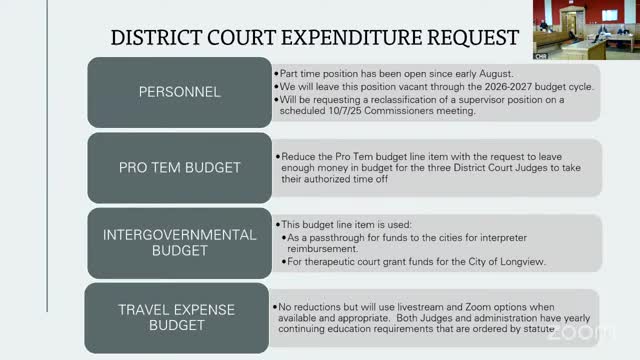
Summary
District court leaders told commissioners they will leave an open part-time clerk position vacant while the state rolls out a new case management system (district court version of Odyssey) in June 2026; the court proposed limited budget adjustments but flagged interpreter reimbursements and pro tem funding as uncertain.
District court administrators presented their proposed budget to the commissioners and said they will not fill a recently vacated part-time clerk slot while the state’s new district court case management system is implemented in June 2026.
The court’s presenter (District Court administrator Molly) said the clerk position became vacant in August when a longtime part-time employee fully retired. Molly told commissioners that many routine workflows are changing because the state is moving district and municipal courts to a modern, web-based case management system (the same vendor used for the Odyssey system that superior courts use); the county’s implementation is scheduled for June 2026. Because the new system will likely change internal workflows and position responsibilities, the court said it does not plan to fill the part-time position during the next budget cycle and will reassess after implementation.
Molly said pro tem (temporary judge) funding had been set high in an earlier cycle; the court proposed a smaller pro tem budget but asked commissioners to maintain some flexibility in case a judge were out for an extended, unforeseen period. The administrator also said interpreter reimbursement is a pass-through item and has increased over time, which complicates the revenue/expenditure forecast. Travel costs were left near current levels because judges and court administration have continuing-education obligations; Molly noted that the state has begun offering more remote training options, which may reduce travel use over time.
On revenues, the court said filings and related fees have increased modestly and that interpreter reimbursements have trended up as well, but both revenue streams are sensitive to caseload volume. The court’s probation office requested no personnel changes and expected revenues to track caseload-driven activity.
Ending: Commissioners heard the court’s presentation and asked for additional details at the personnel workshop, where the administrator said she will request reclassification or changes to one supervisor position to avoid recurring ambiguity in exempt/hourly status tied to salary thresholds.