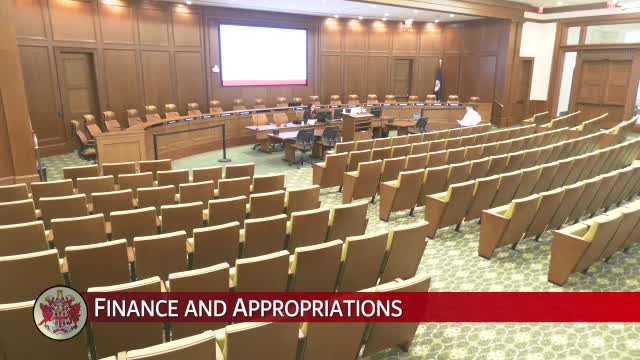
Virginia posts stronger-than-expected September revenues; officials warn uncertainty from federal shutdown and trade tensions
Loading...
Summary
Secretary of Finance Stephen E. Cummings told the committee September general fund receipts outperformed forecasts, leaving roughly $2.2 billion in excess resources for the next biennium. He and outside economists cautioned that a federal shutdown, shifting trade policy and slowing national job growth create uncertainty for 2026 budgeting.
Virginia recorded stronger-than-expected September revenues and a year-to-date gain that Treasury officials say leaves significant one-time resources for the next budget cycle, but state finance officials and economists warned the committee that federal and international developments create near-term uncertainty.
Secretary of Finance Stephen E. Cummings told the Joint Money Committee that "September revenues grew 2.7% over prior year" and that year-to-date growth is 5.1%, a roughly $374,000,000 increase versus the prior year. He said September collections exceeded the month's forecast by about $294,000,000 and that, after accounting for fiscal adjustments and mandatory roll-ins, the Commonwealth has about $2,200,000,000 available for budgeting purposes.
The revenue strength is concentrated in payroll withholding and sales taxes, Cummings said. He described withholding growth as the most reliable signal of underlying revenue health and cautioned that large, nonwithholding collections are more volatile. "Primary revenue drivers withholding, sales and use taxes continue to be strong," he said.
Why it matters
The door to additional one-time spending or reserve-building in the next biennium opens if these results hold, but lawmakers will consider those resources alongside rising demand for K–12 rebenchmarking and Medicaid cost adjustments. Cummings and others told the committee that uncertainty around the federal government shutdown, tariffs and employment trends could change the revenue picture quickly and that year-to-date outperformance may not be sustainable.
What officials said about the economy and the shutdown
Cummings said Virginia continues to outperform the nation on unemployment — citing a 3.6% jobless rate versus a 4.3% national rate — and reported positive private-sector job gains through August. He also briefed the committee on federal employee and contractor withholding trends and said, because Virginia’s federal employment is heavily concentrated in defense, national security and intelligence, the Commonwealth has been relatively insulated from some of the losses seen in nearby jurisdictions.
Cummings also addressed the federal funding lapse. He said major mandatory programs such as Medicaid and Social Security continue to operate and that several federal programs have used prior-year balances to continue services. He added that state officials have surveyed agencies to estimate how many days of operations could be maintained if federal funding remains stalled and that, depending on program and agency, agencies reported having between two weeks and 90 days of funding available for payroll and operations.
Outside economist Bob McNabb, chair of the Department of Economics at Old Dominion University, told the panel that Virginia’s labor market has slowed compared with recent months but remains positive year-over-year. "Labor markets in Virginia had undoubtedly slowed," McNabb said, noting continued increases in unemployment claims in some metropolitan areas. He also cited the decline in international arrivals and potential effects on higher-education enrollment and tourism.
McNabb highlighted longer-term risks from trade policy and tariffs. He said imports and exports through the Port of Virginia have declined in value in 2025 relative to 2024 and that tariff-driven changes in supply chains and higher consumer prices are likely to become more manifest over time.
Details and context
- Cummings said September is a major nonwithholding collection month and that much of the upside in September reflected stronger-than-expected nonwithholding and withholding payments. He noted an accounting adjustment of about $25,000,000 in withholding tied to larger pay periods for some employers.
- The Commonwealth’s reported investment and interest income also outperformed earlier assumptions, Cummings said, reflecting higher rates and improved portfolio returns.
- McNabb flagged differential performance within Virginia: metropolitan areas that rely heavily on federal contracting and grants (notably parts of Northern Virginia and Hampton Roads) face more downside risk than areas powered by healthcare and other sectors that have continued growth.
What’s next
Cummings and staff said they will continue monitoring receipts and federal developments and will provide updated revenue information to lawmakers ahead of the 2026 budget process. The committee chair said staff will present formal updates at the panel’s November meeting in Radford.
Ending
Officials emphasized that the current revenue strength provides a cushion but urged caution. Cummings summarized the committee’s position: the Commonwealth is in a comparatively strong fiscal position but remains exposed to growing economic and federal-policy uncertainty that could affect revenues and spending needs.