
Committee Seeks Consultant to Evaluate Main Street Redevelopment, TIF and Business District Options
Get AI-powered insights, summaries, and transcripts
Subscribe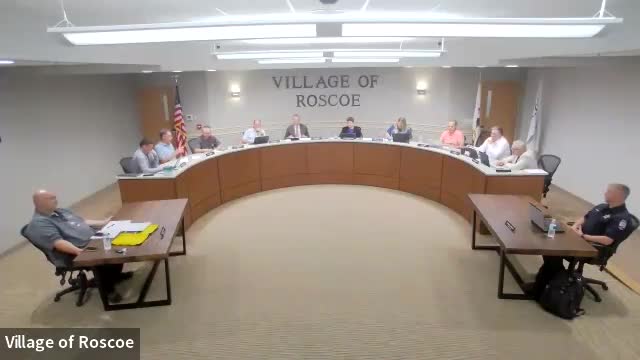
Summary
A consultant will be asked to give an initial review of whether a tax increment financing (TIF) district or a business district would be appropriate for Roscoe's Main Street corridor and nearby vacant properties.
The Committee of the Whole discussed options for revitalizing Main Street and the surrounding corridor, including the use of tax increment financing (TIF) or a business district (retail sales surtax) as development tools, and agreed to bring a consultant in for a preliminary evaluation.
A presenter who has worked on multiple TIFs and business districts described the procedural steps for a TIF: a consultant eligibility study, a resolution approving the eligibility report, public notices, creation of a statutory joint review board made up of affected taxing bodies, public hearings, and then ordinances adopting a plan and designating the TIF area and budget. The presenter explained the increment concept (difference between base tax value and post‑development tax value) and recounted local examples where TIF funds were used for infrastructure and renovation work.
Committee members asked whether Main Street parcels and corridor properties would qualify as ‘‘blighted’’ or underutilized for an eligibility study. The presenter said eligibility typically examines vacancy, underutilization, and indicators of blight; vacant lots and long‑unused parcels are more likely to qualify than already operating, high‑value properties. The presenter advised that small single‑lot TIFs are usually not cost‑effective because eligibility studies and planning have a fixed cost and recommended a broader area for study.
The meeting also covered business district mechanics: imposition of an additional retail sales tax (up to 1% in quarter‑percent increments), public notice and hearing requirements, and a simpler approval path than TIF because the business district does not require a joint review board of taxing bodies. The presenter said business districts can be effective in attracting retailers by rebating a portion of sales taxes to developers or retailers for a set number of years.
After discussion, committee members agreed to invite one or two experienced consultants to review Roscoe’s Main Street corridor and nearby vacant properties, to give a high‑level assessment (a “40,000‑foot look”) and advise whether a TIF or business district would be feasible. The committee discussed timing and the village budget cycle and requested staff schedule the consultant briefing within the next one to two months.
No ordinances or formal financial commitments were adopted at the meeting; members described the action as a direction to seek an initial consultant assessment prior to any official TIF or business district proceedings.