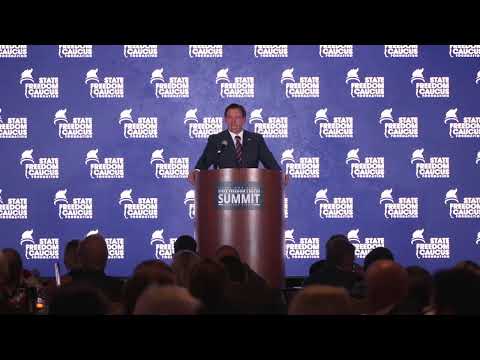
DeSantis touts Florida’s fiscal record and previews 2026 property‑tax elimination effort
Loading...
Summary
In Dallas remarks, Gov. Ron DeSantis said Florida reduced spending three years in a row, retired about half of its historical state debt and will pursue a 2026 ballot measure to eliminate property tax on primary residences.
Gov. Ron DeSantis promoted Florida’s fiscal record and said the state will pursue a ballot measure to eliminate property tax on primary residences in 2026, speaking in Dallas, Texas.
DeSantis, the governor of Florida, said the state budget has shrunk for three consecutive years and that “just since I’ve been governor, we’ve retired almost 50% of that state's historical debt.” He also said Florida has a triple‑A credit rating from major rating agencies and that the state’s population now stands at about 23.5 million, which he contrasted with New York.
“We are leading the effort, right now across the state of Florida that will have to go on the ballot in 2026, to eliminate property tax on our primary residence,” DeSantis said. He argued that rising tourism and investment revenues enable local governments to continue services while giving homeowners the option to exempt their primary residence from property tax; he did not provide legislative language, fiscal estimates or an implementation timeline in his remarks.
DeSantis also said Florida has “1,300,000 more registered Republicans than Democrats,” and he credited those trends to state policy choices. He characterized Florida’s overall approach as low‑spending government with investments in roads and schools.
Why it matters: A successful ballot measure to eliminate property tax on primary residences would significantly change local revenue structures and require changes to state or local funding mechanisms. The governor framed the proposal as a citizen choice for the 2026 ballot but provided no enabling statutory text or fiscal analysis in his remarks.
What remains unspecified: The governor did not provide the proposed ballot question wording, fiscal estimates of the cost to counties and municipalities, or details on which revenue sources would replace property tax revenues if the measure were approved.
Speakers quoted in this article: Gov. Ron DeSantis.