
Public Works outlines operations, seeks recurring savings and shifts street repairs to GeoBond
Get AI-powered insights, summaries, and transcripts
Subscribe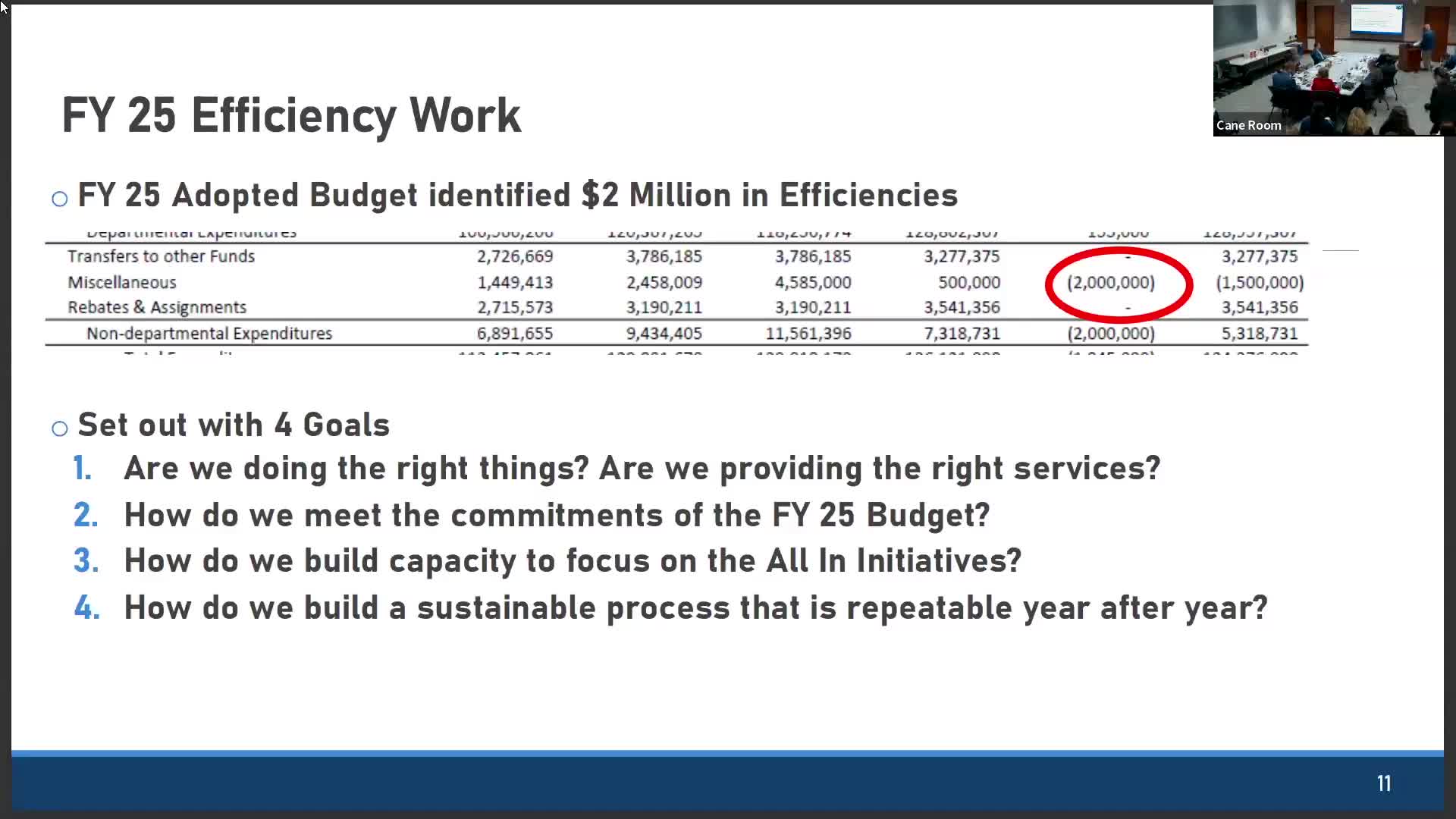
Summary
Public works presented FY26 operating details including staffing, equipment, and a shift of recurring street/sidewalk repair funding into the GeoBond capital program; staff highlighted new tech deployments, reimbursements from right-of-way escrow requirements and supply-driven cost pressures.
Kirk Meyer, director of public works, told the City Council on Aug. 21 that Public Works remains the city's second-largest general-fund department after public safety and explained the department's spending drivers and proposed efficiencies for fiscal 2026.
Meyer described divisions, assets and recent technology deployments that staff say improve operations and response times, including a citywide traffic detection system, GPS emergency preemption for fire and EMS vehicles and a citywide nighttime streetlight assessment using a commercial LumaTracker tool.
Why it matters: Public Works accounts for large recurring operating costs because of supplies and materials (asphalt, concrete, chemicals), contracted services and building maintenance. Shifting recurring pavement and sidewalk repair spending to a GeoBond (debt) program was identified as a way to match long-lived infrastructure costs with long-term financing.
Key points in the presentation
Assets and scope: Meyer said the department manages 62 vertical buildings (about 600,000 square feet citywide, with about 380,000 in the general fund portfolio), 92 traffic signals, biannual inspections of about 90 signal cabinets that require repairs, and maintenance for streets, sidewalks, drainage and right-of-way beautification.
Technology and reimbursements: Public Works deployed traffic detection at roughly 80 of 92 intersections and is working to finish that rollout. GPS emergency preemption for fire/EMS units has started to reduce intersection delay; Meyer cited industry examples of about a 10-second reduction per intersection as plausible once fully tuned. The department also implemented a right-of-way application requirement for letters of credit/escrow tied to fiber/conduit work; Meyer said the city has already collected about $215,000 in reimbursements under that approach.
Efficiency measures and budget shifts
Meyer said the department identified several operating efficiencies estimated at a $65,000 reduction in supplies plus savings in service contracts and staffing where vacancies could be held or repurposed. A major change in the FY26 proposal shifts recurring repair and maintenance funding for streets and sidewalks (previously in the operating budget) to a GeoBond program because the capital need exceeds what a single-year maintenance allocation can sustainably cover. The shift aligns multi-year debt financing with the multi-decade life of pavement and sidewalk assets.
Council questions and clarifications
Councilmember Bob complimented Public Works' demonstration of converting efficiency work into real budget reductions.
Councilmember Mike asked whether the transferred repair funding will return to operations after bond funds are expended; staff responded that the GeoBond includes multiple years of funding and that council will decide at bond sunset whether to restore funding to operations or take other steps.
Discussion v. decisions
Discussion: informational presentation that outlined planned FY26 changes and the rationale for shifting recurring repair funding to a bond program.
Direction: staff to implement the GeoBond-based capital approach for street and sidewalk repairs and to continue pursuing right-of-way escrow enforcement and other reimbursement tools.
Ending
Meyer closed by noting the department will continue refining fleet and technology strategies, including a new fleet-management system to inform data-driven replacement timing and maintenance decisions.