
Seaside planning commission approves 36-unit apartment despite Grocery Outlet safety concerns
Get AI-powered insights, summaries, and transcripts
Subscribe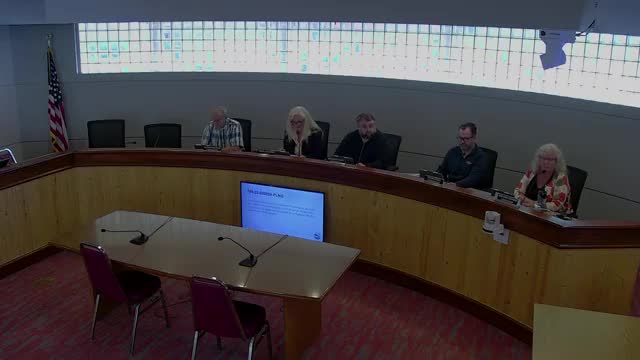
Summary
The Seaside Planning Commission approved a conditional use permit and highway-overlay review for a 36-unit apartment project, with conditions including stormwater engineering, lighting review and parking approvals; nearby business owners and Grocery Outlet corporate raised safety and access concerns.
The Seaside Planning Commission voted to approve a conditional use permit and highway overlay review for a 36-unit apartment complex near Avenue P and Irvine Street, also approving the applicant's proposed compact-parking ratio, after public testimony raising safety and access concerns from nearby Grocery Outlet representatives and local business owners.
The project, presented by Randy Stamper, project manager for RDA Project Management representing Seaside Multi LLC, would build two residential buildings with a total of 36 units and 51 parking spaces. Jeff, the planning director, told the commission the applicant proposes access from both Avenue P and South Irvine Street and that staff is recommending conditions including a detailed lighting plan, stormwater engineering for a proposed pond, and fencing around the pond to protect public safety.
Why it matters: Grocery Outlet and several neighbors told the commission the proposed vehicular access—routing some residential traffic through what functions as Grocery Outlet's parking area and a narrow platted city right-of-way—could create pedestrian safety hazards for shoppers and employees. The commission approved the application but added conditions intended to reduce safety and engineering risks before development permits are issued.
Public comments and developer response Tom Jensen, owner and operator of Jensen's Grocers LLC (d/b/a Grocery Outlet), testified that while he supports additional housing, he was "very concerned with the entrance of the proposed apartment complex having driving access between [Grocery Outlet] store property and the apartment complex," and that the layout could be "very dangerous to our customers and employees." Brian Zarder, a local business owner and customer of Grocery Outlet, and Sadie Mercer, speaking for the Chamber of Commerce, echoed concerns about pedestrian conflicts, freight access, and knock-on effects to Grocery Outlet's operations.
Joe Tanner, entitlement and permit manager for Grocery Outlet's corporate office, said Grocery Outlet "supports new affordable safe housing in the city of Seaside" but that the "proposed apartment complex places the community in danger" because the currently used route "does not meet current city standards" and routes residential traffic through an area designed and used as a parking lot.
Randy Stamper, representing the applicant, said the development will meet the conditions in the staff report and that the proposal follows the original platting and the access layout originally approved with earlier development. He told the commission, "We agree with Jeff's review, and we can meet any of the conditions that he has proposed." When asked about the primary entrance, Stamper said, "The main access will be Irvine." He also noted a trip-count review submitted to the state showed traffic generation low enough that no additional ODOT traffic impact study was required.
Planning staff and technical details Jeff, the planning director, reviewed site and regulatory issues for the commission. He said Avenue P is an unimproved, platted public right-of-way that narrows to a 20-foot right-of-way at one end but widens to 40 feet near the subject property. He told commissioners the site plan provides sidewalks, crosswalks and stairway access to the southern portion of the property and that the applicant proposes more bicycle parking than required.
On parking law, Jeff explained the state'level change: "Senate Bill 1537 mandatory land use adjustments ... when it comes to parking, if it's net new housing, communities are required to give a total adjustment to parking requirements. Total meaning 36 units could be built or more with not a single parking space," and that the applicant is relying on that statute for how parking is allocated across two lots. Jeff also said staff's review shows the development would generate roughly "around 280-ish" daily trips and about "18 trips per hour" at peak times based on the traffic assessment used for this application.
Staff recommended conditions of approval that commissioners discussed and included in the motion: a detailed lighting plan approved by city staff before development permits are issued; engineering review and approval of the stormwater pond and any easement rights to it by the public works director; fencing around the pond for public safety; submittal and approval of fire department turning radii, hydrant and FDC locations and final striping at the development permit stage; and that the development meet floodplain development regulations for areas impacted by the Neawanna Creek floodway.
Commission discussion and vote Commissioners asked follow-up questions about existing crosswalks near Grocery Outlet (Jeff showed aerial images indicating two crosswalks installed when Grocery Outlet was developed), whether the city could require additional crosswalk marking or other traffic calming measures and whether Avenue P could be made one-way. Jeff said traffic-calming measures would require a traffic study to confirm efficacy and avoid creating new safety problems; he noted speed bumps can interfere with emergency vehicle access.
After discussion the commission took a motion to approve the conditional use, the highway overlay review, and the proposed compact parking percentage (35% compact spaces), subject to the staff conditions in the staff report. The commission chair announced the application had been approved; the transcript records the commission saying "aye" and the chair confirming approval.
What remains before construction Before building permits can be issued the developer must submit the engineering materials required by the commission conditions: a final lighting plan, an engineer'signed stormwater report sized to handle runoff (and fencing at the pond), fire department approvals for turning and hydrants, and final site plans showing parking and circulation. Jeff noted the site falls partly in a regulatory floodway and will need to meet the city's floodplain ordinance. The commission did not change zoning; the property remains in the C-3 general commercial zone with highway overlay considerations. The commission did not enforce any private covenant or CC&R mentioned in public comments; Jeff said CC&Rs are civil matters enforced by the CC&R holders.
Ending With conditions attached, the commission approved the project and closed the public hearing. Staff and the developer will return with required engineering, permitting and final plan submissions before any ground work may begin.