Get Full Government Meeting Transcripts, Videos, & Alerts Forever!
Get email alerts on the Municipal Funding topic
No spam. Unsubscribe anytime.
Sequim council narrows 2026 municipal-fund awards, prioritizes health and housing
Summary
Councilors reached a working consensus on proposed 2026 municipal-fund allocations, prioritizing Sequim Health and Housing Collaborative and human services while trimming or withholding funds for several arts and technology requests; final budget action remains scheduled for the regular session.
Sequim city council members working in a Aug. 11 work session agreed on draft allocations from the 2026 municipal fund that prioritize health and human services and set single‑year awards while leaving final budget authority to a later regular meeting.
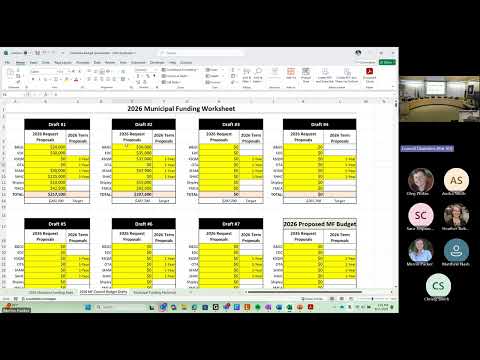
Councilors sketched a proposed distribution that would allocate $120,000 to the Sequim Health and Housing Collaborative (SHHC), $28,750 each to the YMCA and the Boys & Girls Club, $10,200 to the Economic Development Council (EDC), $10,000 each to the Shipley Center and the farmers market program, and $0 in this draft to Olympic Theater Arts and to KSQM (the community radio station), pending further review. Councilors characterized the numbers as a draft consensus to be returned to during the formal budget process; the budget itself must be adopted at a later regular council meeting.
Why it matters: Councilors said limited funds and an internal cap on awards forced choices between programs. Several members argued that investments in direct human services provide the clearest community impact, while others urged balancing those needs with economic-development, arts, and service‑infrastructure requests.
Key points from the session - Scope and process: Councilors asked staff to require a standardized, templated report from funded applicants showing deliverables, progress, and barriers. They directed that awards be considered as one‑year terms in the coming cycle to allow the council to re-evaluate performance. Council materials note that funding awards are subject to council decision and may change under adopted guidelines. - Prioritization: Multiple councilors said they prioritized SHHC and YMCA programs because they touch a broad set of residents who rely on safety‑net services. One councilor noted the collaborative approach of SHHC but said the application lacked budget detail in places; other councilors urged that applicants provide clearer budgets and deliverables in the new standardized reporting. - Budget cap and tradeoffs: Staff and council identified the city’s municipal-fund cap (referenced by council as a 1.5% limit) and said draft allocations exceeded it in initial iterations; councilors iteratively reduced some line items to approach the cap. At the end of the work session, council members indicated a working consensus on the numbers above but emphasized the allocations remain subject to change at formal budget adoption.
Substantive concerns and clarifications requested - Several councilors asked for clearer line‑item budgets from collaborative applicants so the council can track how funds flow between partner organizations. - Council discussion repeatedly noted the preference for one‑year awards in 2026 to enable the council to tie future funding to required performance reports. - A staff member flagged that prior awards and multiple outside funding streams (for example, PUD or county contributions to economic development) should be considered when deciding municipal contributions.
Next steps City staff will incorporate the draft allocations and the council’s direction (one‑year awards, required templated reports, and clarified budgets) into subsequent budget materials. The work-session decisions were described by the city attorney as nonfinal for record purposes: final, binding budget action occurs during the regular-budget adoption process at a future council meeting.
Ending: Councilors said they will return to the draft numbers during the formal budget hearings and that applicants should expect the council to require clearer deliverables and reporting before receiving multi‑year commitments.