Get Full Government Meeting Transcripts, Videos, & Alerts Forever!
Get email alerts on the Fire Equipment Water Supply topic
No spam. Unsubscribe anytime.
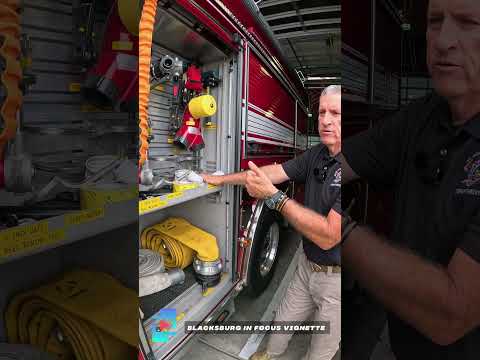
Firefighter outlines engine-compartment tools and need for rapid water supply
Summary
A firefighter described tools stored in an engine compartment, hose sizes firefighters use to connect to hydrants and why the 750-gallon tank on apparatus requires a fast external water supply when multiple lines or a deck gun are in use.
In the meeting transcript, a firefighter described the tools stored in a fire engine’s "engine compartment" and explained why fire apparatus typically require an immediate external water supply.
"So this is the engineer compartment. These are basically the tools once we get to a fire scene. We have hydrant wrenches and spanner wrenches that allow us to connect, hoses together," the firefighter said, listing equipment kept in the compartment. The firefighter said crews carry hoses in several sizes and configurations to connect to hydrants, including a 50-foot section of 3-inch hose, a 25-foot "pony" section and a 5-inch section.
The firefighter added that the apparatus’ on-board water capacity is limited. "Again, these trucks carry 750 gallons. If we're flowing multiple lines or our deck gun, which is our high volume, water supplier, then 750 gallons do not last that long," the firefighter said. The firefighter said the engineers’ role is to position the truck and begin establishing a water supply from a hydrant or other source as quickly as possible.
The transcript records explanation and equipment descriptions only; there was no formal action or decision recorded related to equipment procurement or policy. The remarks focused on operational logistics: the kinds of connectors and hose lengths carried in the engine compartment, the limited duration of on-board water when multiple attack lines or a deck gun are used, and the importance of quickly establishing an external water supply.