
Davidson County cemetery survey finishes Phase 4; 476 historic sites recorded to date
Get AI-powered insights, summaries, and transcripts
Subscribe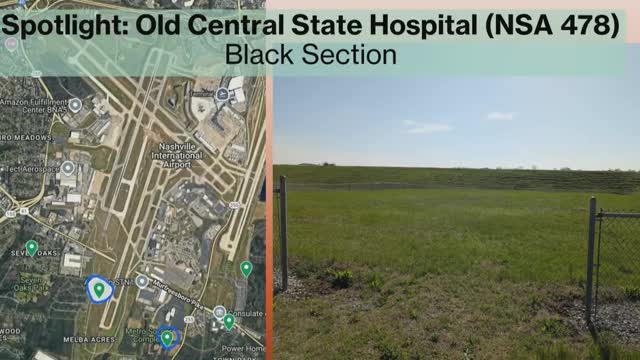
Summary
New South Associates told Metro staff that Phase 4 of the countywide cemetery survey documented 131 cemeteries and brought the project total to 476 sites, highlighted several vulnerable sites near BNA and Hermitage, and outlined Phase 5 work on African American cemeteries and a longer-term countywide preservation plan.
Lauren Walls, branch manager for New South Associates’ Tennessee office, told the Metro Historical Commission that New South completed fieldwork for Phase 4 of the Davidson County cemetery survey and has submitted survey forms and GIS deliverables to the Tennessee Historical Commission for review.
The presentation said Phase 4 documented 131 cemeteries and brought the project total to 476 historic cemeteries surveyed since the project began in 2022. “We completed the field work back at the July and we are now into the final... data cleanup and submission of all of the cemetery survey forms to the THC,” Walls said. She described the work as grant-funded and using consistent methods across phases to create a countywide dataset.
The surveyors spotlighted several cemeteries in East Davidson County to illustrate conditions and threats. Collier Harris Cemetery, an African American family cemetery, contains a burial range the presenter estimated at about 193 years with markers dating from about 1819 through recent burials, and shows evidence of ongoing custodial care in places. Walls said the site includes hand-carved stones and a World War II veteran marker.
Long Neck Cemetery, described by Walls after a nearby resident guided surveyors to the site, is a wooded, largely unmarked burial area with more than 50 fieldstone markers and only a few hand-inscribed stones. Walls said Long Neck “appears to be absent of any custodial care” and has no signage or marked entrance, so it is not visible unless a person knows what to look for.
Walls described a small, fenced family cemetery near the long-term parking at Nashville International Airport (BNA) that surveyors reached by climbing a steep, vegetated embankment. The team found two formal carved headstones, at least three fieldstones and displaced limestone slabs; none of the inscriptions were legible on-site. She noted the site is surrounded by commercial development and has no pedestrian access.
Surveyors also documented institutional burial grounds associated with the old Central State Hospital near BNA. Walls said hospital records list 137 burials in the African American section, but cited a retired state archaeologist’s on-site estimate that “it’s more like 6 to 800 people” may be interred there. On the ground, surveyors found limestone flush markers and mounded depressions; Walls said there is little visible marker evidence outside those features and suggested some markers may have been removed or lost.
Walls gave details on the Hermitage Enslaved Cemetery, which has been the subject of recent research and marking. She said geophysical work identified about 25–28 probable graves and field stones were placed at the heads of GPR anomalies; that work was funded in part by the Andrew Jackson Foundation and a private benefactor, she said.
Regarding documentation standards, an attendee asked how granular the condition assessments were. Walls replied, “We are doing general conditions assessments at every cemetery we visit. The larger and, city cared for or community cared for, we are not collecting, like, insanely granular data on individual headstones. Smaller... cemeteries, it’s very easy for us to document every headstone if we need to. So it really—it’s scalable.”
Walls said Phase 5 will focus on African American cemeteries and related deliverables and partnerships, including working with a Metro-created African American Cemeteries Coalition. She said Phase 6’s goal is a countywide cemetery preservation plan; exact scope and schedule will depend on future grants, but the presentation indicated a multi-year timeline with a final preservation plan targeted around 2029–2030 depending on funding.
The presentation listed standard deliverables for each phase: technical memos, completed survey forms, GIS data deliverables and a cemetery database export. Walls said those same deliverables have been produced for each completed phase. She thanked Metro staff and the New South field team for carrying out the surveys.
The presentation emphasized that the work is grant-funded and that a consistent survey team and methods have allowed the project to build a robust, countywide dataset for preservation planning. Walls said the dataset’s consistency is important as Metro moves toward preparing countywide preservation guidance and targeted work on African American cemetery sites.
Less-critical details noted during the presentation included local access constraints (BNA requires permission to access some airport-adjacent sites), limited or absent signage at many small cemeteries, and that some institutional burial grounds have fragmented or removed markers. Walls and the presentation named partner organizations involved in specific efforts, including the Tennessee Historical Commission (THC), the Andrew Jackson Foundation, and the Vanderbilt Institute for Spatial Research (which worked on GPR at the Hermitage site).