
Sunnyvale names new urban landscape manager and outlines tree‑canopy challenges, pests and study priorities
Get AI-powered insights, summaries, and transcripts
Subscribe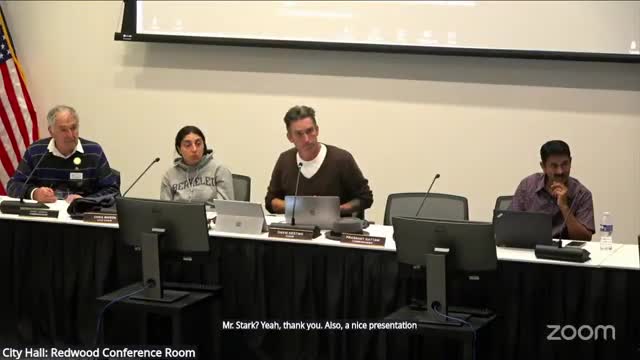
Summary
Parks superintendent introduced Travis Rios as the city's new urban landscape manager and staff outlined threats to the urban canopy, proposed study items (street tree inventory, equity‑focused replanting) and options for future canopy strategies.
The Parks and Recreation Commission received an overview Sept. 10 of the city’s urban forest program, staffing changes and long‑term planning priorities, including a proposed street‑tree inventory and an equity‑driven replanting effort.
Jim Stark, superintendent of parks and golf, introduced Travis Rios as the new urban landscape manager, noting Rios took his post about six months ago. Stark said Rios replaces longtime urban forest manager Leonard Dunn, who retired after 37 years of service.
Rios framed the city’s tree program around long‑term climate and landscape challenges. “The trees are the same way. Less water, less ability to take care of themselves,” he said, describing how longer heat stretches and reduced rainfall stress trees and increase vulnerability to pests and disease.
Rios described the urban heat‑island trend, gave comparative indices for nearby communities and warned of pests that can rapidly damage canopy: he mentioned polyphagous shot hole borer and referenced other pests such as emerald ash borer and gold‑spotted oak borer as threats that could force large removals if they appear locally. He told commissioners that proactive species selection, maintenance and planning are the most effective defenses against widespread losses.
Staff study priorities and outreach
Rios and Stark described two near‑term study items staff plan to pursue: a comprehensive street‑tree inventory to assess species, health and locations, and a tree‑repopulation effort “through an equity lens” to focus canopy increases in underserved neighborhoods. Rios said a complete inventory will give staff the data to develop a preferred plant palette and prioritize high‑impact, low‑cost interventions.
Stark added that the city is planning outreach on specific sites such as Orchard Heritage Park; staff said a second outreach meeting on the orchard is scheduled the week after the commission meeting to gather public input on long‑term management and potential public access models.
New technologies and canopy strategies
Rios discussed alternative urban canopy strategies for constrained downtown spaces, including algae‑based “liquid trees” and algae bricks as conceptual carbon‑sequestration approaches where large trees cannot be planted. He described these as options to explore where traditional, large‑canopy trees cannot be accommodated.
Public questions and operational clarifications
Commissioners and members of the public raised specific maintenance and infrastructure questions, including methods the city uses to inspect street trees that are close to utilities or private sewer laterals and the process for residents to request inspections. Stark and Rios advised residents to contact the parks division for an arborist inspection; staff said they coordinate with environmental services when infrastructure (water or sewer) is implicated.
Staff also discussed policy choices such as whether fruit trees should be used in public rights‑of‑way; the commission was told fruit trees can create maintenance and rodent issues and that dedicated orchard areas (such as Orchard Heritage Park) are a more likely place for public fruit trees and community pick‑your‑own events.
Ending
Commissioners praised the presentation, welcomed Rios and asked staff to return with study scoping details. Rios closed by urging protection and long‑term care of the city’s largest, mature trees: “My big and most important thing for this city is is gonna be saving the giants.”