
Judge rejects state jail agreement for Dora Marie Bravo, orders inpatient treatment and parenting restrictions
Get AI-powered insights, summaries, and transcripts
Subscribe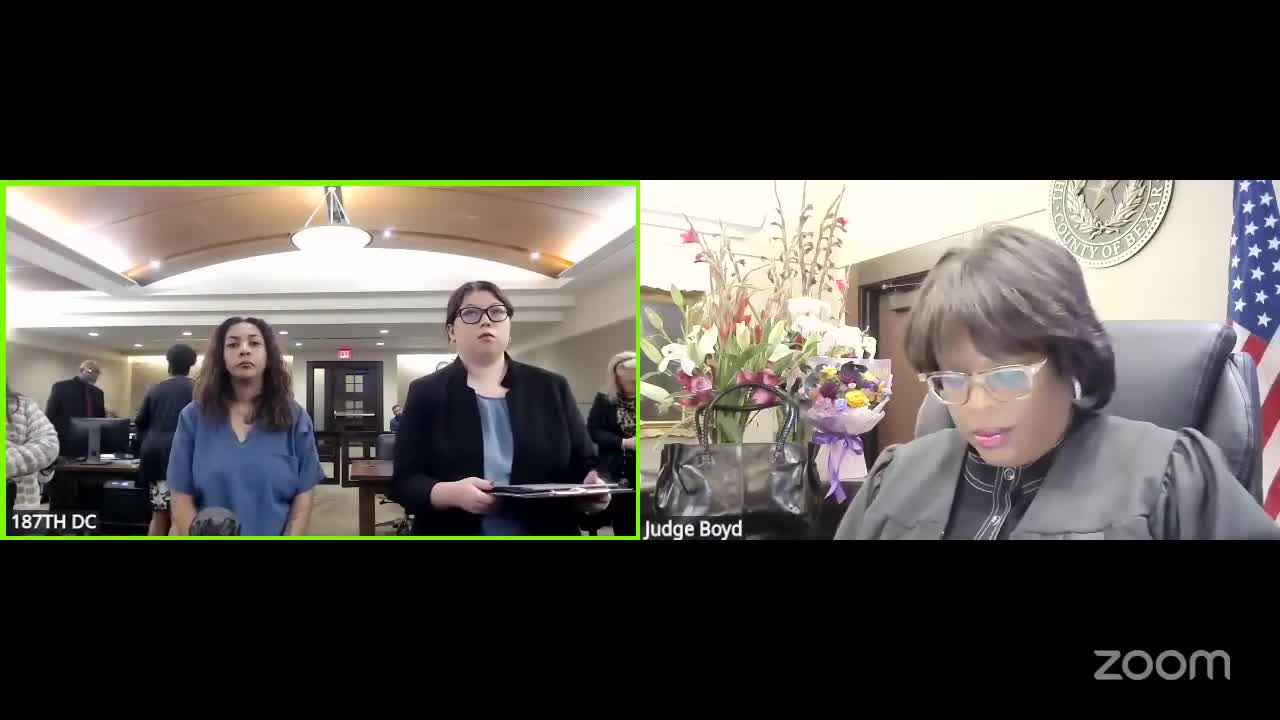
Summary
In the revocation proceeding the court found a supervision violation true, declined the state's proposed short jail-term agreement, and ordered inpatient SADA treatment plus restrictions on contact with minors.
In cause 2024CR011954 the court found a deferred-adjudication violation true for Dora Marie Bravo and declined the state’s proposed disposition, ordering inpatient substance-abuse treatment and additional probation conditions instead.
The prosecutor described a violation arising from failure to follow recommended SADA (substance‑abuse) evaluations and recommendations. The defendant acknowledged the alleged violation; the court found violation "14aa" true on the record. The state proposed a recommendation of a county jail sentence of roughly 126 days, but Judge Stephanie Boyd said she would not follow the proposed agreement because Bravo had remained in custody and had not followed probation conditions.
"You were supposed to be going to SADA," the judge said, and added that the court must protect the community and the defendant’s child-related obligations. In lieu of the state's proposed short county-jail disposition, the court altered conditions to require inpatient SADA treatment, no unsupervised contact with or residing with minors upon release from treatment, and that the no‑contact restriction be revisited after Bravo completes parenting classes. The transcript records that Bravo will remain in custody until transfer to the treatment provider.
The transcript shows the defense raised that the defendant had been in custody continuously and that felony drug court criteria were not met. The court noted felony drug court eligibility was checked and found not met. The transcript does not record a separate negotiated plea accepted by the court; instead the court recorded its own amended conditions and custodial-transfer instruction.