
Cannon Falls council approves AUER and first-reading zoning change to allow data centers after debate over water and jobs
Get AI-powered insights, summaries, and transcripts
Subscribe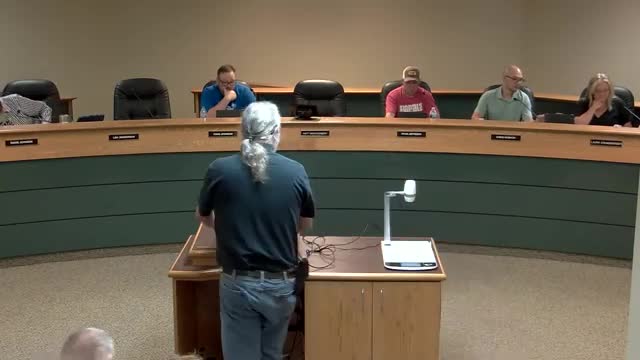
Summary
The Cannon Falls City Council approved the final Alternative Urban Areawide Review (AUER) for a proposed data center and passed first reading of Ordinance 410, amending city zoning to allow data centers, after councilmembers and members of the public debated water use, local job estimates and potential limits on future facilities.
The Cannon Falls City Council on a first reading approved Ordinance 410 to permit data centers in I-2 zoning and separately approved the final Alternative Urban Areawide Review (AUER) for the proposed data center tract after extended discussion about utilities, jobs and future limits.
The AUER final report was approved by a 4-1 vote (motion by Ryan, second by Novak); Councilmember Diane Johnson cast the lone no vote. The first reading of Ordinance 410, including two clarifying amendments, passed on a separate motion (motion by Ryan, second by Novak) with no recorded opposition.
During public input, Jeff Keltchick, who said he has about 40 years in IT infrastructure, told the council he did not expect the high-skilled jobs advertisers predict to remain locally once a data center was built. "In short, the high quality jobs that are being referred to ... Once the load in is complete, those jobs will not be here," Keltchick said.
Several councilmembers and members of the public raised the availability and regulation of utilities, especially water, as a central concern. The ordinance text and council discussion note that conditional-use approvals will consider utility availability and that future applicants would need to show the city could support water and sewer demands. City staff and the ordinance language referenced state permitting (including MS4 stormwater obligations) and the role of utilities such as Dakota Electric in siting substations.
Councilmember Diane Johnson summarized an oppositional view during debate: "I'm not gonna sell my soul to the, agent carp in turn for some tax money," she said, expressing concern about the long-term land-use and community character impacts.
City staff proposed two small wording amendments the council adopted in the ordinance text to add clarity: (1) insert "public or private sanitary sewer, water, and stormwater services" to permit on-site or campus utility configurations; and (2) change the requirement that substations be "on the same site" to be on the "same or contiguous site" as the data center, accommodating substations that utilities place on adjacent parcels they control.
Staff noted the ordinance is intended to preserve the council's authority to evaluate conditional-use permit applications, including utility sufficiency, noise, heat mitigation, and final building design; it does not guarantee any particular end-user. Staff also said some mitigation strategies could be requested during later development- and design-stage approvals.
What happened next: the council approved the AUER final report (motion by Ryan; second by Novak) 4-1, and later approved Ordinance 410 introduction/first reading with the two clarifying amendments (motion by Ryan; second by Novak). Both items will return if required by ordinance procedure for subsequent readings or final adoption.
The AUER and ordinance votes move the project through the city's land-use process but do not by themselves authorize construction or utility hookups; those require subsequent permits and approvals.