Get Full Government Meeting Transcripts, Videos, & Alerts Forever!
Get email alerts on the Public Health Addiction topic
No spam. Unsubscribe anytime.
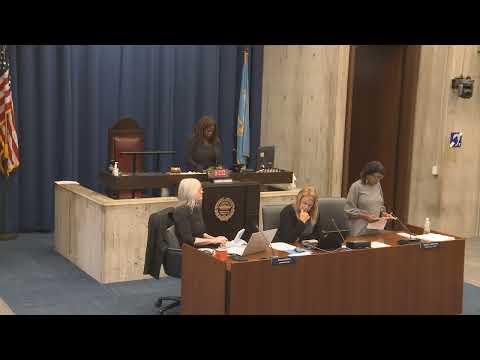
Council defeats resolution opposing safe-injection sites after heated debate; vote 8–3
Summary
The Boston City Council voted to reject a resolution opposing supervised injection sites after a lengthy debate over public safety, addiction treatment and harm-reduction evidence. The measure failed 8–3 while speakers urged both recovery-first approaches and harm-reduction pilots.
The Boston City Council voted to reject a resolution opposing supervised injection sites, after a lengthy debate on public safety and treatment strategies tied to state legislation (S.1393).
The resolution, offered by Councilor Ed Flynn, asked the council to record formal opposition to supervised injection facilities. Flynn, who led the motion, said residents near Mass and Cass, Andrew Square and other neighborhoods have reported public drug use, discarded needles and related public-safety incidents and urged a recovery-first approach. "Residents don't want us to enable additional harmful behavior," Flynn said. "They need recovery services. They need detox." Councilor Aaron Murphy, a cosponsor, said the city should prioritize treatment and accountability rather than legalizing sites where illegal drugs are consumed.
Opponents of the resolution — including Councilor Coletta Zapata and Councilor Braden — argued that evidence reviewed by public-health experts supports overdose-prevention sites (also called overdose prevention centers or OPCs) as tools that can reduce overdose deaths, lower disease transmission and connect people to treatment. "Potentially, OPCs prevent overdose deaths. They reduce disease transmission. They connect people to treatment," Coletta Zapata said, citing peer-reviewed research and public-health guidance discussed with her staff.
Councilors who spoke for harm-reduction approaches emphasized that supervised facilities are one part of a broad continuum of care and that other jurisdictions show mixed but instructive results. Councilor Braden highlighted the role of clean-needle disposal, screening for fentanyl and on-site recovery coaching as benefits that can reduce public health risks.
The council recorded an 8–3 vote against the resolution (eight votes in the negative, three in the affirmative), and the measure did not pass. The debate repeatedly referenced S.1393, "An Act relative to preventing overdose deaths and increasing access to treatment," now before the Massachusetts Legislature; several councilors urged local engagement with the State House process rather than preemptive municipal policy.
The council did not adopt a substitute resolution or direct staff to pursue an immediate pilot at this meeting. Several speakers said they plan further work on treatment, recovery-campus proposals and regional approaches to reduce pressure on neighborhoods currently experiencing concentrated open-air drug activity.
Looking ahead, councilors said they will continue to monitor the State House debate on S.1393 and work with public-health officials, community groups and law-enforcement partners on a coordinated response that pairs recovery access with public-safety protections.