Get Full Government Meeting Transcripts, Videos, & Alerts Forever!
Get email alerts on the Parks And Schools Partnership topic
No spam. Unsubscribe anytime.
Spokane leaders outline “Together Spokane” schools-and-parks partnership, highlight 200-plus projects and shared funding plan
Summary
Spokane parks and Spokane Public Schools officials on Monday described a new joint initiative, “Together Spokane,” that pairs a parks levy and a school bond to fund more than 200 projects across the city and expand maintenance, safety and programming at neighborhood parks and schools.
Spokane parks and Spokane Public Schools officials on Monday described a new joint initiative, “Together Spokane,” that pairs a parks levy and a school bond to fund more than 200 projects across the city and expand maintenance, safety and programming at neighborhood parks and schools.
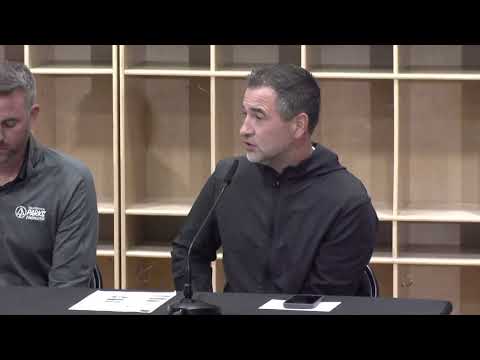
At a District 3 town hall at the West Central Community Center, Garrett Jones, director of Parks and Recreation, and Dr. Adam Swinyard of Spokane Public Schools presented details of the study that shaped the proposal and highlighted projects in District 3, including a combined Madison School and recreation center, Meadow Glen Park, expanded lit all‑weather fields, an indoor tennis center at Shadle Park and a plan to invest in an existing indoor pool at Spokane Community College.
The authors of the study say the partnership would stretch levy and bond dollars by sharing facilities and private contributions. "When you look now together, we see what you call the partnership projects — additional 30 projects system wide," Jones said. "Now what we're able to do is provide over 200 projects system wide, every park, every neighborhood, every school for what was originally planned for the park's levy at that 29¢ per thousand." Swinyard added, "We serve 30,000 kids. We do that in those 58 schools that encompass over 5,000,000 square feet across 600 acres. So we are one of the largest school districts in the state."
Why it matters: officials said combining school bond and parks levy proposals would increase the number of projects delivered without raising the per‑household cost beyond the levy plan presented to voters. City and district staff framed the partnership as a way to increase everyday programming for youth, reduce travel burdens for families, and improve safety and maintenance at parks and school properties.
Key elements and examples - Madison School recreation center: The Madison elementary replacement is planned as a school with an integrated community recreation center. Officials described a 5‑court field house to host youth and senior programming and larger events. Jones said partners such as Hoopfest have pledged funding and in‑kind resources; he cited a "million dollars" commitment from Hoopfest to the project. - Fields and tournament capacity: The plan would expand all‑weather, lit rectangular and diamond fields, doubling capacity at the Dwight Merkel Sports Complex and creating roughly 15 all‑weather fields scattered across the city to help meet high spring and fall demand for organized sports. - Meadow Glen Park and park deserts: The initiative targets gaps identified in the parks master plan, including neighborhood “park deserts” such as parts of North Indian Trail where officials propose new development resources. - Park rangers and safety: The proposal would expand limited special commission park ranger officers from four full‑time rangers to additional positions citywide; Jones described this as part of a multi‑pronged approach that pairs capital investments, maintenance, environmental design and targeted enforcement to encourage positive use of parks. - Shadle Park indoor tennis center: The U.S. Tennis Association approached the city with a proposal to fund an indoor structure over existing courts at Shadle Park; officials called it the region’s first public indoor tennis center if built. - Trades high school and indoor aquatics: Swinyard described a proposed four‑year trades high school to be located on Spokane Community College campus and a plan to invest roughly $5 million to renovate and program an underused SCC indoor pool so it can be used year‑round for school swim lessons, therapeutic programming and community access. Jones said a standalone indoor aquatic center would cost on the order of $80 million to $100 million, which officials said was financially impractical compared with upgrading the SCC facility.
Funding and thresholds Officials said the school bond requires a 60% voter approval threshold while the parks levy would require a simple majority (50%). Jones and Swinyard told attendees the combined plan preserves the levy’s originally advertised tax rate (29¢ per $1,000 assessed value) while delivering more projects through shared financing and private contributions. Organizers described the average homeowner cost as "less than $8 a month."
Community and equity aims Jones and Swinyard repeatedly framed the initiative around equity of access: shorter travel distances to practices and programs, school‑based community centers open outside school hours, and increased programming to reach children who lack affordable extracurricular options. Swinyard said, "We have to take some practical steps in our community to make sure that every kid every day has something to do outside of school." He also cited a middle‑school tackle football pilot and other extracurricular pilots that district staff said correlated with improved attendance, behavior and grades for participating students.
Questions from council and residents Council members raised pre‑K classroom capacity, facilities access and neighborhood concerns about parks and safety; one council member asked about senior programming and facilities availability, which officials said the designs aim to accommodate.
What officials did not decide or promise No formal levy or bond text was adopted at the town hall and no final cost estimate for the full package was presented at the meeting. Officials described programmatic goals, project lists and funding partners but said several details remain subject to further study and voter approval.
Ending: The presentation closed with a reminder that the initiative will require community feedback and voter approval before any projects proceed. Jones and Swinyard directed attendees to togetherspokane.org for more information and to contact city staff with comments.