Get Full Government Meeting Transcripts, Videos, & Alerts Forever!
Spokane Plan Commission recommends Cannon Hill Park local historic district to city council
Summary
The Spokane Plan Commission voted 7–1 to recommend adoption of the Cannon Hill Park local historic overlay zone and accompanying design standards and guidelines after presentations by the city’s historic preservation officer and neighborhood proponents, following ballots showing majority owner support.
The Spokane Plan Commission voted 7–1 on Sept. 24 to recommend that City Council adopt a local historic overlay zone and design standards for the proposed Cannon Hill Park Historic District.
Megan Duvall, the city and county historic preservation officer, told the commission the nomination covers a largely intact residential area identified in a 2008 intensive survey and proposes an overlay that would amend the Unified Development Code and the official city zoning map. "A local historic district is basically a nomination of a group of properties. It's listed on the Spokane register as a district," Duvall said.
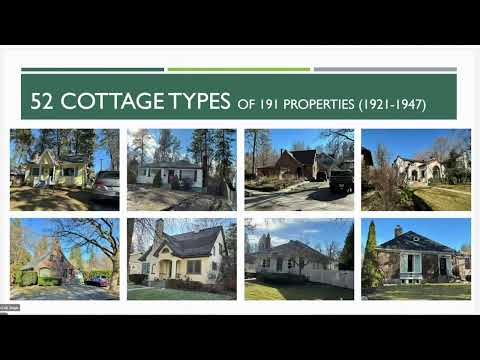
The nomination covers 191 property parcels (193 votes because two parcels are split) and, according to the nomination materials, 180 properties are classified as contributing and 11 as noncontributing to the district’s period of significance, which the nomination defines as roughly 1909–1958. Duvall said the nomination map bounds the area by a set of streets shown in the materials and that the district is composed almost entirely of single‑family houses, with common building types including bungalows, cottage‑style homes, larger two‑story residences and a small number of ranch houses.
The nomination was preceded by owner balloting. "We mailed 193 ballots on May 8. We received 154 ballots back — that's 80 percent. A 135 of those ballots were in favor of forming the district," Duvall said, adding that returned ballots amounted to 88 percent in favor of the district and that, counting unreturned ballots as no votes per city procedure, the measure met the simple‑majority threshold required to move forward.
Neighborhood proponents emphasized local outreach and the district’s grassroots origin. Nathan South, a member of the…
Already have an account? Log in
Subscribe to keep reading
Unlock the rest of this article — and every article on Citizen Portal.
- Unlimited articles
- AI-powered breakdowns of topics, speakers, decisions, and budgets
- Instant alerts when your location has a new meeting
- Follow topics and more locations
- 1,000 AI Insights / month, plus AI Chat