
United Way presents ALICE data to Lacey council, highlights housing, childcare and construction academy
Get AI-powered insights, summaries, and transcripts
Subscribe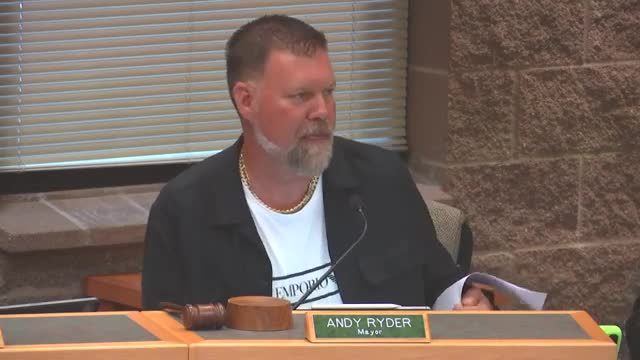
Summary
United Way of Thurston County presented new ALICE findings showing 33% of Thurston County households and 38% of households in the city of Lacey fall below the ALICE threshold; the presentation emphasized housing and childcare costs and promoted a residential construction training program at South Puget Sound Community College.
United Way of Thurston County Executive Director Chris Wells told the Lacey City Council that the organization’s latest ALICE (asset limited, income constrained, employed) analysis shows 33% of Thurston County households fall below the ALICE threshold and that 38% of households in the city of Lacey are below that measure.
"ALICE is an acronym for asset limited income constrained employed," Wells said. "If you're working and you're earning an income and you can't meet your basic needs you're poor, right?" He said ALICE captures households that can be far above the federal poverty level yet still cannot meet the real local cost of living.
Wells said the three biggest monthly costs driving strain on ALICE households are housing, childcare and food. He told council members an ALICE “survival” budget for a family of four with two full-time earners and two children under 5 in Thurston County was about $115,000 a year in his calculation, driven by childcare of roughly $3,000-plus per month and housing costs of about $2,500 per month.
The presentation also highlighted demographic disparities in local ALICE figures. Wells said Black households and Hispanic households are disproportionately represented among those below the ALICE threshold and that single-parent female-headed households are particularly affected: "68% of those households fall below the ALICE threshold," he said.
Wells recommended focusing on education and workforce development to reduce long-term ALICE risk. He said Washington ranks poorly for FAFSA completion, a leading indicator of post-secondary enrollment, and described a pilot navigator program started in 2022 that embeds high school career and resource navigators to increase post-secondary enrollment.
Wells also described a residential construction academy launched at South Puget Sound Community College to address a shrinking skilled construction workforce. He invited council members to a ribbon-cutting and graduation for the program’s first cohort on September 29 and said the second cohort begins the same month.
Mayor Andy Ryder introduced the presentation and thanked Wells for bringing the data to the council. In follow-up comments, a council member who visited the first cohort praised the program and instructor Damon Doyle as a promising local pipeline into construction trades.
The presentation was informational; no formal council action was taken at the meeting.
Ending: Wells left council members with local data and a request to consider workforce and education strategies as part of long-term housing affordability efforts. He provided printed reports to council and invited further meetings.