Get Full Government Meeting Transcripts, Videos, & Alerts Forever!
Get email alerts on the Parks And Recreation topic
No spam. Unsubscribe anytime.
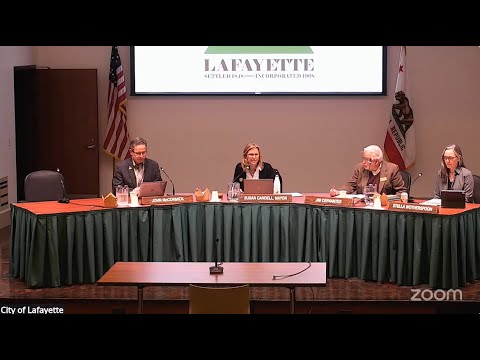
Lafayette council adopts new fee schedule for city sports fields, ending preferential Little League lease
Summary
On Oct. 14 the Lafayette City Council adopted Resolution 2025‑49 to update hourly rental fees and use categories for the city’s multi‑sport fields. The change replaces an expired preferential lease for Buckeye Fields and phases field fees toward market levels over four years.
The Lafayette City Council on Oct. 14 adopted Resolution 2025‑49 to update hourly fees and formalize use categories for the city’s multi‑sport fields, including Buckeye Fields and Lafayette Community Park.
City staff and the Parks, Trails and Recreation (PTR) Commission recommended the change after noting the current fee schedule had not been updated since 2011 and the lease that previously set Buckeye’s true cost has expired. Jonathan Katayanagi, the city’s parks, trails and recreation director, told the council that although the listed baseball fee remained at $8 per hour, Buckeye’s actual 2024 cost—when calculated across hours and expenses—worked out to about $24 per hour. Katayanagi said the proposed schedule ramps rates from the 2011 base toward a $20‑per‑hour benchmark over four years to catch up with market comparators while limiting immediate impacts to user groups.
The staff presentation explained the policy change replaces a preferential lease arrangement for Lafayette Little League with an all‑hourly model and a formal allocation process for user groups. Katayanagi said that under the current combination of lease and hourly rates, Lafayette Little League’s average effective cost for its Buckeye and community park use was about $15.75 per hour; under the new schedule staff calculated that comparable charges would be roughly $17 next year with a planned ramp to $20.
Public comments were strongly represented by Lafayette Little League volunteers and parents. Speakers including Nancy Hu and coach/board member Roger Hu urged the council to consider that Little League volunteers currently provide maintenance work and financial contributions. Roger Hu said volunteer and program contributions totaled “over $20,000” for landscaping and upkeep at Buckeye and Chaney fields in the prior year. Other speakers said Buckeye fields are noticeably better maintained than some other community or school fields because of long‑term volunteer stewardship.
The PTR Commission recommended the fee change by a 9‑0 vote. City staff said the changes are intended to be revenue‑neutral overall: they anticipate some user groups will reduce requested reserved hours, others will take advantage of newly available time, and the city will continue to subsidize fields rather than recover full cost from hourly fees. Staff also flagged capital needs: a patio and drainage project at Buckeye was estimated at approximately $650,000, and constructing new fields would be substantially more expensive (staff cited a rough ballpark “north of $5,000,000”).
Councilmembers asked staff how the city will manage maintenance if volunteer stewardship declines. Katayanagi said the allocation process will prioritize Lafayette resident user groups and that the department will continue to work with user groups on shared maintenance responsibilities. He recommended the council adopt the resolution and suggested staff return with a one‑year review of how the new model is working.
Councilmember (name not recorded in the minutes) moved to adopt Resolution 2025‑49; the motion was seconded and carried by voice vote with all present members answering “Aye.” The council directed staff to implement the fee schedule as outlined in the resolution and to return with a progress report after one year. No changes to field leases or to the field surfaces themselves were approved at the meeting; separate requests about infield composition and leases were referred to future meetings or commission processes.