
Richmond city workers urge council to press negotiators after 56 days without contracts
Get AI-powered insights, summaries, and transcripts
Subscribe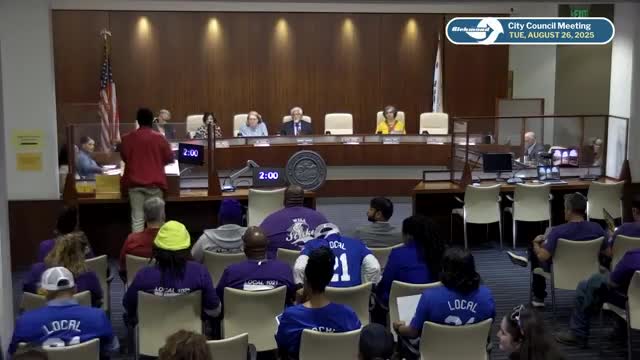
Summary
Dozens of Richmond city employees and labor representatives told the City Council on Aug. 26 that bargaining has stalled for months and asked elected officials to instruct negotiators to return to the table and settle contracts.
Dozens of Richmond city employees and union representatives addressed the City Council on Aug. 26 to press elected officials to intervene in stalled labor talks and secure new contracts.
Speakers said bargaining began in April and that several bargaining units have been working without a contract for weeks. "Trust is built on action, not empty promises," said Yvette Williams Barr, a mid‑manager bargaining unit member represented by IFPTE Local 21. Several speakers urged the council to instruct the city's negotiating team to engage in good‑faith bargaining.
The message came from a cross section of municipal workers and union leaders. SEIU-affiliated employees and IFPTE members listed daily services they continued to deliver while without agreements: encampment removals, crisis calls, multi‑agency responses, and neighborhood events. "56 days is enough," said Michelle Milam, who gave a long list of tasks city workers said they handled during the contract lapse. Ron Collins, SEIU staff and chief negotiator for the union, said bargaining started April 14 and that by Aug. 26 "we've been in bargaining. We started bargaining April 14, and today is, August 26. Hundred and 34 days. Hundred and 34 days we've been in bargaining." Collins said bargaining has produced eight joint sessions and that members have placed 35 proposals on the table with four responses from the city.
Other union leaders echoed those figures and described scheduling and delay tactics they said hampered negotiations. Kevin Tisdale said his union authorized a strike vote that passed by 96% and described repeated scheduling changes and long gaps between sessions. Several speakers said they had filed or planned to file charges with the Public Employment Relations Board (PERB).
Speakers also cited operational impacts and staffing shortages. Joe Summers of the Contra Costa Labor Council noted an 11% vacancy rate in the city's workforce and warned that hiring gaps strain remaining employees. City employees representing public works, IT, finance and other departments described increased workloads and frequent use of temporary staff and consultants.
Council members did not take formal action during the public comment portion. The city attorney later reported in the closed‑session summary that the council gave direction to negotiators on labor items; no reportable action was taken in open session.
The council heard the comments before adjourning to closed session for labor negotiations, liability claims and other matters. Several union speakers asked the council to ensure negotiators come to the table with sufficient authority to reach agreements and to end what they described as divisive bargaining tactics.
Going forward, labor leaders asked the council to instruct the city negotiating team to respond to outstanding proposals and to prioritize settlement so that staffing and service delivery are not further disrupted.