Get Full Government Meeting Transcripts, Videos, & Alerts Forever!
Get email alerts on the Library Funding topic
No spam. Unsubscribe anytime.
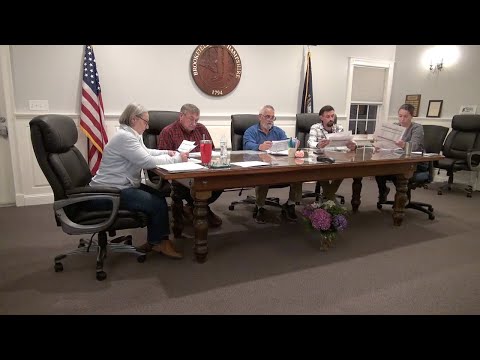
Brookfield trustees ask for larger Gaffney Library contribution; select board asks for MOU, financial reporting
Summary
Gaffney Library requested $20,000 from Brookfield for fiscal year 2026, up from $16,000; library and select board members discussed usage-based allocation, town representation on the library board and whether a memorandum of understanding or financial oversight should accompany continued municipal funding.
Gaffney Library trustees asked the Brookfield Select Board to increase the town's annual contribution to $20,000 for fiscal year 2026, up from the $16,000 Brookfield provided in the current budget cycle.
The increase reflects the library's argument that Brookfield accounts for roughly 8–9% of active library users and that the library's programming, computer training, notary and printing services are heavily used by town residents. "We have about 8 or 9% of the library users ... 355 residents with library cards, but only 166 of them are what we consider active," a library representative said, citing the library's internal counts and door‑monitoring data.
Select Board members asked how the library calculated the usage figures and whether municipal funding should be governed by a formal agreement. One board member said the town should have a written understanding before committing larger tax dollars, saying an MOU (memorandum of understanding) would “spell out” the arrangement. A library trustee said the library operates under a charter with elected trustees and that Brookfield has representation on the library's board, but several Select Board members said they were unclear whether any formal, current agreement governs the town's payment.
Board members also asked whether the library is a public agency or a private nonprofit. The library representative described the Gaffney as a private nonprofit that receives municipal support, and another participant called it a public‑private partnership. Select Board members requested documentation of the library's most recent budget and a clearer explanation of how Brookfield's requested share was calculated relative to Wakefield and other participants.
Board members discussed options for funding allocation, including population versus actual usage metrics; the library representative said the usage method (active cardholders and door counts) produced the higher figure. The board did not take a final vote on the request at the meeting and left the line item in the draft budget for further review.
The Select Board asked the library to return supporting materials and noted they would review the library's paperwork, including any charter, and to consider whether the town should require an MOU or periodic financial reporting as a condition of continued municipal support. No binding agreement was created at the meeting.
The board also discussed whether trustees or library staff should provide audits or other financial oversight; a board member asked whether Brookfield performs any follow‑up on nonprofit financials before allocating tax revenue, and participants said that, at present, there was no standardized town review beyond the annual budget process.
Going forward, the Select Board said it would review the library's backup documentation and usage data and revisit the request in a later meeting prior to finalizing the town budget.