Get Full Government Meeting Transcripts, Videos, & Alerts Forever!
Get email alerts on the Budget topic
No spam. Unsubscribe anytime.
Waukegan panel approves $400,000 supplemental appropriation to fund housing-rehab program using temporary revenue swap
Summary
The Finance & Purchasing Committee approved an ordinance to amend the 2025 budget and appropriate $400,000 to a housing rehabilitation program, temporarily replacing expected cannabis revenue with state income tax distributions.
The Waukegan Finance & Purchasing Committee on Aug. 18 approved an ordinance to amend the city’s annual budget and make a $400,000 supplemental appropriation to support a housing-rehabilitation program funded through the Community Development Block Grant (CDBG) framework.
Committee members said the city will use an equal increase in projected state income tax distribution in the current fiscal year and intend to replace that with cannabis-tax receipts next year when those revenues are available. Finance Director Juan explained, “In other words, the cannabis revenue will not generate an extra $400,000 this year. So in order to be able to meet this, this is the way to do it,” and said the city expects to dedicate cannabis revenue to the program in a subsequent budget year.
The measure funds a program that caps assistance at $50,000 per home; staff said some homes will receive smaller awards (for example $10,000–$30,000) and that the city is working from a waiting list of roughly 82–83 households. City staff summarized the program design as combining CDBG flexibility with a separate city fund to address items CDBG cannot cover, such as emergency tree removal that could cause imminent structural damage.
Alderman Florian voiced concern about using cannabis-tax proceeds and the timing given the city’s potential legal settlements, saying he did not “see the connection between the cannabis money and this particular plan” and that removing $400,000 from reserves when settlement-related expenses may require bonding could increase long-term costs. Several other aldermen stressed the humanitarian need for repairs for low-income and fixed-income residents; Alderman Martinez said he has visited constituents on the list and urged approval to address urgent home repairs.
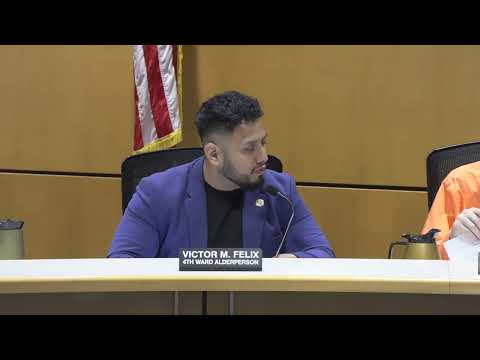
Committee members also discussed eligibility and outreach. Staff emphasized the program is income-based, not limited to seniors, and noted the program will require a formal policy and will not begin immediately. The committee approved the ordinance on a 4–1 vote: Alderman Newsome, Alderman Bolton, Alderman Felix and Alderman Martinez voted yes; Alderman Florian voted no.
The committee directed staff to continue developing program policy, confirm funding mechanics for the current fiscal year, and report back to the council. The ordinance takes effect per the city’s normal appropriation processes and will be reflected in the next formal budget documents.