
McHenry County staff brief committee on energy omnibus, FEMA reforms and federal funding risks ahead of veto session
Get AI-powered insights, summaries, and transcripts
Subscribe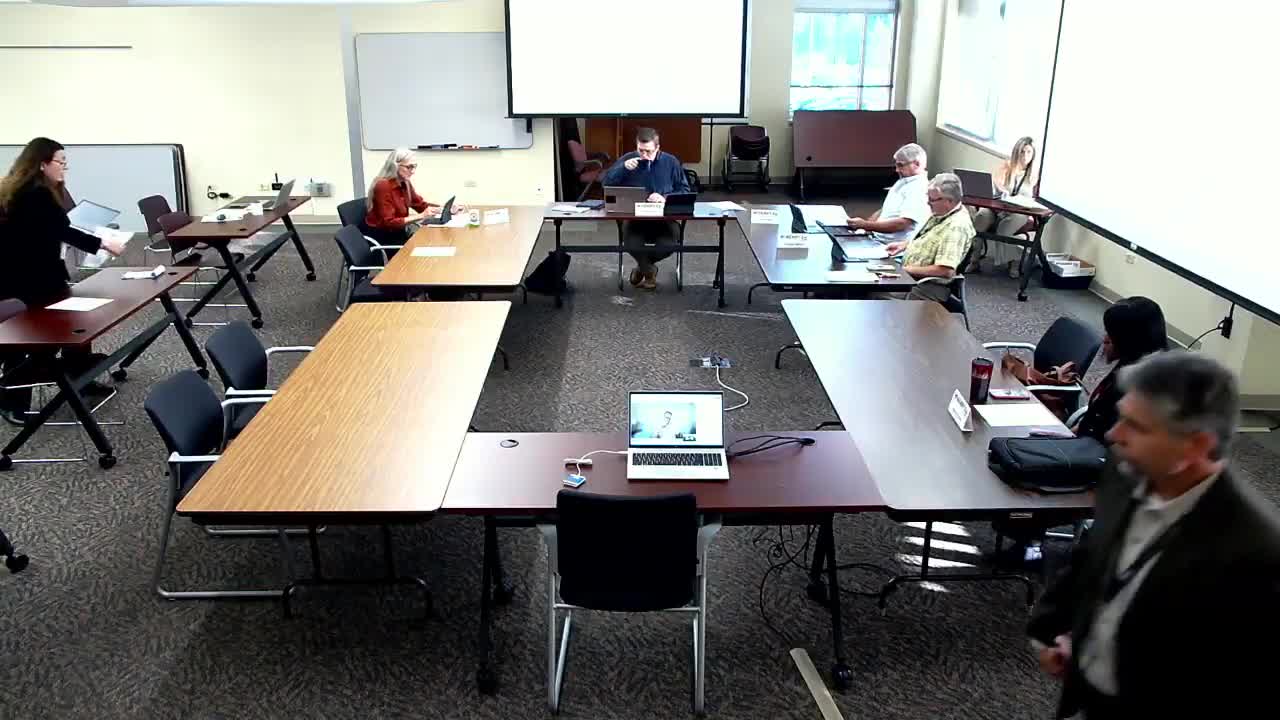
Summary
County public affairs staff reviewed state and federal legislative activity — including an energy omnibus bill with energy storage provisions and proposed FEMA reforms — and warned federal budget uncertainty could affect local community project funding.
McHenry County public affairs staff updated the Law and Government Committee on state and federal legislative activity and potential effects for county programs during the Sept. 30 meeting.
The briefing, given by Lucia Schuler, McHenry County director of public affairs, highlighted an Illinois energy ‘‘omnibus’’ bill (identified in materials as House Bill 4116) that is under negotiation in Springfield and contains provisions touching energy storage, including drainage plans and decommissioning and remediation funding. Schuler said some provisions in the energy bill overlap with recommendations the county’s solar and wind task force had sought through the Illinois State Association of Counties (ISACo).
Why it matters: changes in state law could affect local permitting and county positions on energy siting, and federal budget actions could remove community project grants the county expects.
Schuler told the committee that the county had requested language amending energy legislation so that county boards would not be required to vote on some solar zoning actions. She cautioned the panel that it is uncertain which of ISACo’s comments will survive final negotiations in Springfield, where the bill also includes provisions involving labor and data‑center energy usage.
Schuler also warned that a possible federal shutdown or continuing resolution could imperil a community project grant the county sought for the sheriff’s office. She said a house committee had approved $1.2 million in community‑project funding for the sheriff’s office but that a federal continuing resolution likely would not include that allocation.
On emergency management, David Christensen, the committee’s FEMA subject‑matter expert, said a bipartisan House measure to shift some FEMA activity from reimbursement to a grant model is advancing and could be advantageous to counties. Christensen said the FEMA proposal ‘‘presents a significant opportunity for McHenry County to accelerate our EOC upgrades, resilience projects, and our survivor support’’ but warned success will depend on proactive planning, state advocacy and availability of matching funds. He said some professional associations — including the National Emergency Management Association and the International Association of Emergency Managers — have endorsed elements of the reform.
County staff said the committee will receive a fuller presentation on the FEMA proposal at a later meeting and encouraged members to contact federal legislators before the bill advances further.
Additional federal items on staff’s radar included possible changes to workforce network funding and other federal programs; staff said House and Senate proposals differed and the county was monitoring both.