
Kalamazoo UPC recommends class-specific 2026 water rate changes, urges City Commission review
Get AI-powered insights, summaries, and transcripts
Subscribe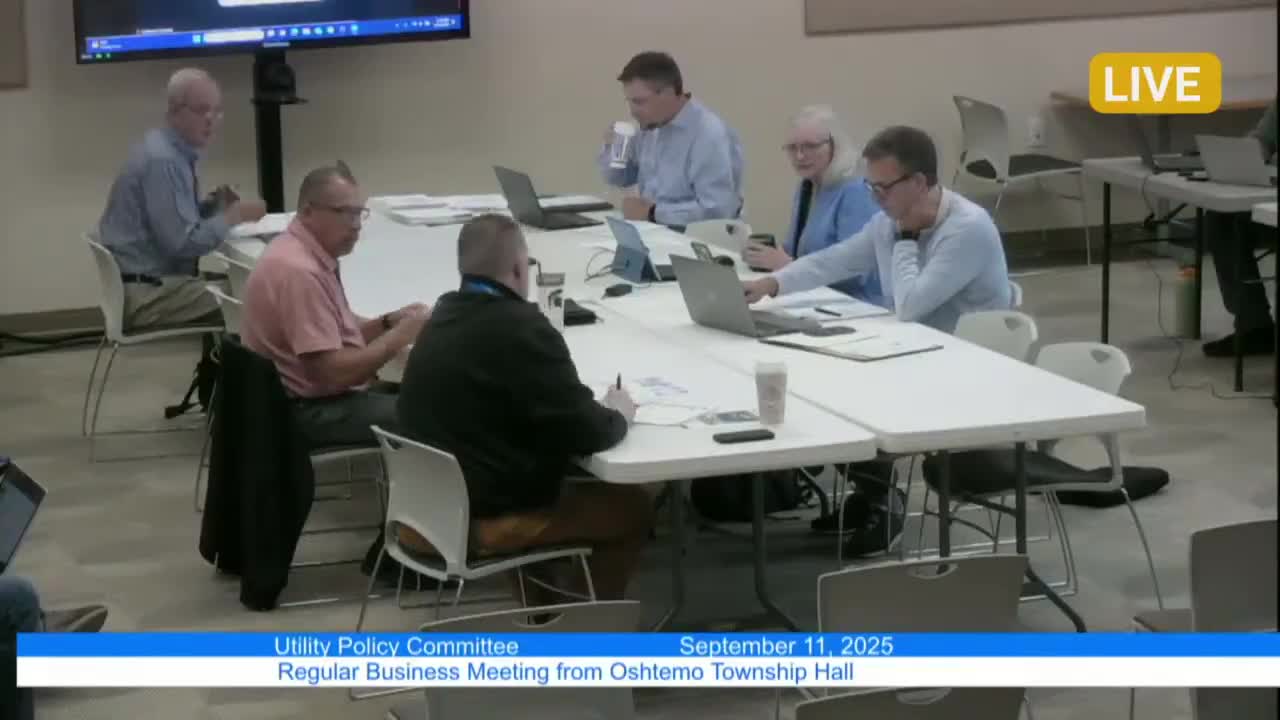
Summary
The Utility Policy Committee voted Sept. 11 to recommend the City Commission adopt a 2026 water rate package that would raise residential rates by 6.5% and implement smaller, class-specific changes while keeping seasonal rates unchanged.
The Utility Policy Committee (UPC) for the City of Kalamazoo voted Sept. 11 to recommend that the City Commission adopt a set of 2026 water rates that would raise the residential class by 6.5 percent, increase commercial rates by 5 percent, raise multifamily rates by 3 percent, reduce no change for seasonal customers and set a 2 percent increase for industrial customers.
The recommendation follows a cost-of-service analysis presented to the UPC by city staff and consultant Stantec that identified a revenue shortfall for the residential customer class. James Baker, a city staff member participating in the rate study discussion, said the combined revenue-requirements and cost-of-service review led staff to propose a “compromised approach” that phases corrections over several years rather than closing the gap in a single year.
The recommendation matters because the rate changes are intended to better align revenues with the cost to serve different classes of customers, rather than relying on a uniform across-the-board increase. Baker told the committee the proposed residential increase would translate to an average quarterly bill increase of about $7.13, or roughly $2.38 per month for a typical residential account.
Committee members discussed data refinement, meter zone consolidation projects and the underlying assumptions used by the consultant. Peter Hafner, a UPC member, urged caution about how beginning balances and grant accruals were treated in the reserve calculation and recommended the UPC consider refining the city’s reserve policy to clarify which items count as cash and investments for rate-modeling purposes. Danica (city staff, finance-related) and Baker described the model inputs, noting the consultant’s schedules included outputs intended to provide transparency without releasing proprietary modeling software.
Stantec staff described using a multi-year average and a four-year smoothing technique to avoid abrupt adjustments for classifications such as seasonal customers. Committee members repeatedly emphasized that the cost-of-service outputs depend on model inputs and that the smoothing approach is intended to avoid “rate whiplash” for customers.
After discussion, Peter Hafner moved and Jeff Chamberlain seconded a motion to recommend the rate schedule in the Sept. 11, 2025 memo (the package presented by Mr. Baker and included in the meeting packet) to the City Commission. The motion carried with a recorded outcome of 5–0 (two members absent). Committee members agreed a UPC representative should attend the City Commission presentation anticipated in November and the formal readings in December to provide context and answer questions.
Next steps: the UPC’s recommendation will be presented to the City Commission during a Committee of the Whole presentation planned for mid-November, followed by a first reading in early December and a final vote later in December, according to staff.