MPO 101: Congestion-management process framed as operations-first toolbox for TMAs
September 29, 2025 | Laredo, Webb County, Texas
This article was created by AI summarizing key points discussed. AI makes mistakes, so for full details and context, please refer to the video of the full meeting. Please report any errors so we can fix them. Report an error »
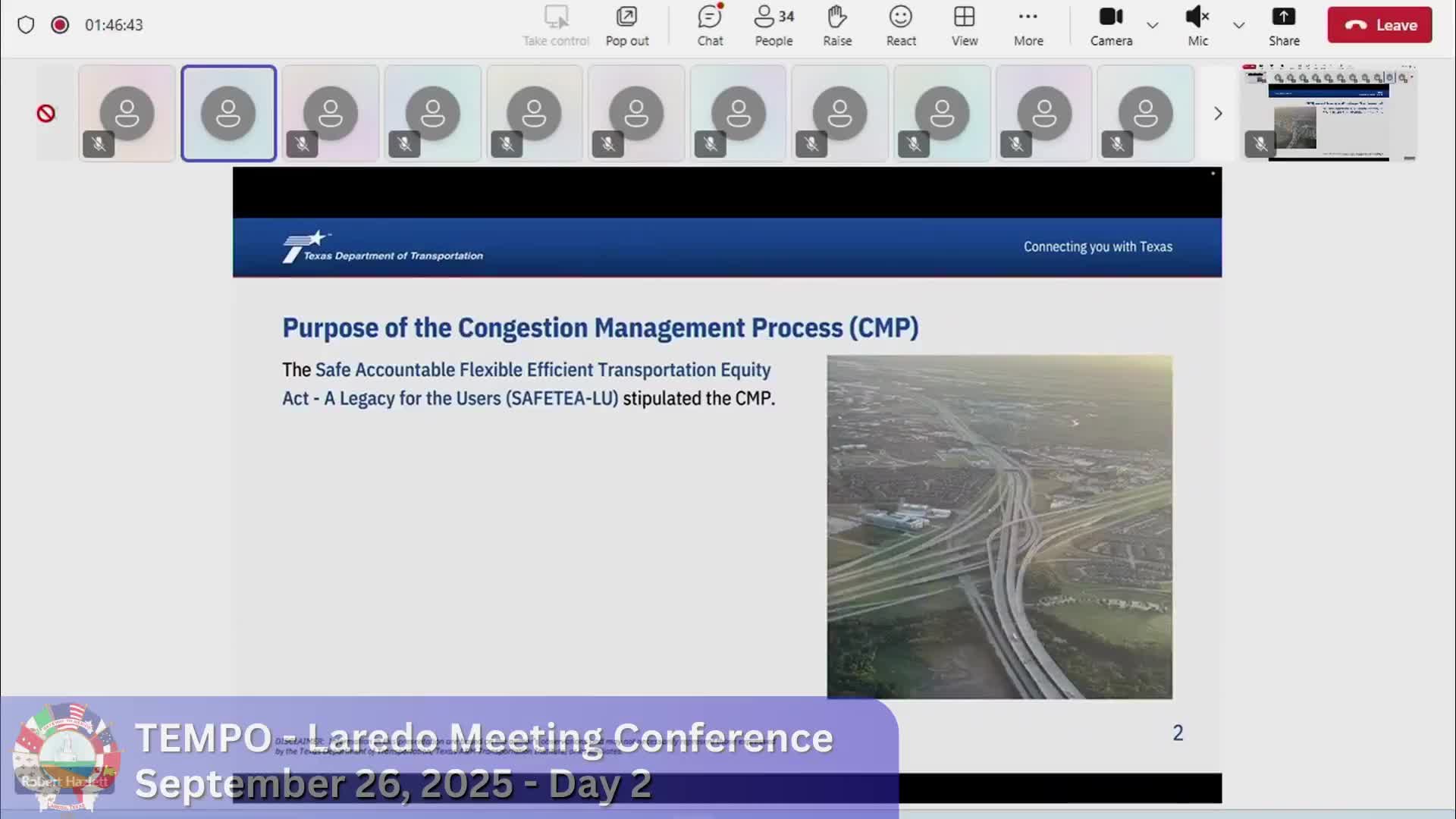
Why it matters: federal regulations require a CMP for Transportation Management Areas (TMAs; areas with population over 200,000). The CMP helps agencies prioritize management-and-operations solutions, inform project selection in metropolitan transportation plans and the TIP, and provide a documented performance-monitoring system for certification reviews.
Bob outlined the CMP's typical steps: develop regional objectives tied to MTP goals; define a CMP network (segments and junctions in scope); collect data and monitor performance; identify and evaluate congestion problems; assemble a toolbox of strategies (signal timing, incident clearance, transit priority, TSMO approaches); implement and program selected strategies; and monitor effectiveness. He emphasized that federal rules prescribe goals and outcomes but do not mandate specific methods, so MPOs should tailor the approach to local conditions.
Speakers highlighted implementation details: agencies should match CMP updates to MTP refresh cycles and maintain ongoing monitoring (annual reporting was recommended by some participants). Barbara cautioned that TMA nonattainment areas should note additional CMP requirements in federal guidance. Participants discussed data sources (INRIX and similar providers), the cost of purchased datasets, and TxDOT's existing INRIX arrangement that may provide MPO access.
Bob recommended treating the CMP as a living, consultative process that prioritizes management and operations before capacity expansion where possible, and as a documented input for project selection and performance reporting.
View the Full Meeting & All Its Details
This article offers just a summary. Unlock complete video, transcripts, and insights as a Founder Member.
30-day money-back guarantee
Sponsors
Proudly supported by sponsors who keep Texas articles free in 2026

