Get Full Government Meeting Transcripts, Videos, & Alerts Forever!
Get email alerts on the Wastewater Permit topic
No spam. Unsubscribe anytime.
Residents urge ADEM to deny proposed Integra permit to discharge into Flint River
Summary
Residents, business owners and veterans’ advocates told the Alabama Department of Environmental Management at a public hearing that a proposed permit for a private wastewater treatment plant should be denied because the Flint River is widely used for full-body recreation and local livelihoods would be harmed.
Residents, business owners and veterans’ advocates told the Alabama Department of Environmental Management at a public hearing that a proposed permit for a private wastewater treatment plant should be denied because the Flint River is widely used for full-body recreation and local livelihoods would be harmed.
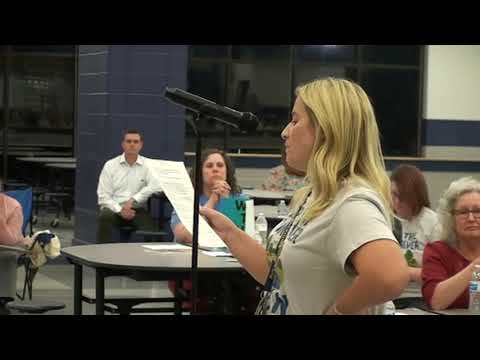
“Are we really going to discharge 1,200,000 gallons, gallons of sewage effluent daily into water where children swim based on standards designed only to protect fish and wildlife?” said a resident who spoke during the hearing, summarizing a recurring theme among commenters: that existing permit classifications and monitoring do not reflect how people use the river.
The hearing featured multiple speakers who said the Flint River is heavily used by kayakers, swimmers, school groups and recreation businesses, and that a permitted discharge upstream would threaten those uses and local businesses. Jason Pauls, owner of TGL Adventures in Brownsville, Alabama, said: "This is an abnormal risk to the living river that's central to our community, identity, and economy." He and other small-business owners said higher bacteria counts, visible algae blooms or even the perception of sewage in the river would reduce visitors, costing jobs and sales tax revenue.
Several speakers urged ADEM to require stronger oversight or to deny the permit outright. The unnamed resident opening the public comments asked ADEM to “require full disclosure of design plans, low flow modeling data, and treatment guarantees made public and not hidden,” and recommended independent third-party audits, automatic penalties or shutdowns for repeated violations, and monthly recreational water-quality testing for E. coli, enterococci and pharmaceutical compounds with public posting of results.
Andrea Utley, a teacher who read a statement for Project Healing Waters, described the river’s importance to disabled veterans participating in the program and said: "This will negatively affect our disabled veteran community." Utley said the program serves about 70 disabled veterans locally and that the river provides accessible fishing and therapeutic outdoor activity.
Other speakers raised additional concerns: Amanda Briggs, a Riverwalk resident, described repeated flooding on her property and warned that a discharge could raise flood risk and septic-system backups. Larry Vance, who said he has lived in the area 30 years, asked for protections in case flooding or contamination affects homes. Several residents asked for a financial assurance, including one request that the applicant post a $1,000,000 bond to cover potential damages or cleanup costs.
Environmental advocates at the hearing offered monitoring and volunteer-testing options. Susan Weber, founder and recently retired chairman of the Flint River Conservation Association for Freedom, said local volunteers have used Alabama Water Watch protocols and offered to train citizens to test upstream and downstream of any discharge pipe and submit data following EPA protocols.
Speakers also raised ecological concerns, including mention of a federally listed darter species found in the Flint River watershed and the need to account for cumulative pollutant loading from multiple dischargers and during drought or flood events. One commenter said the proposed discharge would enter the Flint River roughly half a mile upstream from the Flint River Bridge and asked whether ALDOT or Madison County had been contacted about potential erosion or infrastructure impacts.
Opposition at the hearing was bipartisan in tone but varied in emphasis: property owners focused on property values and odors, business owners emphasized lost customers and liability, veterans’ advocates emphasized the river’s therapeutic role, and conservation volunteers emphasized independent monitoring and species protection. Several speakers said they did not oppose wastewater treatment in general but opposed the proposed location and the perceived level of regulatory oversight.
No formal action or vote was taken at the hearing; speakers addressed ADEM staff and requested that the agency either deny the permit or impose stricter conditions, independent audits, transparent modeling and monthly public water-quality testing. ADEM staff provided a deadline for submitting written comments (the hearing notice and staff indicated written comments could be submitted through 5:00 p.m. the following day). The hearing transcript does not record a final permit decision.
The hearing included multiple requests that ADEM disclose modeling of low-flow and drought conditions, cumulative loading analyses for the Flint River system and a clear plan for enforcement, including automatic penalties or shutdowns for repeated violations rather than after-the-fact warnings. Commenters also asked that any monitoring results be posted publicly and that a community complaint mechanism with enforceable timelines be required.
The public input at the ADEM hearing provides the agency with multiple requests and technical questions to address before any permit decision. Those include: confirming the applicant company’s exact name and ownership structure (variously referred to in remarks as "Integra" and "Integris"), providing the design discharge point and modeling data, clarifying compliance and enforcement mechanisms, and responding to community concerns about recreation, veterans’ programming and local businesses that rely on the Flint River.
For now, residents and business owners said they will continue submitting written comments and coordinating volunteer water testing and community outreach to document any changes in river water quality, and several threatened legal action if property or health impacts occur.