Get Full Government Meeting Transcripts, Videos, & Alerts Forever!
Get email alerts on the Economic Development topic
No spam. Unsubscribe anytime.
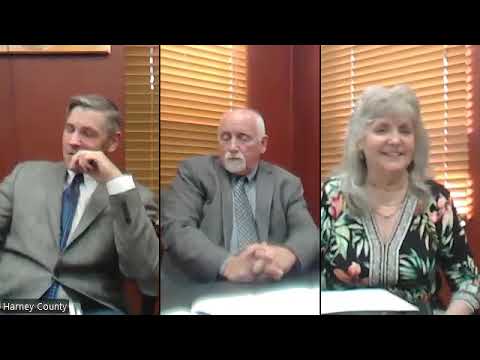
Harney County court debates scope, staffing and funding for economic development push
Summary
Harney County Court spent its work session outlining goals and timelines for a refreshed economic development strategy, discussing whether to hire an outside contractor or a local coordinator, use of an annual $105,000 economic development fund, and outreach plans including four stakeholder meetings ending Dec. 2.
Harney County Court discussed strategies this week for reshaping economic development work in the county, weighing whether to hire an outside contractor with statewide industry connections or create an in‑house coordinator position and use existing annual economic development funds to pay for it.
County Judge Hart said the court needs a clear scope of work for any hire and indicated a preference for someone with western Oregon connections if the court’s primary goal is recruiting employers. “I really think, by the end of the year, I’d like to have something ironed out on what we’re gonna do with an economic development plan,” Hart said, setting an internal target to refine direction and funding by year‑end.
The court heard that Biz Harney plans to present information on services already provided locally; members asked for statistical evidence of measurable local benefit before committing to new contracts. Commissioners and staff discussed whether the county should emphasize recruitment of manufacturing and industry or focus on small business and Main Street development, and whether hired help should be local or come from other parts of the state with more industry ties.
Court members described a near‑term outreach plan of four listening sessions the judge will lead; the last session was scheduled for Dec. 2. The judge said those meetings, plus a written public survey, will help define a scope of work that could be used for a request for proposals or a job description. The court noted that Biz Harney and other partners such as GEODC and small business development organizations already provide services, and that the county should avoid duplicate efforts.
Financial constraints were a central part of the discussion. The judge said the county receives roughly $105,000 annually into an economic development fund, of which about $85,000 remained for the current year; the court must report annual expenditures and asked whether unused funds can be carried over. The county currently pays its website vendor from the same fund; commissioners said the annual $10,000 cost appears high compared with alternatives estimated closer to $5,000.
Participants outlined potential near‑term growth that could alter economic needs: local housing projects were cited as examples that could increase demand for local employment. The Telos/Palmer Estates project was described as planning about 170 units over an eight‑year period; Miller Springs was described as planning roughly 150 units. Court members said additional housing and residential growth would increase demand for trades and services, and could spur retail and pharmacy investment.
Court members referenced federal Payments in Lieu of Taxes (PILT) and State Revenue Sharing (SRS) in the context of county revenues. One commissioner gave a rough example that used round figures to show how PILT, timber receipts and other federal payments can change total funds available, and noted uncertainty about whether SRS had been reauthorized and how that would affect next year’s revenues.
The court agreed to gather more data before deciding whether to contract externally or hire a coordinator: planned steps include the listening sessions, a Biz Harney presentation, follow‑up data requests to the treasurer on fund carryover rules, and drafting a scope of work or RFP. No formal motion or vote was recorded.
Ending: Court members said they will continue outreach and return with the compiled input and proposed scope of work for further discussion before making hiring or contracting commitments.