Get Full Government Meeting Transcripts, Videos, & Alerts Forever!
Get email alerts on the Public Art topic
No spam. Unsubscribe anytime.
Committee discusses utility-box wrap contest, murals and Westside sculptures; staff flags private-ownership limits
Summary
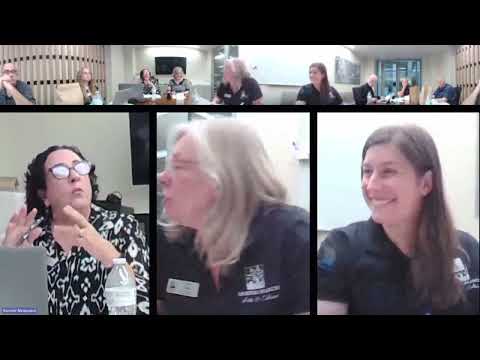
The Farmers Branch Arts & Culture Advisory Committee discussed a school-focused utility-box wrap contest, additional public art installations, and legal and funding challenges for murals on private buildings, and received an update on Westside sculptures planning.
The Farmers Branch Arts & Culture Advisory Committee discussed plans for a student contest to design utility-box wraps, broader public contests for 2026, and options for expanding murals and public sculptures across the city. Committee members described an incremental approach that pairs school outreach with a later open contest for the general public.
Committee members proposed a student contest with a Feb. 20 submission deadline to create designs for utility boxes, focusing on Texas themes and styles inspired by artists. A later open contest would invite community members to submit work under a separate theme; staff said winners could be announced at Branch Arts Live. "We would try and announce the winners at Branch Arts Live," one committee member said. The committee discussed starting with a modest number of wrapped boxes, testing designs and costs before expanding the program. Staff reported three wrap designs are ready and two will be installed next week; a third design is slated for future installation.
Members also explored larger mural projects. David, staff member, explained the difference between city‑owned and privately owned buildings: "If it's a city‑owned building, the city can do whatever they want... When it's a privately owned building, it starts getting really complicated." He and others said the city could promote mural ideas to building owners, connect property owners with artists, or pursue a mural grant similar to existing facade grant programs that help private owners offset improvement costs.
Committee members said past outreach to large property owners produced limited engagement; staff suggested the city could act as a connector and take strong proposals to council for funding consideration. David described how facade grants typically work: owners submit an application, the city or economic-development staff review it, and council approves partial funding. "The business owner is responsible for hiring the contractor to do all the work," he noted; the city’s role is typically to offset costs, not carry liability for installation.
The committee also received an update on the Westside trail sculptures: staff said the city’s project manager is coordinating next steps and that the city may brief council through an informational memo or a study session showing proposed sculpture locations and background. No final council action or budget allocation was announced.
Members discussed other public-art tactics — utility-box wraps as a lower-cost, quicker visual improvement and public‑private partnerships for murals where property owners contribute or apply for grants. The committee agreed to continue developing contest rules, outreach to schools and property owners, and to return with more detailed cost estimates and installation schedules in subsequent meetings.