Get Full Government Meeting Transcripts, Videos, & Alerts Forever!
Get email alerts on the Parent Teacher Conferences topic
No spam. Unsubscribe anytime.
Waukegan CUSD 60 provides guidance for upcoming parent-teacher conferences
Summary
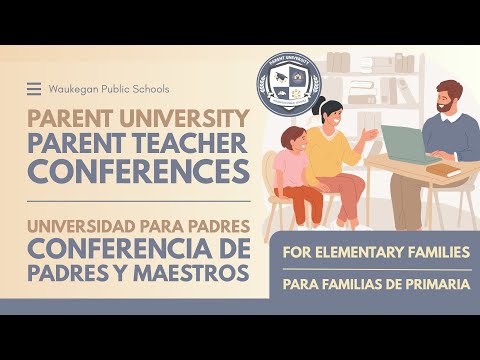
Waukegan CUSD 60 staff outlined how parents can schedule and prepare for brief (15–20 minute) parent-teacher conferences, options for meeting formats, key assessment tools discussed, and tips for ongoing home–school communication.
Waukegan CUSD 60 staff provided a step-by-step guide for parents about upcoming parent-teacher conferences, including scheduling, meeting formats and suggested preparation. The district said conferences will take place in the afternoons on Oct. 22 and Oct. 23, and that teachers will send home a form allowing families to select a time and receive a confirmation once the conference is scheduled. Staff said teachers will be flexible if families need to reschedule and offered meetings in person at school, by phone, or virtually via Google Meet.
The district described the conferences as short, focused meetings — generally 15 to 20 minutes — intended to build collaboration between home and school. Staff asked parents to prepare by noting their child—s strengths, areas of challenge and goals, and suggested asking the child what they—d like the teacher to share so the student feels included. During the conference, teachers will discuss academic progress, class participation, social-emotional skills and attendance, and may share assessments, report cards and samples of student work.
Two assessments were named as points of discussion. The recording referenced an adaptive test that measures reading and math progress (described as adjusting difficulty based on responses) and the DIBELS (Dynamic Indicators of Basic Early Literacy Skills) for students in kindergarten through fifth grade to monitor foundational reading skills; staff said these assessments are used multiple times a year to track student progress. The district explained its report-card scale uses numbers 1–4 rather than letter grades: a —3— indicates a student is on track with grade-level expectations and a —4— indicates the student is exceeding expectations.
Staff emphasized that attendance is a strong indicator of student success, noting that five or more absences in a quarter may be considered chronic and can affect progress. They also urged parents to document avoidable absences so teachers can maintain accurate records. Practical tips for reinforcing learning at home included daily routines such as reading together and reviewing classroom goals, and staff encouraged parents to share preferred communication methods (phone, text or email) to maintain contact after the conference.
The recording closed with an invitation to contact the district office and to complete a follow-up questionnaire.