Get Full Government Meeting Transcripts, Videos, & Alerts Forever!
Get email alerts on the Finance topic
No spam. Unsubscribe anytime.
Mount Pleasant council hears May financial report; sales-tax shortfall and fleet leases flagged
Summary
City staff told the Mount Pleasant City Council on June 17 that the budget is broadly on track two-thirds through the fiscal year, but members raised concerns about lower-than-expected sales-tax receipts and recurring fleet lease costs and asked staff to identify savings.
The Mount Pleasant City Council on June 17 received a monthly financial report for the period ending May 31 and pressed staff to narrow revenue projections and identify possible reductions ahead of next year’s budget. The council heard that property-tax receipts are on schedule but sales-tax receipts are running behind projections.
The report, presented at the council meeting by finance staff, showed the city about two-thirds (66.7 percent) of the way through the fiscal year. The general fund’s year-to-date revenues were reported slightly above that pace, and expenditures were running lower than budgeted, producing a year-to-date surplus in the general fund. The utility fund likewise showed revenues roughly in line with the fiscal calendar. The city’s debt-service payments are concentrated in recent months, producing uneven monthly results.
Why it matters: Council members said the sales-tax shortfall could require mid-course corrections to the budget. One council member told colleagues staff should “spend some very serious time in the next two weeks” to identify revenue lines and potential spending reductions to avoid a year-end shortfall.
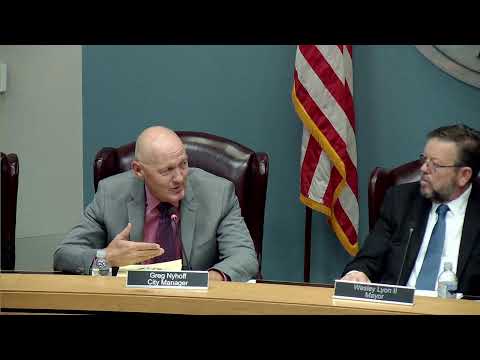
City manager Greg (role title: City Manager) and finance staff said they would refine revenue forecasts and return with recommendations. Greg said staff would review all projected revenue streams — including permits and liquor sales — and identify where reductions or re-prioritization might be necessary.
Council and staff discussed several specific items that affect near-term finances. Staff explained that large debt-service payments are concentrated in a few months; one bond issuance has a final payment scheduled in September that will bring that department to full-year budgeted levels. Council members asked staff to circulate the specific bond schedule to clarify which bonds are close to final payment.
Fleet leasing drew extended discussion. The police department’s lease program was described as costing about $48,000–$49,000 per month (roughly $600,000 annually budgeted), paid from the capital replacement fund; maintenance costs for vehicles are recorded in a separate fleet-services account. The police chief (role title: Police Chief) said the upfitting cost for a marked patrol vehicle is roughly $28,000; under the city’s arrangement the city must pay half of that up front and the remainder is financed through the lease. The chief said some leased vehicles remain under warranty while others require ongoing repairs charged to the fleet budget.
Council members said the city should consider shifting away from short-term leases for vehicles that can be kept longer — public-works and code-enforcement trucks, for example — and examine whether buying selected vehicles would reduce long-term costs. Staff reported efforts already under way: returning newer leased units and retaining older, lower-cost units to lower monthly lease payments until those vehicles are paid off.
Next steps: Finance staff (Jillian) and the city manager will refine revenue projections, provide the bond-payment schedule requested by the council and return with options for adjustments or recommended cuts as needed. The council signaled it expects a tighter revenue outlook for next fiscal year and said it will review goals before finalizing budget direction.