Get Full Government Meeting Transcripts, Videos, & Alerts Forever!
Get email alerts on the Healthcare Coverage topic
No spam. Unsubscribe anytime.
Minnesota senators warn federal changes, shutdown could strip health coverage and cut SNAP, WIC
Summary
State senators at a legislative committee briefing said proposed federal changes and a partial federal shutdown threaten advanced premium tax credits and other programs, putting about 60,000 Minnesotans at risk of losing health coverage and causing SNAP and WIC benefits to stop on Nov. 1, officials said.
State senators and members of a Minnesota Legislature select committee on federal impacts warned that proposed federal policy changes and a partial federal shutdown could remove advanced premium tax credits and other support programs, potentially leaving about 60,000 Minnesotans without health insurance and cutting SNAP and WIC benefits around Nov. 1.
The warning came during a committee briefing in which lawmakers described overlapping federal actions — including changes to premium tax credits, cuts to Medicaid and Medicare funding and an ongoing shutdown — that they said would multiply harms for families, hospitals and local governments across Minnesota. Committee members said they will continue gathering information and plan additional interviews, including with federal workers, to document day‑to‑day impacts.
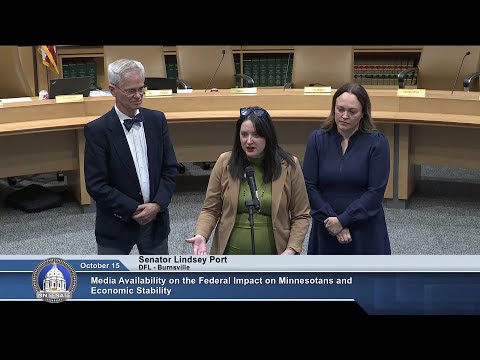
Sen. Port, a member of the Minnesota Senate select committee on federal impacts, said the committee is focusing on the short‑term and long‑term consequences of federal actions for Minnesota residents and the state’s health infrastructure. "We need to come with an openness to find new ideas," Sen. Port said, describing the committee’s purpose as gathering facts and identifying state‑level responses. She added that holding the line in negotiations can be a tool for the minority party in Congress, and argued that the potential losses would be devastating: "People will die because of these provisions," she said.
Committee members said they have been hearing reports that SNAP and WIC benefits will be cut off on Nov. 1, and that federal guidance to state agencies about reimbursements and program continuity has been slow to arrive. One committee member summarized the overlap of harms: "The trouble is they all multiply," the lawmaker said, referring to simultaneous cuts in tax credits, SNAP and Medicaid funding.
Lawmakers pointed to a specific estimate raised at the briefing — that roughly 60,000 Minnesotans could lose health coverage if advanced premium tax credits are reduced or eliminated — and to testimony from hospital systems warning that cuts to federal funding and insurance subsidies could push some rural hospitals to close or curtail services such as maternity care. The committee also discussed the prospect that federal contractors and employees affected by a shutdown would face income disruption and be reluctant to speak publicly about their circumstances.
Speakers at the briefing criticized House bill HR 1 for not including protections for premium tax credits and said congressional leaders and the White House had so far not prioritized keeping those credits intact. Committee members emphasized that state options are constrained when federal funding is uncertain but said the Legislature must prepare policy responses ranging from creative state programs to interstate partnerships if federal support is not forthcoming.
No formal votes or directives were taken at the briefing. Committee members described the session as an information‑gathering meeting and said further hearings and interviews are expected. Next steps the committee mentioned included conversations with affected federal workers and agencies and continued public briefings to outline options for state‑level responses.
Committee members summarized immediate concerns for residents who rely on subsidized insurance and nutrition programs, and for hospitals that depend on federal and insurance revenue. They said the goal of the select committee is to collect data and outline potential state responses so lawmakers can assess tradeoffs during the upcoming legislative session.